
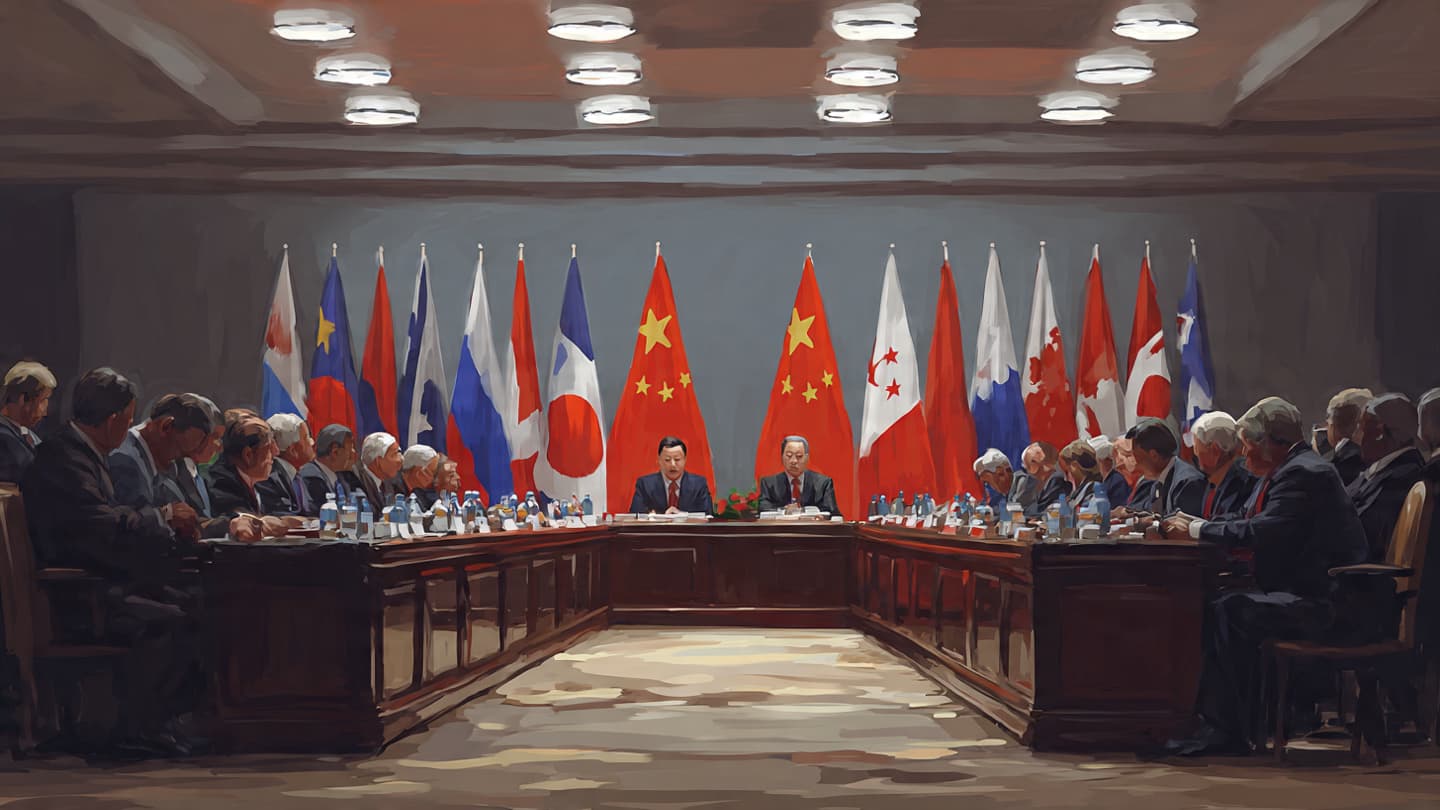
In many corners of history, moments of tension rarely arrive with thunder alone. Sometimes they appear through carefully chosen words spoken across polished tables, beneath bright conference lights, while the wider world listens in cautious silence. Recent statements from Russia and China carried that familiar atmosphere, where diplomacy and warning moved side by side like parallel rivers meeting uncertain seas.
During a high-level bilateral meeting, leaders from both countries criticized what they described as a growing “law of the jungle” mentality in global politics. Their remarks appeared directed largely toward the expanding defense posture of the United States and its allies, particularly across Europe and the Indo-Pacific region. The language used was firm, though wrapped in the traditional vocabulary of strategic cooperation and international stability.
Russian officials emphasized concerns surrounding military expansion, sanctions, and what they perceive as increasing geopolitical pressure from Western powers. China, meanwhile, repeated its long-standing position advocating for multipolar global governance, arguing that no single country should dominate international affairs. While such positions are not entirely new, the synchronized tone between Moscow and Beijing reflected how closely aligned their diplomatic messaging has become in recent years.
The meeting also highlighted broader anxieties shaping the international landscape. Conflicts in Eastern Europe, disputes in the South China Sea, and rising defense spending among major powers have collectively contributed to an atmosphere of persistent unease. Across many capitals, governments are balancing economic priorities against growing security concerns, often finding that the two can no longer be separated cleanly.
Observers note that the language of “law of the jungle” is intended to suggest a world drifting toward raw power competition rather than rules-based cooperation. Yet international politics has always carried a difficult balance between principle and strategic interest. Nations often speak of peace while simultaneously preparing for uncertainty, much like sailors repairing vessels during calm weather because they know storms eventually return.
Economic realities also shape these conversations. Russia continues to navigate sanctions and energy realignments, while China faces slowing domestic growth alongside heightened scrutiny from trading partners. In that context, public displays of unity serve both strategic and symbolic purposes. They reassure domestic audiences while signaling resilience to external rivals.
Western governments, for their part, argue that their military partnerships are defensive rather than aggressive. NATO officials and U.S. representatives have repeatedly stated that alliance expansion and regional deployments are intended to deter conflict, not provoke it. The contrast between these competing narratives illustrates how international events are often interpreted differently depending on geography and political perspective.
Despite sharp rhetoric, diplomatic channels remain active among all major powers. Trade relationships continue, multinational forums still convene, and negotiations on issues such as climate change and technology regulation have not disappeared entirely. Even during periods of rivalry, the modern global system remains deeply interconnected, making complete separation difficult for any major economy.
As global tensions continue to evolve, many countries outside the major power blocs are watching carefully. Smaller nations often carry the burden of adapting to shifting alliances while trying to preserve economic stability at home. For now, the latest exchange between Russia and China serves less as a sudden turning point and more as another signal that the international order remains unsettled beneath its formal ceremonies.
AI Image Disclaimer: Some accompanying visuals for this article may be digitally generated using artificial intelligence to illustrate geopolitical meeting scenes.
Sources: Reuters, Al Jazeera, Associated Press
Note: This article was published on BanxChange.com and is powered by the BXE Token on the XRP Ledger. For the latest articles and news, please visit BanxChange.com