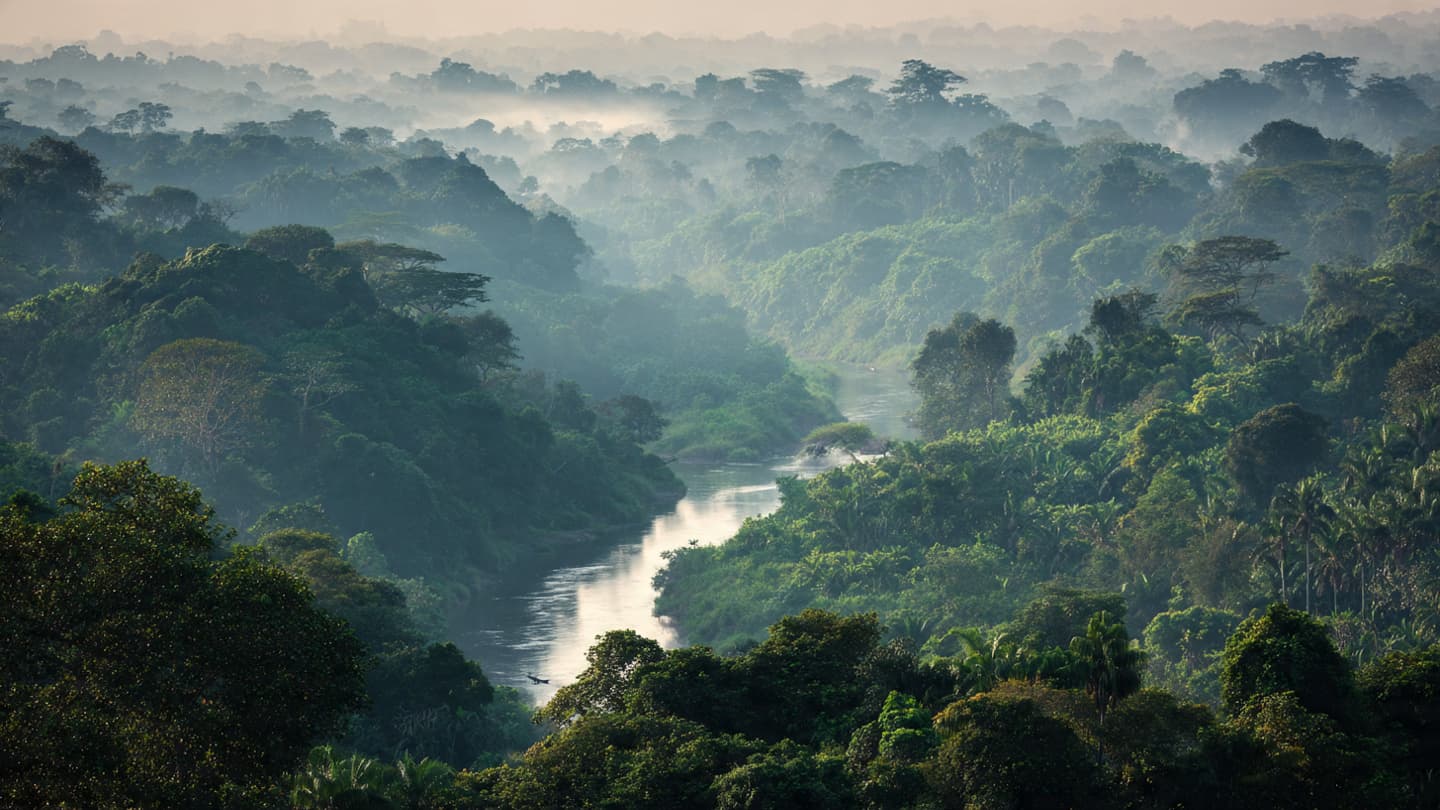
The forests of central Africa breathe with their own rhythm. Beneath towering canopies, rivers thread through dense green landscapes, carrying water, wildlife, and the daily movements of communities that have lived alongside nature for generations. In many remote areas of the Democratic Republic of Congo, the forest is more than scenery. It is a source of food, livelihood, medicine, and tradition, woven deeply into everyday life.
Yet the same environment that sustains life can also carry unseen risks.
As health authorities continue responding to outbreaks of Ebola in parts of the Democratic Republic of Congo, scientists and public health experts are once again drawing attention to a long-standing concern: the potential connection between deadly viral diseases and human contact with infected wild animals. Their warnings arrive not as new discoveries, but as reminders of a relationship between people and nature that has shaped the history of infectious disease across the region.
Ebola has appeared periodically in Central Africa since it was first identified in 1976 near the Ebola River, from which the disease takes its name. Over the decades, outbreaks have varied in size and severity, but many investigations have pointed toward wildlife as the likely origin of initial human infections. Researchers believe that certain animal species, particularly fruit bats, may serve as natural reservoirs for the virus, while other animals such as monkeys, chimpanzees, and forest antelope can become infected and transmit the disease to humans through direct contact.
In regions where access to food is limited and economic opportunities remain scarce, hunting and consuming wild animals—often referred to as bushmeat—continues to play an important role in local diets and livelihoods. For many families, these practices are not choices driven by preference but by necessity. The challenge facing health officials is therefore both medical and social: reducing the risk of disease transmission without overlooking the realities of life in remote communities.
Experts note that the majority of interactions between humans and wildlife do not result in outbreaks. However, when viruses that circulate among animals cross into human populations, the consequences can be significant. Ebola is among the most serious examples because of its high mortality rate and the speed with which it can spread through close human contact once an outbreak begins.
The current concerns emerge within a broader global conversation about zoonotic diseases—illnesses that pass from animals to humans. Scientists increasingly view environmental change, population growth, deforestation, and expanding human activity in previously isolated ecosystems as factors that can increase opportunities for such transmission. The boundaries separating human settlements from wildlife habitats have become more fluid in many parts of the world, creating new points of contact between species.
In Congo, health workers continue efforts to identify cases, trace contacts, and educate communities about prevention measures. These responses often rely not only on medical expertise but also on trust. Public health campaigns must navigate cultural traditions, local customs, and economic realities while communicating the dangers associated with handling sick or dead wild animals.
The work is rarely straightforward. Communities confronting immediate concerns about food security may view health warnings through a different lens than policymakers or scientists. Effective responses therefore require more than regulations or advisories. They demand cooperation, dialogue, and practical alternatives that acknowledge local circumstances.
At the same time, advances in surveillance, vaccination strategies, and outbreak response have strengthened the region's ability to confront Ebola compared with earlier decades. International organizations, local health authorities, and research institutions have developed tools that allow faster detection and containment. These improvements have helped reduce the scale of some outbreaks and provided valuable lessons for future responses.
Still, each new outbreak serves as a reminder of the delicate balance between human societies and the ecosystems around them. The forests of the Congo Basin remain among the most biodiverse places on Earth, home to countless species and ecological relationships that scientists are still working to understand. Within that complexity lies both immense natural wealth and the potential for unexpected biological encounters.
As evening settles over villages along forest roads and riverbanks, daily life continues much as it always has. Families prepare meals, fishermen return from the water, and traders move between communities connected by winding paths through the trees. The routines are familiar, shaped by generations of experience and adaptation.
Yet the renewed warnings from health experts suggest that understanding the future may require looking closely at those longstanding relationships between people, animals, and the environment. The latest Ebola outbreak is not only a public health challenge. It is also a reminder that human well-being is deeply connected to the landscapes that sustain it.
For now, health authorities continue their work, communities remain vigilant, and scientists seek answers. In the vast forests of central Africa, where life depends upon coexistence with nature, the lesson remains both simple and profound: the distance between survival and vulnerability can sometimes be measured in a single point of contact.
AI Image Disclaimer: The accompanying images are AI-generated visual interpretations created to support understanding of the topic and do not depict actual events or individuals.
Sources:
World Health Organization (WHO) Reuters Centers for Disease Control and Prevention (CDC) UNICEF Democratic Republic of Congo Ministry of Health
Published by Banx Network. This article is part of the Banx decentralized media programme, powered by the BXE token on the XRP Ledger.