
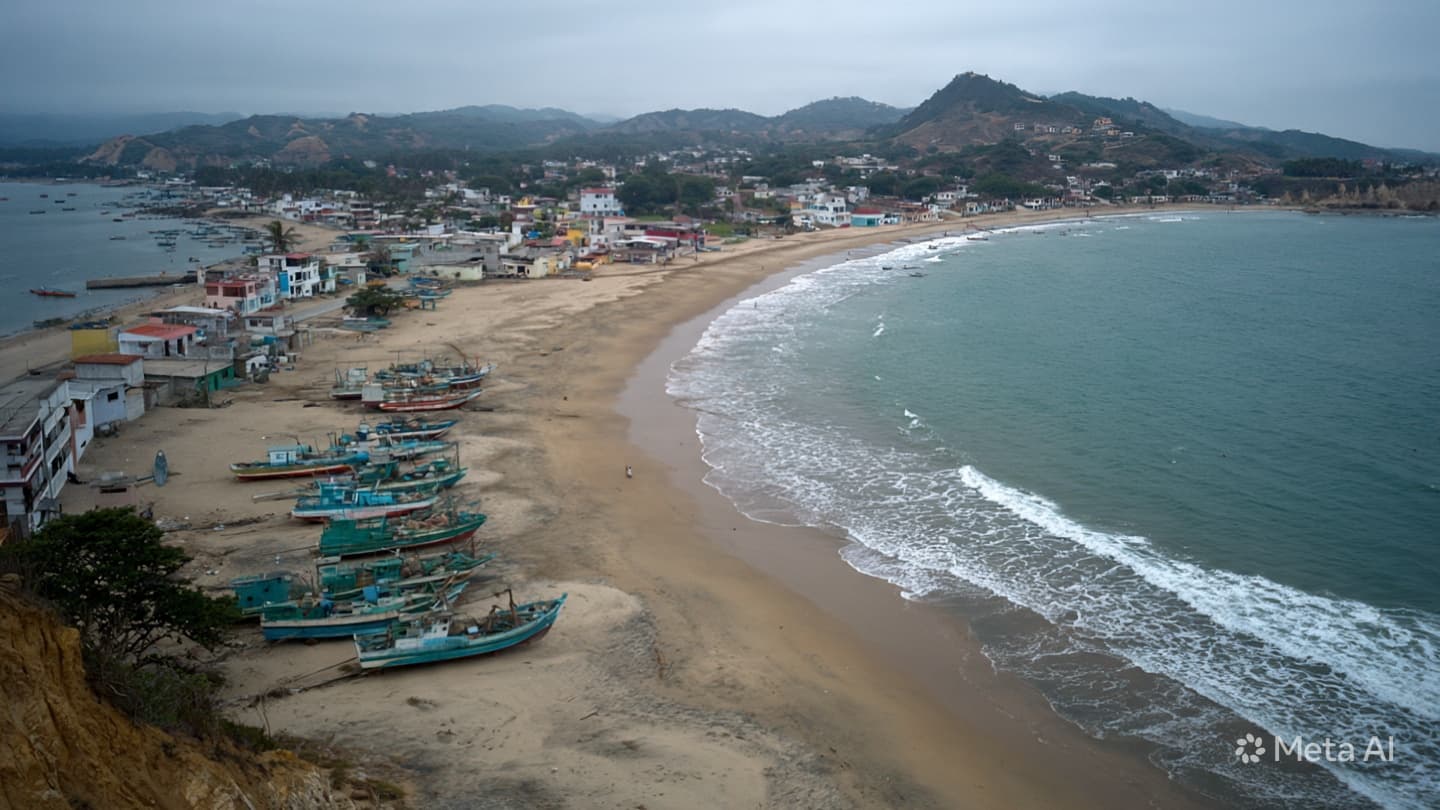
Puerto Lopez is known to the world as a sanctuary for the whale, a place of soft sand, gentle waters, and the awe-inspiring migration of the giants of the deep. It is a destination that speaks to the beauty of the natural world and the peace that can be found at the edge of the continent. When five severed human heads appear on the shore, displayed with a gruesome, mechanical precision, the horror is not just in the act itself; it is in the total, terrifying violation of a place that was meant to be a refuge.
The display is a message of dominion, a calculated shock designed to fracture the local community’s sense of safety and replace it with the paralysis of fear. To see the heads fixed to wooden posts is to witness the absolute triumph of the cartel’s dark logic—the desire to turn even the most cherished, public spaces into a theater for their brutality. It is an act that strips away the veneer of the coastal idyll and exposes the rot of the illicit routes that now traverse the country’s length.
To reflect on this event is to confront the terrifying shift in the scale of the conflict. The violence is no longer hidden in the shadows of the outskirts; it is placed at the center of the tourist map, a signal that no corner of the nation is beyond the reach of the cartels’ influence. The message left beside them, targeting the extortionists who prey upon the fishermen, is a chilling reminder of how deeply the criminal economy has entwined itself with the daily life of the coast, pitting neighbor against neighbor and worker against worker.
The collective response must be more than the typical cycle of shock and temporary mobilization. It requires a fundamental, soul-searching inquiry into how the coastal regions have become the primary nodes for the international narcotics trade. The port of Puerto Lopez, once defined by its artisanal tradition, is now a flashpoint in a war of attrition. The tragedy of the heads is a call for a sustained, integrated approach—one that addresses the economic desperation that fuels the extortion while dismantling the structures of the criminal cartels.
As the authorities and the local community begin the process of cleaning the sand and processing the trauma, there is a lingering awareness that the landscape itself has been forever marked. The beach, which should be a site of wonder, now holds the heavy, invisible memory of the violence that occurred there. It is a time for the nation to pause, to look toward the coast, and to reaffirm the value of every life that the ocean touches, ensuring that the shore is once again a place for the living.
In the end, the display at Puerto Lopez is a mirror, reflecting the deep-seated challenges that face the nation as it navigates this era of profound instability. The memory of the five who were lost is a persistent, somber anchor for the ongoing dialogue about justice, order, and the sanctity of the public space. It is a reminder that the path to peace is long, and that the first steps must be taken on the very sands where the darkness has taken hold, ensuring that the light of the state finally reaches every corner of our coast.
Five severed human heads were discovered mounted on wooden posts along a popular tourist beach in Puerto Lopez, Ecuador. The discovery was accompanied by a threatening message directed at local extortionists, suggesting a violent territorial dispute between criminal groups. Police reports indicate that the display was meant to intimidate those who resist paying "protection" fees. The coastal province of Manabi remains under a state of emergency as military and police units scramble to secure the area and identify the perpetrators responsible for the gruesome warning.
Note: This article was published on BanxChange.com and is powered by the BXE Token on the XRP Ledger. For the latest articles and news, please visit BanxChange.com