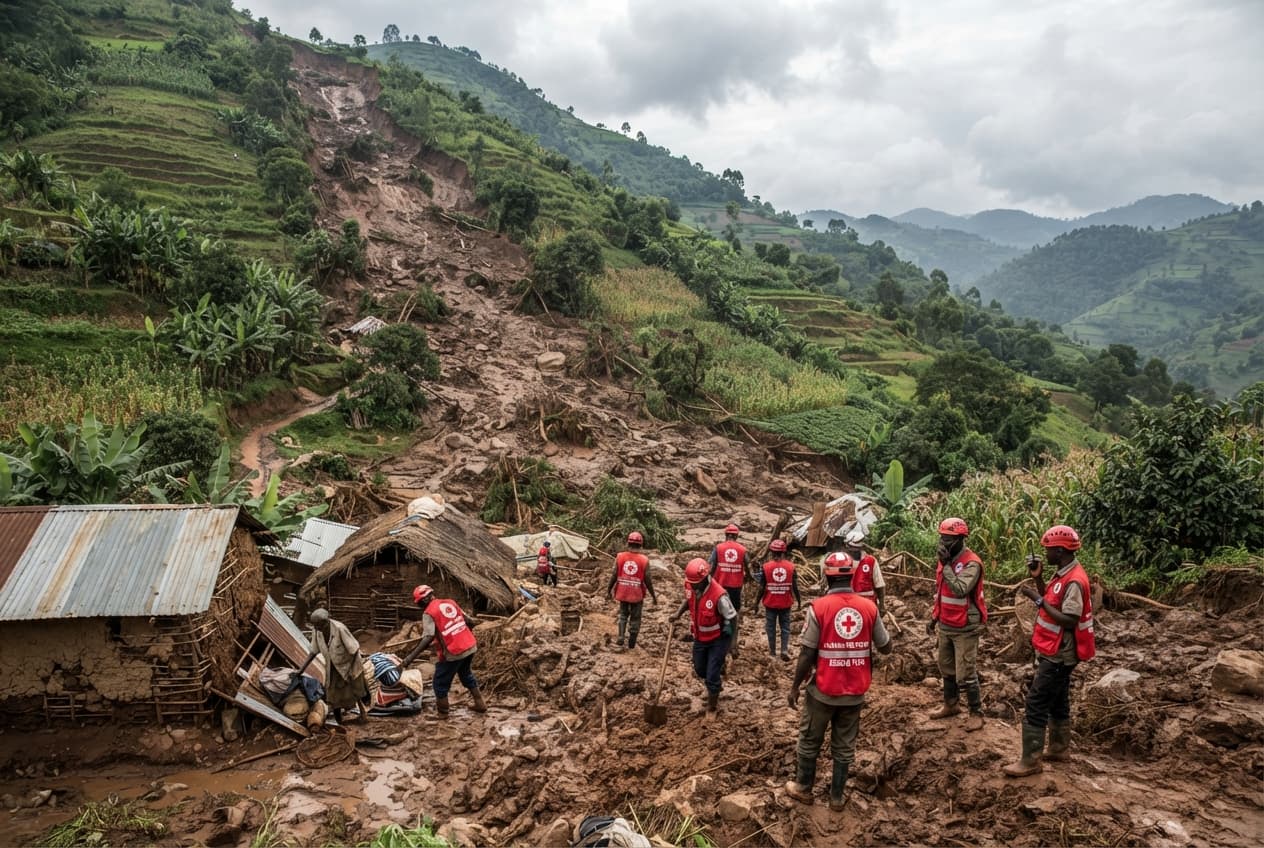
The economic highways that traverse the Western Province are vital logistical lifelines, cutting through a dramatic geography of steep terraces, deep valleys, and mist-shrouded peaks. These routes are engineered marvels, designed to connect agricultural heartlands and international border points to the central hubs of the country. Daily, a continuous procession of cargo trucks, passenger buses, and local traders navigate these winding black ribbons, carrying the material wealth of the region across a vertical landscape. It is an environment where human ingenuity has successfully imposed order upon a challenging, mountainous terrain, maintaining a steady pulse of transit against the hills.
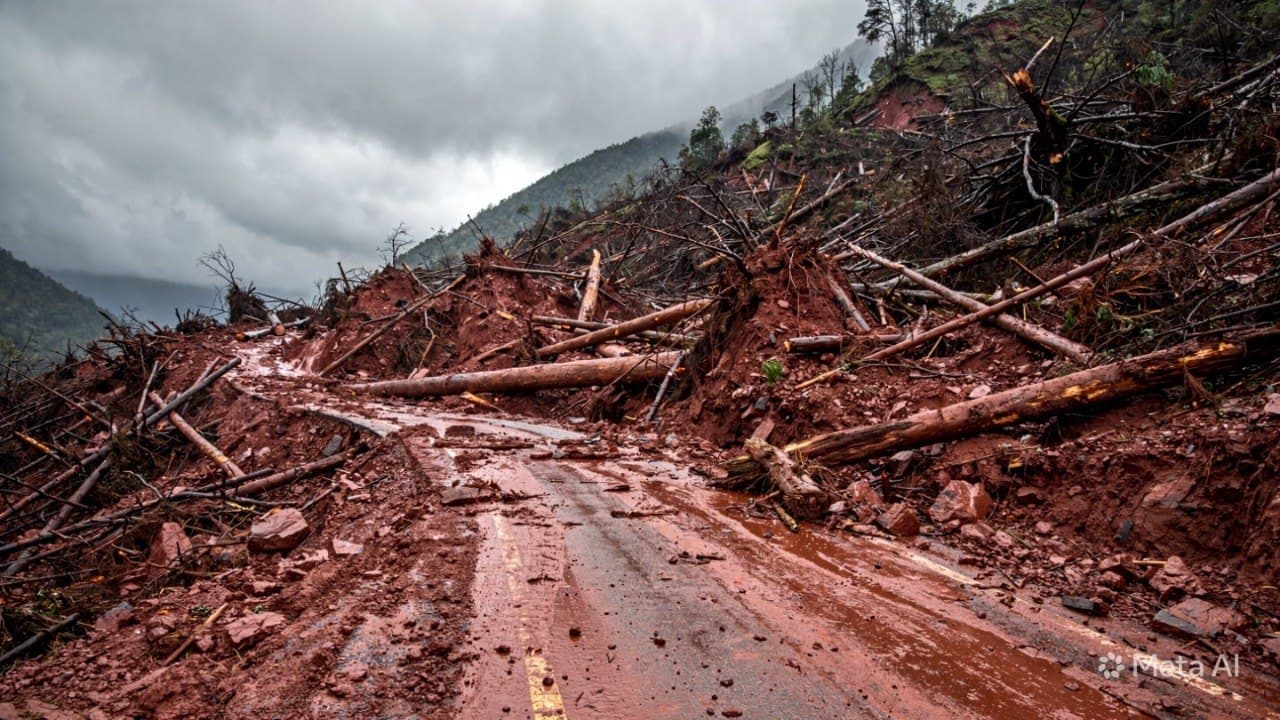
That vital flow was abruptly severed when a weather system of exceptional density saturated the high ridges, triggering a catastrophic mudslide that cascaded down a vulnerable mountain face. The torrential rains had accumulated for days, filling every fissure in the volcanic soil until the hillside lost its internal cohesion and transformed into a heavy, liquid mass. With a low, rolling rumble that echoed across the valley, thousands of tons of deep red clay, uprooted trees, and fractured boulders tore loose from the upper slopes. The debris swept over the defensive retaining walls, burying a critical section of the economic highway beneath an impassable barrier of earth.
The physical impact of the slide was absolute, instantly paralyzing the movement of goods and travelers along the major provincial artery. Where asphalt had lain clean moments before, there was now only a deep, treacherous sea of thick mud that stretched across both lanes, isolating western economic sectors from the interior. Long queues of cargo vehicles quickly formed on either side of the collapse, their engines idling in the damp mountain air as drivers realized the scale of the obstruction. The landscape had effectively reasserted its ancient, untamed character over the works of modern infrastructure.
Heavy engineering crews and emergency infrastructure teams were rapidly deployed to the site, utilizing excavators and front-loaders to begin the slow, methodical process of clearing the mass. The operation is delicate, carried out under the constant threat of secondary slips from the unstable slopes above, which remain saturated by the lingering seasonal mist. Re-establishing single-lane transit remains the immediate priority, followed by a long-term stabilization of the fractured hillside. Until the red clay is fully cleared, the Western Province remains cautious, its primary economic pulse temporarily redirected through longer, more arduous rural paths.
Published by Banx Network. This article is part of the Banx decentralized media programme, powered by the BXE token on the XRP Ledger.