
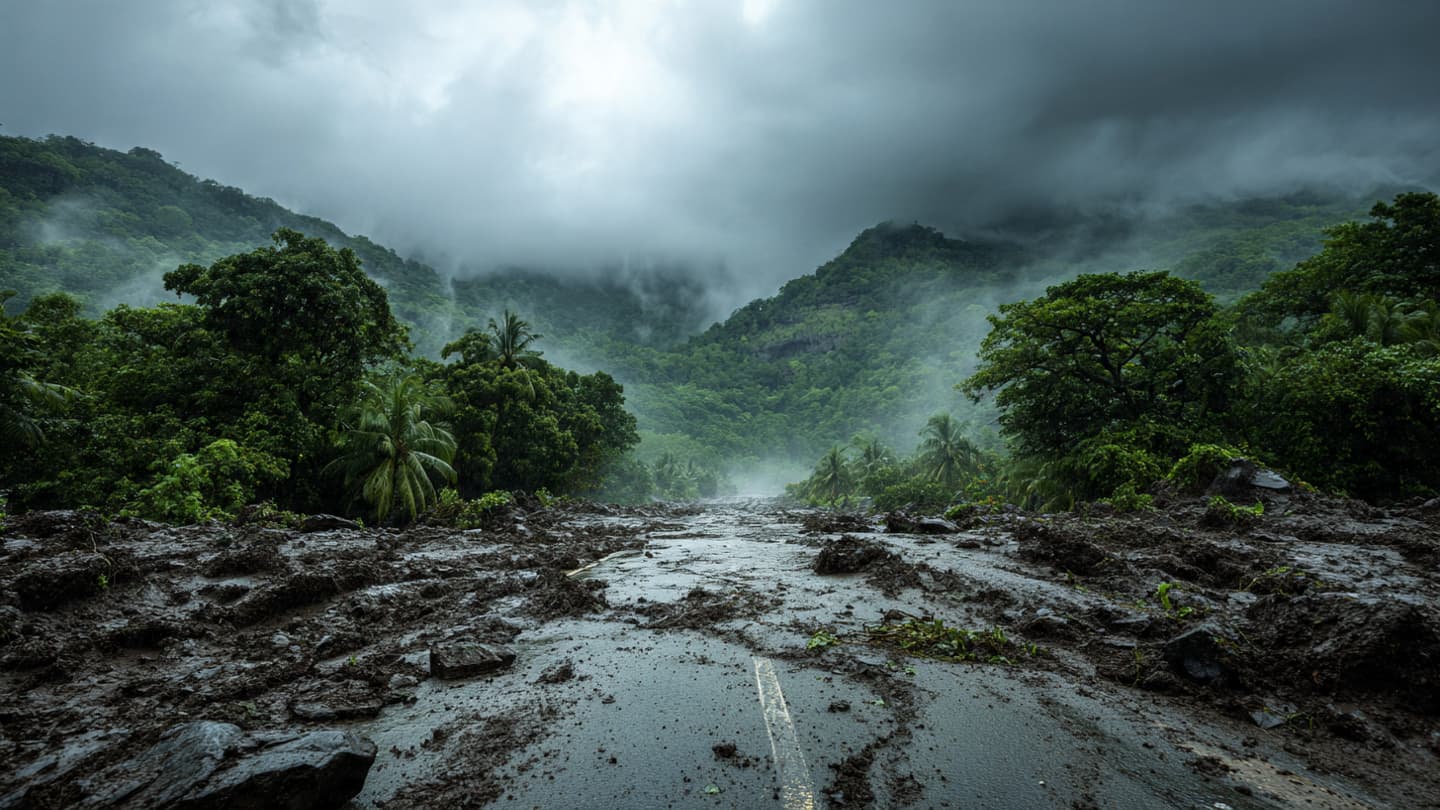
The wooded ridges that surround the outer perimeter of Guatemala City offer a stark, green contrast to the concrete density and restless noise of the capital. Here, forests of pine and oak drape themselves over steep valleys, creating a landscape that appears deceptively serene, bathed in a cool mountain mist that creeps in during the early morning hours. For the city dwellers who look up from the urban valley, these hills represent an escape, a quiet zone where the air is clean and the wind whispers softly through the high canopy. Yet, this very isolation, defined by deep ravines and dense undergrowth, carries an underlying vulnerability that has long been exploited by those who operate entirely in the shadows.
To walk into these secluded forests is to enter an environment where the natural stillness can quickly take on a heavy, somber character. Far from the main transit routes, the dense foliage creates a canopy that filters the tropical sun, casting long, moving shadows across the damp forest floor. It is a territory where the modern state feels distant, its presence reduced to the occasional sound of a far-off highway or the hum of an airplane crossing the sky. For years, the lack of public illumination and regular security patrols has turned these green spaces into quiet repositories for the grim realities of urban conflict, where the earth is forced to hide what society refuses to confront.
The discovery of human remains within these hidden clearings alters the peaceful atmosphere instantly, replacing the natural sounds of the woods with the grim mechanics of forensic recovery. A routine search by local woodgatherers reveals a site where the earth has been disturbed, exposing a tragedy that speaks directly to the ongoing friction between rival criminal factions. The air grows cold as the perimeter is marked off with bright tape, transforming a quiet grove into an active theater of state investigation. There is no drama in the immediate scene, only a profound, sobering silence as investigators begin the delicate task of documenting the physical evidence left on the soil.
The processing of such a site requires a methodical, respectful endurance from the forensic technicians and judicial investigators who must navigate the difficult, uneven terrain. Multiple victims are systematically uncovered from the shallow ground, each recovery representing a distinct fracture in the social fabric, a life cut short by the unyielding violence of organized syndicates. The work proceeds slowly under the filtered sunlight, as ballistics experts and medical examiners collect data that will eventually tell the story of the final, terrifying moments spent in the clearing. It is an encounter that lays bare the true human cost of the transnational drug trade, stripping away the mythology of the cartels to reveal the stark reality of its violence.
As the dusk begins to settle over the ridge, casting the wooded valley into deep shadow, the immediate recovery phase draws to a close under the watchful guard of national police units. Officials from the Public Ministry confirmed the recovery of five bodies from the location, all showing signs of targeted violence characteristic of cartel-linked executions. The remains have been transferred to the National Institute of Forensic Sciences (INACIF) for formal identification and post-mortem examination, while specialized units expand their sweep of the surrounding woodland for further evidence. The pines continue to stand against the darkening sky, their branches swaying in a cool wind that carries the heavy memory of the day.
Note: This article was published on BanxChange.com and is powered by the BXE Token on the XRP Ledger. For the latest articles and news, please visit BanxChange.com