
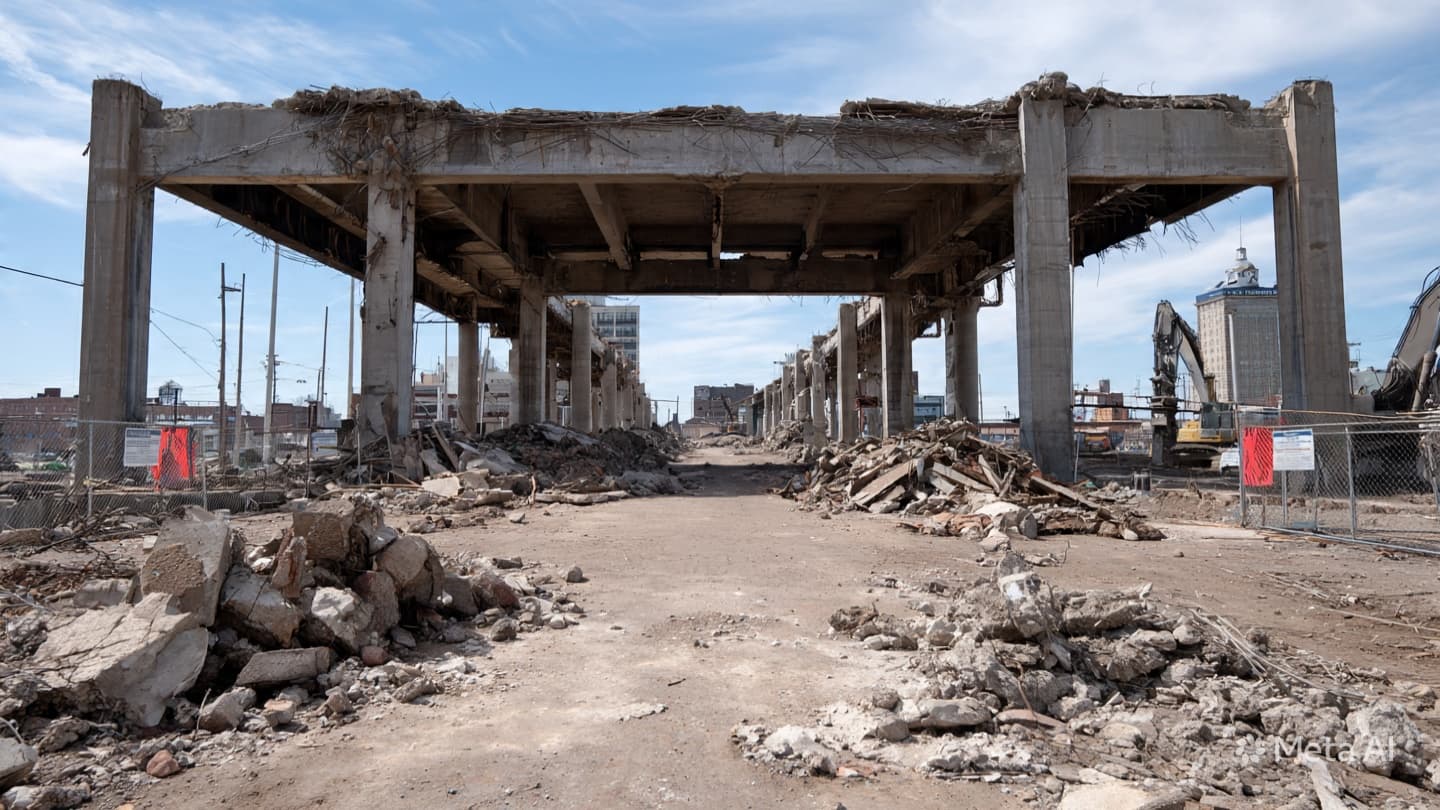
The overpass demolition site in Seoul is a landscape of complex, careful subtraction. It is a place where the history of the infrastructure is methodically peeled away, a process defined by the steady, rhythmic pulse of the machinery and the professional expertise of the engineering teams. But this morning, that pulse was abruptly halted. The structure itself, meant to be dismantled with precision, suffered a sudden, violent collapse, transforming a space of industry into one of immediate, chaotic emergency.
The image of an industrial site in the aftermath of a collapse is one of jarring, broken order. The overpass, which has carried the weight of the city’s movement for decades, now lies in a chaotic heap of steel and concrete, a sobering, reflective reminder of the engineering that goes into every structure we inhabit. For the three engineering supervisors who lost their lives, and the three workers currently in the care of the hospital, the transition from the familiar routine of the project to the sudden, traumatic impact was instantaneous—a moment of gravity that has left the entire construction community in a state of mourning.
Emergency responders, arriving with the disciplined speed of those accustomed to the hazards of the construction sector, were faced with the task of navigating a site that remained structurally compromised and dangerous. The work of securing the area, of verifying the safety of the remaining structures, and of providing the initial, essential care to the injured, is a testament to the dedication of the professionals who operate within this high-risk environment. It is a quiet, intense labor that happens in the shadow of the tragedy, performed by those who understand the physical, constant demands of the job.
The investigation into the cause is already underway, with the local labor bureau and the ministry of land examining the demolition plan, the material integrity, and the adherence to safety protocols. It is a necessary, introspective process, one that seeks to ensure that such a failure is not repeated. For the families of those involved, however, the technical details seem secondary to the immediate, crushing weight of the accident. It is a time for support, for the sharing of information, and for the slow, quiet beginning of the healing process.
Reflecting on the event, one must acknowledge the inherent risks that define the industrial landscape. We build our societies upon the foundation of such projects, often forgetting the human cost that can be associated with the work. The collapse serves as a sobering, quiet reminder of the need for constant, unyielding vigilance—a call to prioritize the safety of the worker above the speed of the output. The construction site is a community, and the loss of three of its own is a blow that echoes through the entire collective.
As the day concludes, the focus remains on the survivors, their care, and the support of the families affected. The collapse is a scar on the history of the site, a temporary but significant mark of the incident. When the investigation is complete and the site is cleared, the demolition will eventually resume, but the memory of this morning will remain. It is a moment of gravity, a point in the history of the city’s development that underscores the precious, fleeting nature of our presence here.
We look to these moments to learn, to grow, and to understand the risks that are inherent in the act of building—and dismantling—our world. The investigation will eventually yield answers, and the safety measures will likely be tightened, but the impact of the morning’s collapse will persist. It is a moment that invites us to appreciate the vital importance of safety and the quiet, persistent strength of those who navigate these projects every day.
Three engineering supervisors were killed and three workers injured Monday after a section of an overpass in Seoul collapsed during a scheduled demolition. Emergency responders were called to the site after the structure buckled, trapping the individuals beneath the debris; the injured workers were transported to a nearby hospital, where they are currently in stable condition. The city government has ordered an immediate suspension of all demolition activities as federal and local authorities launch a comprehensive safety review into the cause of the structural failure.
Note: This article was published on BanxChange.com and is powered by the BXE Token on the XRP Ledger. For the latest articles and news, please visit BanxChange.com