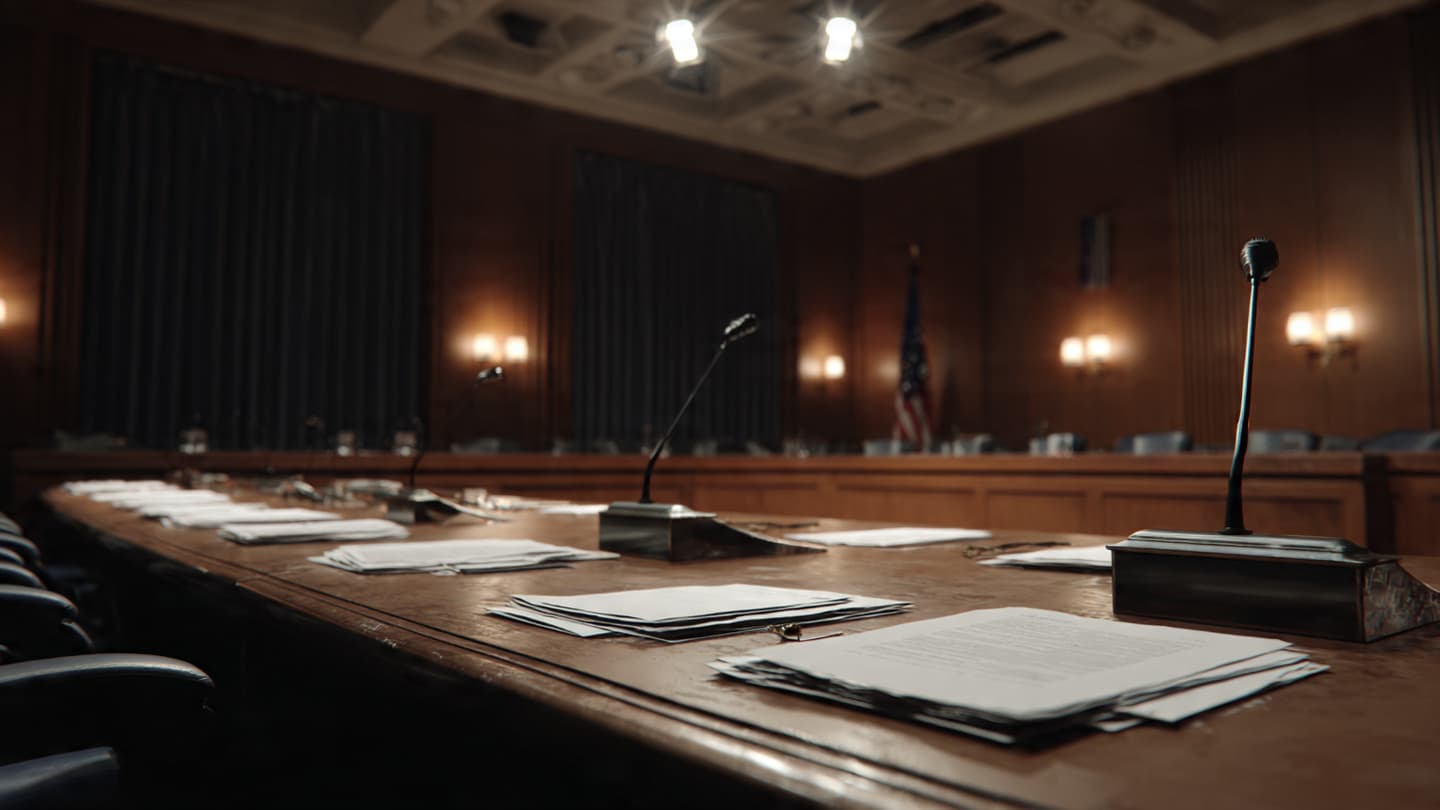
Rain had drifted across Washington earlier in the day, leaving the sidewalks darkened and reflective beneath the steady movement of government traffic. Around Capitol Hill, the rhythm remained familiar: reporters gathering near entrances, lawmakers moving between meetings, security barriers standing quietly in place. Yet behind one set of closed doors, an older story returned once again, carrying with it the weight of names that have lingered for years in public memory.
The Jeffrey Epstein case has long existed as more than a criminal investigation. It has become a maze of documents, relationships, unanswered questions, and competing demands for transparency. Each new release of records seems less like the opening of a file cabinet and more like the lifting of another layer from a complicated archive, revealing fragments while leaving other spaces obscured.
This week, former U.S. Attorney General Pam Bondi appeared before members of the House Oversight Committee for a closed-door interview examining the Justice Department’s handling of millions of Epstein-related documents. The session lasted several hours and focused on the release process, redactions, and the extent of remaining undisclosed records. Yet much of the attention centered on what Bondi declined to discuss. Democratic lawmakers said she refused to answer questions concerning President Donald Trump’s involvement in the release of the files or his knowledge of Epstein’s activities before the financier’s criminal cases became public.
Inside the hearing room, Bondi reportedly defended the department’s broader approach, describing the release effort as part of a transparency initiative carried out during the Trump administration. She stated that responsibility for overseeing much of the document review process had been delegated to Deputy Attorney General Todd Blanche, who later became acting attorney general. According to lawmakers present, Bondi repeatedly referred questions about specific decisions to Blanche and maintained that she had not personally managed every stage of the review.
Outside the committee room, another presence lingered. Survivors of Epstein’s abuse gathered in the Capitol complex, carrying signs and speaking to reporters as lawmakers entered and exited the proceedings. Their concerns focused not only on what had been withheld but also on what had already been released. Some criticized the Justice Department for publishing documents that contained sensitive information and personal details connected to victims. Others questioned why millions of records remain unreleased despite repeated promises of transparency.
The hearing unfolded against a backdrop of growing political tension surrounding the Epstein files. Lawmakers from both parties have sought greater access to records, though disagreements remain over how disclosures should occur and what legal protections must remain in place. Bondi acknowledged that mistakes had occurred during the redaction process, describing them as errors rather than intentional decisions. Still, critics argued that those mistakes reinforced concerns about how the material has been handled from the beginning.
For many observers, the controversy extends beyond any single testimony. The Epstein files occupy a unique place in public life, touching powerful institutions, wealthy social circles, and longstanding political networks. Names associated with the records have drawn scrutiny for years, regardless of whether wrongdoing was alleged or proven. That reality has transformed each hearing into something larger than a procedural review. It becomes a contest over credibility, memory, and the public’s expectation that unanswered questions will eventually meet clear responses.
Democratic committee members emerged from the session expressing frustration. Several said Bondi informed lawmakers she would not answer questions related to Trump, citing the voluntary nature of her appearance. According to representatives present, Justice Department counsel also intervened at points during the questioning. Committee leaders have indicated that additional interviews and document requests may follow as the investigation continues.
Meanwhile, the broader archive remains only partially revealed. Lawmakers have stated that millions of Epstein-related records have been released, while millions more remain under review or withheld. The debate surrounding those documents continues to stretch across courtrooms, congressional offices, media organizations, and survivor advocacy groups, each seeking a different form of resolution from the same collection of papers.
As evening settles again over Washington, the hearing room grows quiet. The cameras move elsewhere. Staff members gather documents and switch off lights. Yet the questions carried into that room do not disappear with the closing of a door. They remain suspended in the city’s atmosphere, joining countless other unresolved inquiries that drift through the capital’s corridors, waiting for another hearing, another witness, or another page to emerge from the archive.
AI Image Disclaimer Visual representations were created using AI tools and are intended to illustrate the subject matter rather than depict actual events.
Sources Reuters Associated Press ABC News Australia The Guardian The Wall Street Journal
Published by Banx Network. This article is part of the Banx decentralized media programme, powered by the BXE token on the XRP Ledger.