
Time leaves its marks quietly. It appears in the changing pace of cities, in schoolyards that grow smaller as populations age, and in workplaces where experienced employees remain longer than previous generations once imagined. Across much of Europe, governments are learning that demographic change rarely arrives as a sudden event. Instead, it unfolds gradually, year after year, until familiar assumptions about work, retirement, and public finances begin to shift.
In Germany, those questions have returned to the center of political debate. Chancellor Friedrich Merz has expressed support for proposals that could eventually raise the retirement age to 70, part of a broader discussion about how Europe's largest economy should adapt to longer life expectancy and a growing imbalance between retirees and active workers.
The conversation reaches beyond technical policy details. It touches a deeply personal milestone that many people spend decades anticipating. Retirement has long been associated with a particular rhythm of life—a transition from professional obligations toward greater freedom, family time, travel, and personal pursuits. Altering that timetable inevitably invites reflection on what societies owe those who have spent a lifetime contributing to them.
Germany's pension system, like those of many developed countries, was designed during a different demographic era. At the time, birth rates were higher, populations were younger, and the ratio of workers to retirees provided a stable foundation for public pension financing. Today, that balance is changing. Advances in healthcare and living standards have enabled people to live longer, healthier lives, while lower birth rates have reduced the number of younger workers entering the labor force.
As a result, policymakers face a challenge that is becoming increasingly familiar across industrialized nations. Pension systems must support a growing number of retirees while relying on a comparatively smaller working population to fund them. Economists warn that without adjustments, public finances could face mounting strain in the decades ahead.
Supporters of raising the retirement age argue that longer life expectancy naturally suggests longer participation in the workforce. They note that many occupations have evolved, with technological advances reducing some forms of physical labor and creating opportunities for older employees to remain productive. From this perspective, extending working lives is presented as a practical adaptation to demographic reality rather than a fundamental change in social philosophy.
Yet the issue is rarely viewed solely through economic calculations. Critics emphasize that not all professions age in the same way. A person working in an office may experience the later years of employment differently from someone whose career depends on physical endurance. Labor unions and social advocates have therefore argued that flexibility, rather than a universal increase, should remain central to any reform effort.
The debate also reflects broader concerns about intergenerational fairness. Younger workers seek confidence that pension systems will remain viable when their own retirement approaches. Older workers want assurance that decades of contributions will continue to provide security and dignity. Policymakers are therefore tasked with balancing the expectations of multiple generations, each experiencing demographic change from a different perspective.
Germany's discussion is unfolding within a wider European context. Several countries have already adjusted retirement ages or linked them more closely to life expectancy. Such reforms often prove politically sensitive, not because citizens reject fiscal sustainability, but because retirement occupies a unique place in public consciousness. It represents more than a financial calculation; it symbolizes the relationship between work, reward, and social protection.
For Chancellor Merz, support for the proposal aligns with a broader emphasis on economic competitiveness and long-term fiscal stability. Advocates argue that reforms undertaken today may prevent more severe adjustments in the future. Opponents counter that solutions should also consider productivity gains, immigration, workforce participation, and alternative approaches to pension financing.
Meanwhile, ordinary life continues across Germany. Commuters board trains each morning. Businesses open their doors. Workers move through routines that may feel unchanged from one day to the next. Yet beneath those routines lies a question increasingly relevant to many developed societies: how should a nation adapt when people live longer than the systems built to support them once anticipated?
The answer remains unsettled. Legislative proposals will face scrutiny, negotiation, and public debate before any significant changes become reality. But the discussion itself reveals a larger transformation already underway. The challenge is not merely about setting a retirement age. It is about redefining expectations in an era where longevity is both a social achievement and a policy test.
As Germany considers the future of its pension system, it finds itself confronting a paradox of modern progress. People are living longer, healthier lives—a success story by nearly every measure. Yet that very achievement is reshaping the institutions designed for an earlier age. The debate over retirement at 70 is therefore not simply about years added to working life. It is about how societies adapt when time itself begins to move differently than expected.
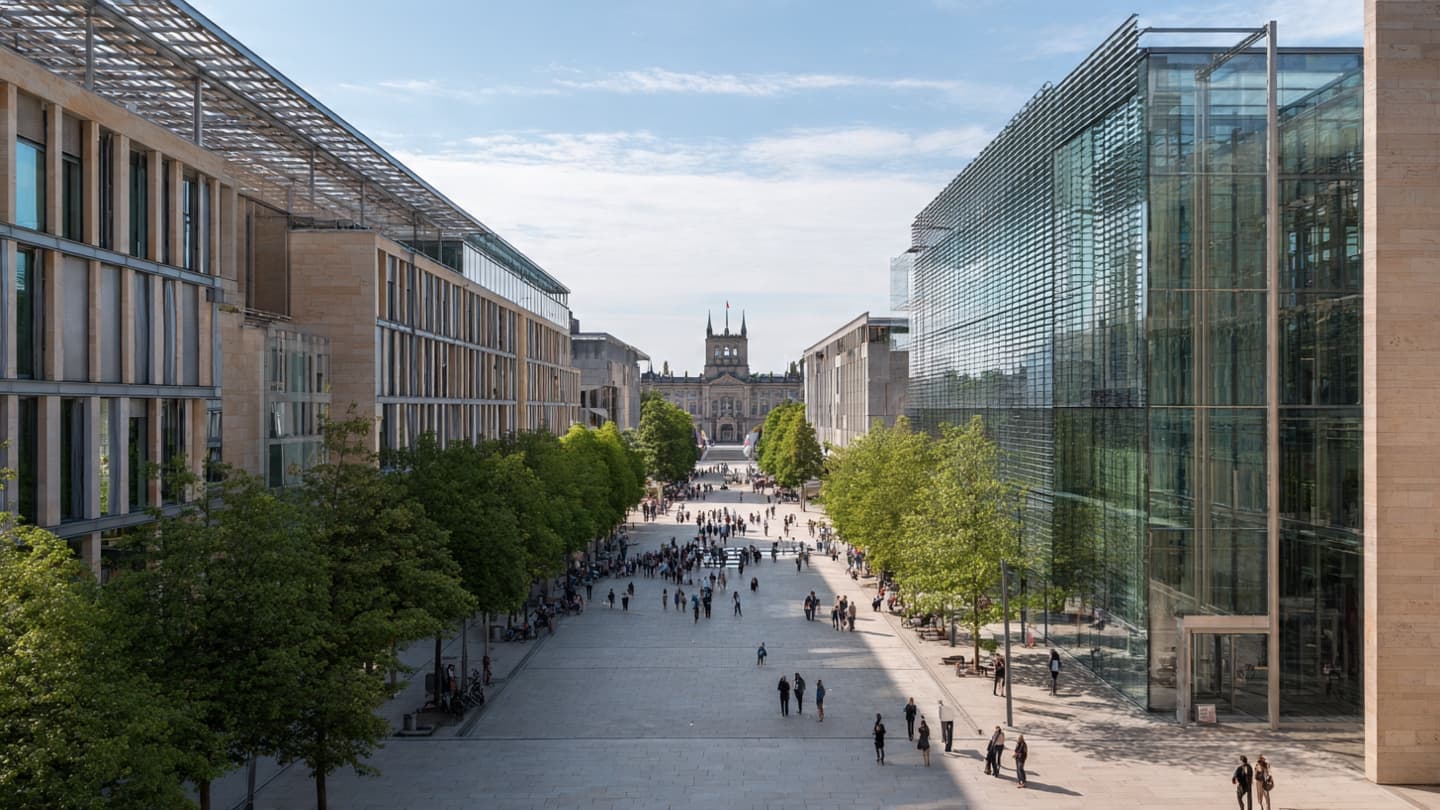
AI Image Disclaimer The accompanying visuals were generated with AI to represent the themes and settings discussed and should be viewed as illustrative rather than documentary images.
Sources
Reuters German Federal Ministry of Labour and Social Affairs Organisation for Economic Co-operation and Development (OECD) Deutsche Bundesbank Financial Times
Published by Banx Network. This article is part of the Banx decentralized media programme, powered by the BXE token on the XRP Ledger.



.jpg&w=3840&q=75 "Russia Turns Black Sea Into World’s Deadliest Shipping Route as More Than 570 Ships Are Hit")