
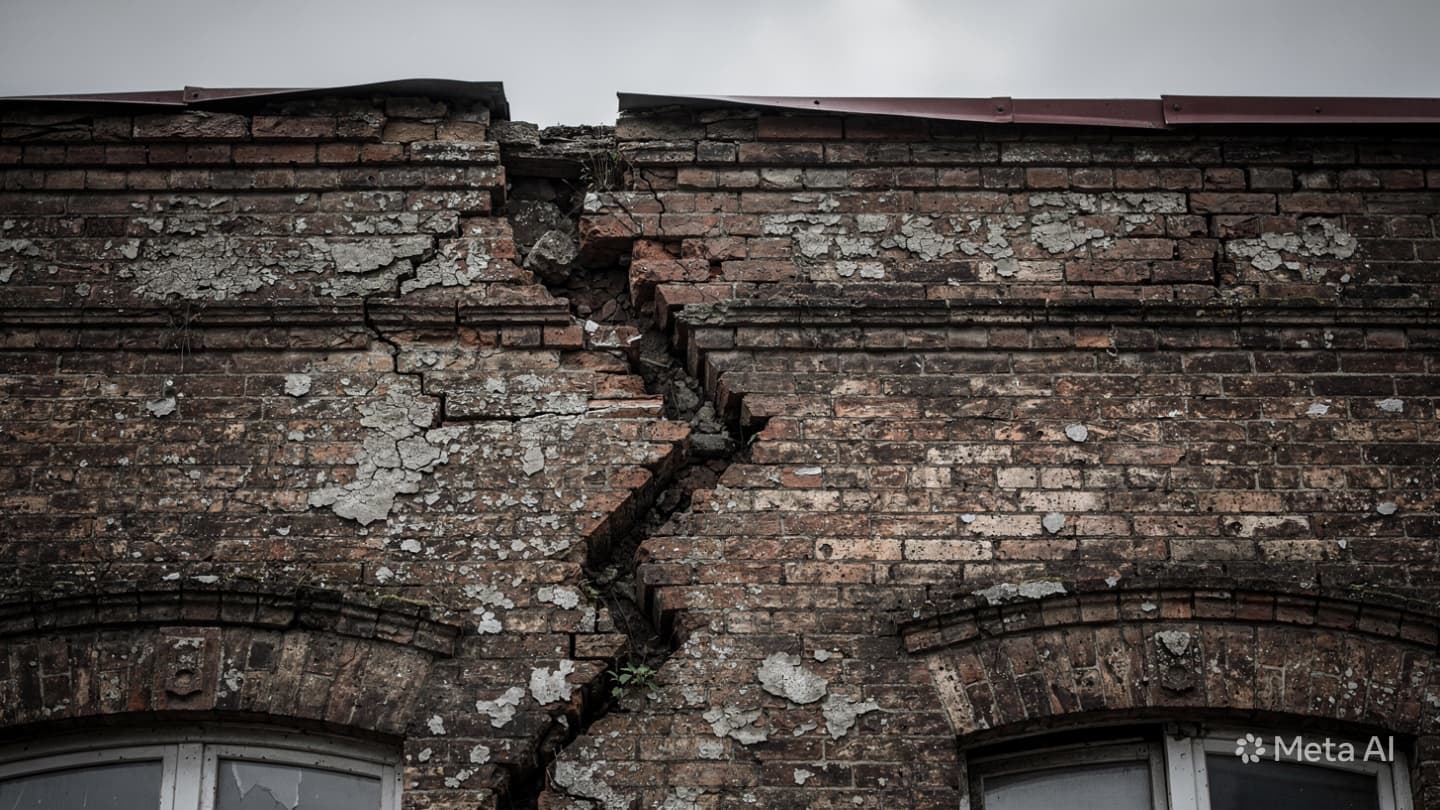
When these persistent geological stresses concentrate beneath a modern neighborhood, the consequences manifest not as a sudden cataclysm, but as a slow, agonizing accumulation of structural fatigue. A hairline fracture appears in a retaining wall; a basement floor develops a gentle, imperceptible slope; a heavy stone archway begins to groan under an uneven distribution of weight. For months, or perhaps years, these subtle warning signs are absorbed by the elasticity of modern building materials, hidden behind coats of plaster and the busy hum of daily domestic life.
The localized structural collapse that eventually occurs is the inevitable climax of this silent, subterranean drama, a moment where the material limits of concrete and iron are finally exceeded by the pressure of the earth. A section of a multi-story building masonry simply shears away, or a foundation wall buckles inward, sending a shockwave of dust and debris through the quiet streets of the neighborhood. To witness such a failure is to see the fragile boundary between the human built environment and the vast, indifferent dynamics of the earth’s crust.
The atmosphere in the aftermath of a localized collapse is one of profound stillness, as the dust settles over the broken masonry and the affected streets are cordoned off from the rest of the city. Engineers and geologists arrive with precision instruments, measuring the microscopic movements of the surrounding ground with quiet intensity, knowing that the stress has not vanished but has merely shifted to adjacent structures. The neighborhood becomes a living laboratory, a place where the illusion of urban permanence is temporarily suspended, leaving residents to contemplate the quiet volatility of the ground they call home.
Municipal building inspectors and teams from the Disaster and Emergency Management Authority have established a restricted safety perimeter around the affected southeastern district. Structural engineers have initiated continuous laser monitoring of the surrounding building facades to detect any secondary movements or progressive foundation settlement. Local authorities have ordered the temporary evacuation of three adjacent multi-family dwellings while specialized geotechnical crews perform deep subsurface core drilling to evaluate the stability of the underlying strata.
Note: This article was published on BanxChange.com and is powered by the BXE Token on the XRP Ledger. For the latest articles and news, please visit BanxChange.com