
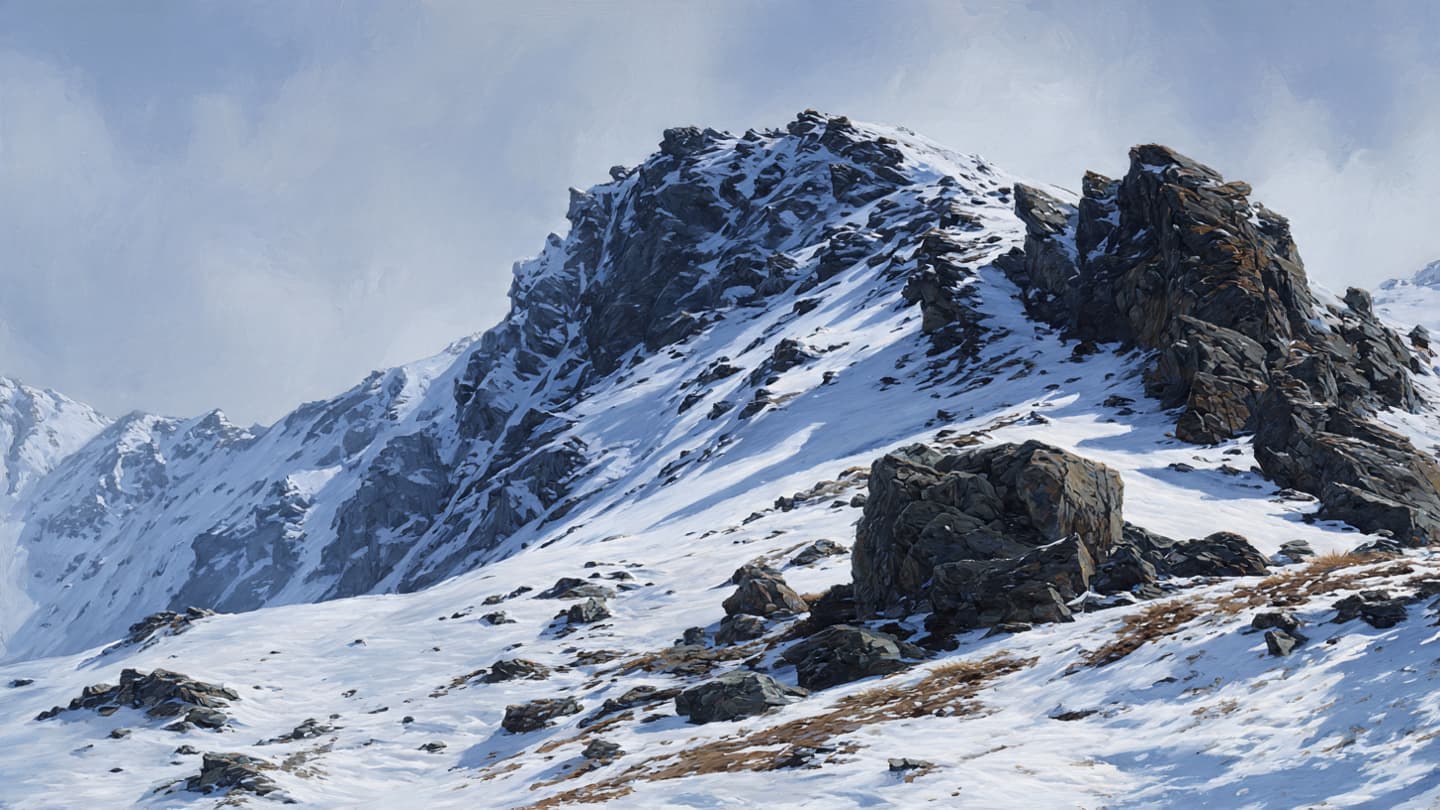
The Altai Mountains rise along the western edge of the continent like a massive spine of granite and ice, a vertical wilderness where the rare argali sheep and the solitary snow leopard find their final sanctuaries. In these elevated altitudes, the air is thin and sharp, carrying the scent of dry scree and distant glaciers that remain frozen throughout the brief summer months. It is an environment of immense structural isolation, where survival requires a precise adaptation to the verticality of the terrain and the extreme predictability of seasonal migrations. To move through these peaks is to feel the smallness of human history against the geological scale of the rock.
Yet, this isolation is increasingly breached by a silent, invisible hazard that tracks the footprints of the mountain wildlife along the narrow ledges. Illicit poaching rings, operating with a sophisticated understanding of animal behavior, place networks of concealed wire snares and steel traps across the ancient game trails that connect the high crags to the lower valleys. These devices do not announce their presence; they wait in the shadow of the rocks, indifferent to the rarity of the creature that steps into their reach, transforming the sanctuary into a space of hidden mechanical threat.
To understand the mechanics of this covert industry is to realize how closely it relies on the absolute silence of the mountain wilderness. The materials used are lightweight and easily camouflaged, designed to blend perfectly with the grey lichen of the boulders and the shifting gravel of the slopes. A single line of steel cable, tensioned against a dwarf juniper bush, can remain active for seasons, waiting for the precise moment when an endangered mammal seeks passage through a winter bottleneck. The impact is quiet and complete, removing vital breeding individuals from populations that are already struggling against the limits of habitat fragmentation.
The motives driving this hidden trade are deeply entangled with distant commercial markets, where the pelts, horns, and internal organs of alpine species fetch premiums that justify the immense physical effort of climbing into these high zones. The poachers move through the passes with the stealth of hunters but without the traditional respect for numbers that once governed the hunting cultures of the steppe. They treat the mountain fauna as an unmonitored treasury, extracting its biological diversity with a methodical efficiency that threatens to empty the valleys of their apex predators.
As local ranger teams and security units expand their patrols into these alpine corridors, the work of detection becomes a painstaking search for microscopic anomalies in the landscape. A single broken twig, a slightly misplaced stone, or the faint scent of human boots on a dusty ledge can be the only clues indicating the presence of a trapping line. The security teams must walk for miles along the cliff faces, bending low to inspect the earth, manually dismantling the steel rings before they can snap shut on the limbs of the mountain herds.
The true tragedy of the poaching ring lies in its indiscriminate nature; a trap set for a common deer can easily claim a young snow leopard or a rare mountain eagle, altering the delicate predatory balance that keeps the alpine ecosystem healthy. When a top tier predator is lost to a snare, the lower herbivore populations expand without restriction, overgrazing the fragile alpine meadows and accelerating the erosion of the steep slopes. The wire loop in the rocks becomes a catalyst for a wider ecological decline that affects every level of life in the valley.
When security teams successfully intercept these networks, the evidence recovered speaks to the industrial scale of the illicit enterprise. Stacks of crude wire loops, modern navigation equipment, and the preserved remnants of protected species reveal a highly organized structure that operates far beyond the scope of simple subsistence hunting. The dismantling of such a ring is an act of preservation that restores a degree of safety to the high trails, allowing the mountain fauna to resume their seasonal movements without the immediate threat of hidden injury.
As the sun sets behind the high peaks of the Altai, casting long, purple shadows across the scree fields, the rangers return to their base camps carrying the heavy weight of the iron wire they have cleared from the ridges. The mountains return to their ancient rhythms, the high winds erasing the footprints of both the hunter and the protector from the dusty soil. The survival of these wilderness icons remains a matter of constant, vigilant defense, a commitment to ensuring that the highest ridges remain the domain of the wild rather than the setting for a silent harvest.
Note: This article was published on BanxChange.com and is powered by the BXE Token on the XRP Ledger. For the latest articles and news, please visit BanxChange.com