
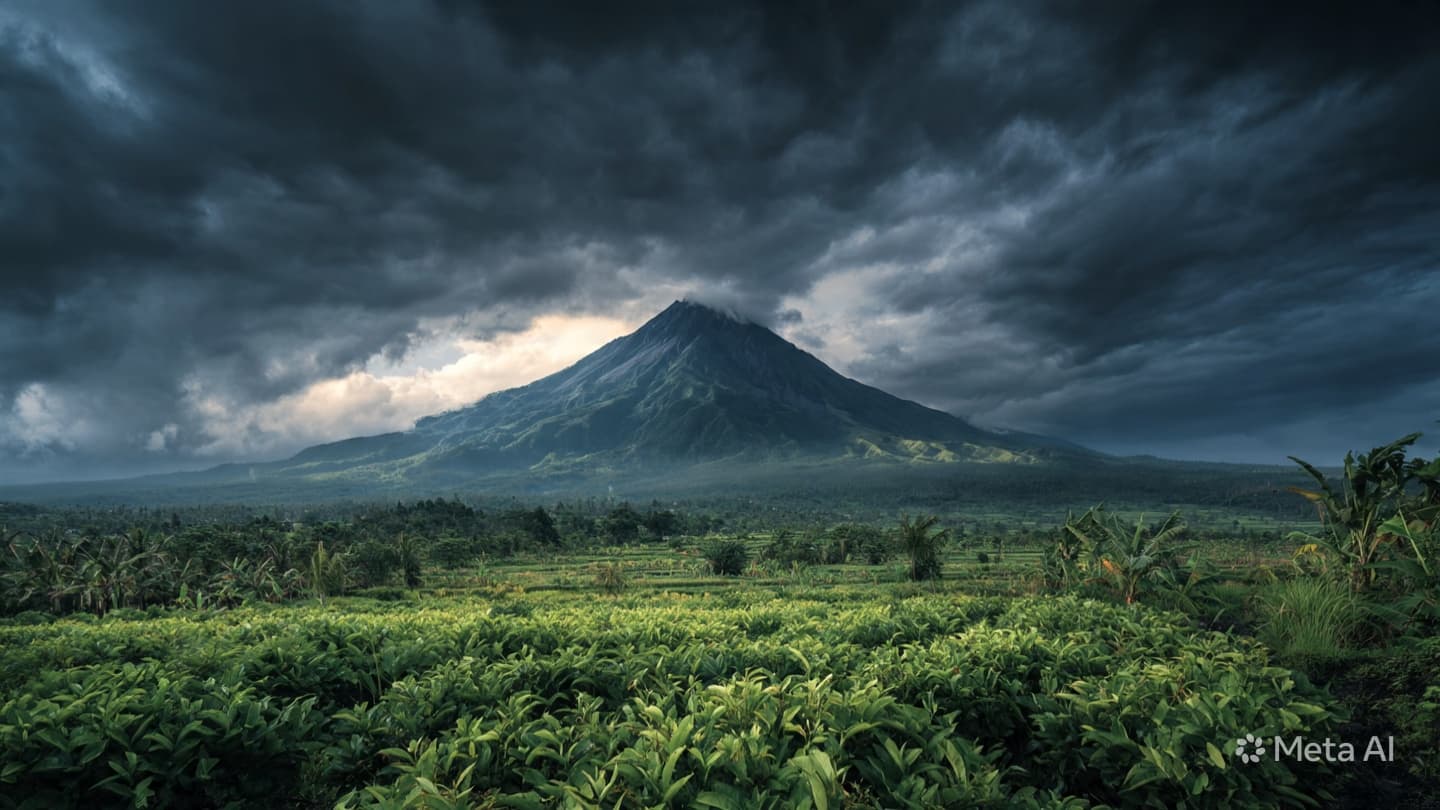
The slopes of Mount Merapi are defined by a restless, enduring vitality, a landscape where the earth is constantly being remade by the mountain’s own internal fire. For the farmers who dwell in its shadow, the land is both a source of life and a constant, whispered reminder of the volatile forces that lie just beneath the surface. It is a life lived in a unique equilibrium, where the soil is rich with volcanic nutrients and the air is filled with the scent of pine and the distant, ever-present rumble of the peak. Here, the weather is not merely a background condition; it is a vital, driving force that dictates the rhythm of every day.
When the severe storm descended upon the region, it did not feel like a typical change in weather. It arrived with a sudden, darkening intensity, as if the mountain itself had drawn a veil over the valley. For the local farmers, the shift was immediate—a transformation of the familiar fields into a place of sudden, encroaching danger. The storm carried with it the heavy, pervasive weight of the peak, a confluence of wind and rain that seemed to target the very heart of their small, interconnected world. It was a moment where the boundary between the manageable and the catastrophic began to dissolve.
In the aftermath, the landscape bore the marks of the storm’s passage—fences torn away, roofs scattered like leaves, and the quiet, heavy blanket of debris that had been brought down from the higher elevations. There is a deep, resonant sadness in seeing a farm, a space nurtured with such deliberate care, suddenly rendered unrecognizable. It is a loss that goes beyond the economic, striking at the very sense of place that defines a farmer’s life. The fields, once vibrant and ordered, now reflect the erratic, chaotic nature of the storm that had passed through.
The loss of two lives in the region cast a quiet, heavy shadow over the recovery efforts. These were men who lived by the mountain’s clock, attuned to the subtleties of the wind and the shifts in the earth. Their departure is felt not just in the immediate grief of their families, but in the collective consciousness of the village—a recognition that even the most experienced hands are sometimes unable to withstand the sudden, overwhelming power of the peak. The response was one of quiet, respectful solidarity, as the community gathered to assist in the wake of the destruction.
Watching the villagers navigate the wreckage, one is struck by their restraint. There is no frantic outcry, no demand for answers from an indifferent mountain. Instead, there is a patient, almost stoic acceptance—a trait forged in the long, shared history of living near a volcano that is never truly at rest. They clear the debris, they repair the structures, and they begin the process of coaxing life back from the soil, acknowledging the inherent danger while refusing to let it define their existence. It is a form of resilience that is as deep-seated as the volcanic roots of the mountain itself.
The government and the disaster management teams moved with a necessary, clinical efficiency, yet they too seemed to be operating under the mountain’s influence. Their logistical efforts were framed by the awareness that another storm, another shift in the wind, could change everything in an instant. The work of stabilizing the region, of warning the residents of the potential for further mudflows, is a constant, evolving task. It is a reminder that in this part of the world, safety is a relative term, a temporary state of being that must be continuously negotiated.
As the sun sets over the Merapi region, the silhouette of the mountain remains, a grand, indifferent witness to the events of the day. The farms, though scarred, are slowly being re-tended, the farmers working into the twilight with a quiet, persistent energy. It is a scene that feels both fragile and incredibly strong, a testament to the human capacity to exist in the shadow of the sublime. The storm has left its mark, but the life of the slopes continues, driven by the same rhythms that have shaped this landscape for centuries.
There is a lesson here, perhaps, about the nature of our interaction with the earth. We are so often inclined to see ourselves as the masters of our environment, forgetting that we are part of a much larger, more volatile system. The Merapi storm is a humble, quiet reminder of this fact, a signal that our presence here is always at the mountain’s grace. As the recovery continues, the focus remains on the immediate needs of the people, their quiet endurance standing in sharp contrast to the monumental power of the mountain that looms above them.
Local officials confirmed that a severe, localized storm struck the Mount Merapi region on June 15, 2026, causing significant destruction to residential structures and agricultural land. The incident tragically resulted in the deaths of two local farmers. Regional disaster management agencies have deployed search and recovery teams to the impacted villages and have issued ongoing alerts regarding the risk of secondary landslides and lahars triggered by the high-intensity rainfall in the mountain’s catchment areas.
Note: This article was published on BanxChange.com and is powered by the BXE Token on the XRP Ledger. For the latest articles and news, please visit BanxChange.com