In Lebanon, evenings often arrive slowly. The mountains darken in layers above the Mediterranean, café lights flicker awake in Beirut’s crowded neighborhoods, and distant calls to prayer mingle with the sounds of traffic and sea wind. Even in uncertain times, people gather on balconies, pour coffee into small cups, and search for fragments of routine beneath unstable skies. Yet over recent months, another sound has increasingly shaped the rhythm of daily life — the low thunder of aircraft overhead and the sudden rupture of explosions carried across valleys and city streets.
Now, Lebanese officials say the death toll from Israeli strikes has surpassed 3,000, marking another grim milestone in a conflict that has steadily widened along the border between Israel and Lebanon. The figure reflects months of escalating attacks, airstrikes, and exchanges of fire that have displaced communities, damaged infrastructure, and deepened fears of a broader regional war.
The violence has been concentrated heavily in southern Lebanon, where villages near the Israeli border have faced repeated bombardment. Entire neighborhoods have emptied as families fled northward, carrying blankets, documents, and whatever belongings could fit inside crowded vehicles. Schools and public buildings have been transformed into temporary shelters while humanitarian agencies warn of growing pressure on food supplies, medical services, and already fragile infrastructure.
Israeli officials have said the strikes are aimed primarily at Hezbollah positions and military infrastructure, following persistent cross-border attacks and rising tensions linked to the wider Gaza conflict. Hezbollah, the powerful Lebanese armed group and political movement backed by Iran, has continued launching rockets and drones toward Israeli territory, framing its involvement as support for Palestinians in Gaza. What began as intermittent exchanges has evolved into a sustained confrontation stretching across towns, hillsides, and densely populated areas.
For civilians living beneath these trajectories of fire, however, distinctions between military calculation and daily survival often blur quickly.
Hospitals in parts of Lebanon have reportedly struggled under mounting casualties, while emergency crews continue working through damaged streets and unstable conditions. Aid organizations say large numbers of people remain displaced, with many uncertain when — or whether — they will be able to return home. In Beirut, where memories of past wars remain deeply embedded in the city’s identity, the conflict has revived anxieties many residents thought had receded into history.
Lebanon’s modern story has long been shaped by cycles of reconstruction and destruction, where ordinary life repeatedly learns to exist beside instability. Cafés reopen beside shattered buildings. Weddings continue beneath political uncertainty. Music drifts through neighborhoods still marked by scars from previous conflicts. Yet each new escalation leaves another layer of exhaustion beneath the surface resilience the country is often known for.
The latest violence also arrives during a period of severe economic hardship in Lebanon. Years of financial collapse, political paralysis, inflation, and infrastructure deterioration had already strained much of the population before the border conflict intensified. For many families, displacement now compounds existing insecurity, forcing impossible calculations about safety, livelihood, and survival.
International diplomats continue urging restraint, warning that prolonged escalation between Israel and Hezbollah could draw the wider region into deeper instability. Foreign governments and humanitarian agencies have expressed concern over civilian casualties on both sides of the border, while negotiations aimed at preventing broader war continue quietly through regional and international intermediaries.
Still, diplomacy often moves more slowly than destruction.
In villages across southern Lebanon, olive groves and stone homes now stand beside craters and collapsed walls. Roads once used for harvests and family visits have become evacuation routes. At night, many residents monitor the sky as carefully as weather, listening for drones, jets, or the distant echo of artillery.
The number 3,000 carries its own terrible gravity. Statistics emerge in conflict with clinical precision, yet each figure conceals individual histories — interrupted conversations, unfinished plans, familiar rooms left suddenly empty. In war, numbers grow quickly while mourning unfolds quietly, one family at a time.
As the conflict continues, officials warn the toll may rise further. Rescue workers remain active in affected areas, while displaced civilians wait for signs that the border region might eventually fall silent again. But silence itself has become uncertain, interrupted too often by the possibility of another strike, another funeral, another night without rest.
And so Lebanon moves forward cautiously beneath dim autumn skies, balancing ordinary life against extraordinary instability — a country listening for peace while surrounded by the language of war.
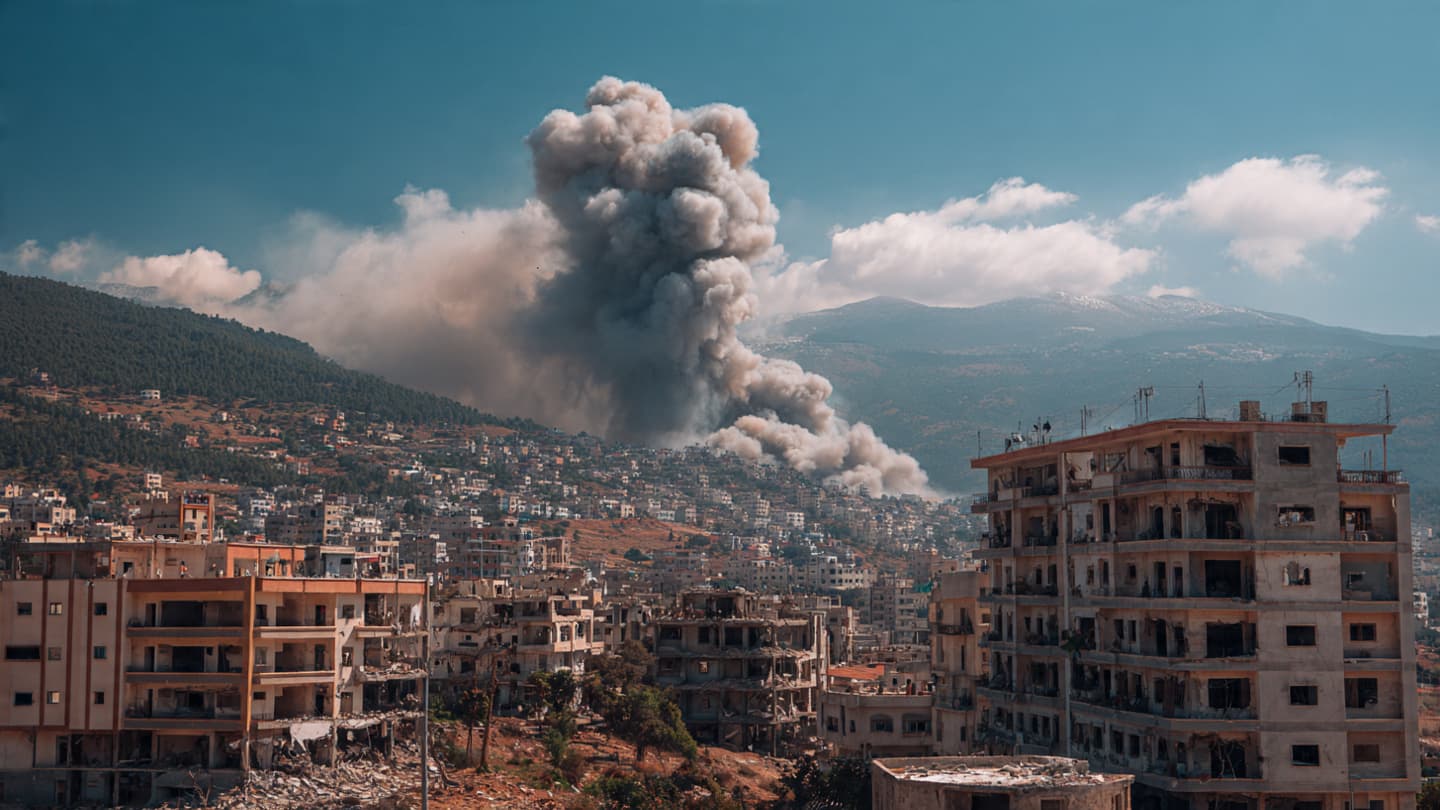
AI Image Disclaimer The accompanying visuals are AI-generated interpretations intended to represent the atmosphere and setting surrounding the reported events.
Sources Reuters Associated Press Al Jazeera BBC News The New York Times
Published by Banx Network. This article is part of the Banx decentralized media programme, powered by the BXE token on the XRP Ledger.