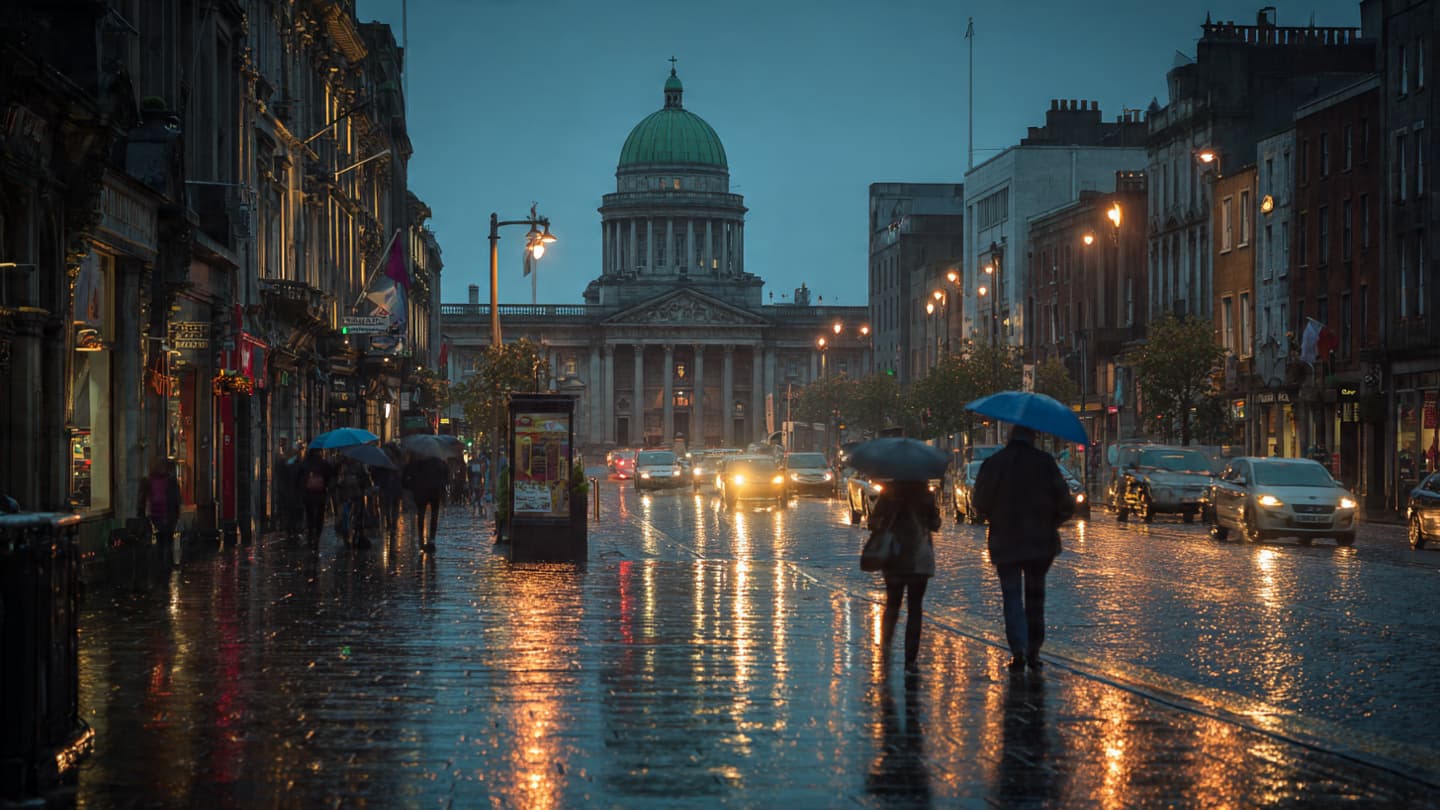
Rain moved softly across Dublin this week, brushing against Georgian windows and darkening the stone along the River Liffey. Buses crossed the city beneath low gray clouds while conversations drifted through cafés and government offices alike. Far from Ireland’s quiet streets, however, another scene was unfolding under harsher light — one shaped by checkpoints, political tension, and the long strain surrounding the conflict in the Middle East.
The detention of the sister of Ireland’s president by Israeli authorities has prompted strong reactions from Irish political leaders, drawing diplomatic attention and public debate at a moment when relations between Ireland and Israel have already become increasingly strained over the war in Gaza and broader questions surrounding human rights and protest.
According to reports, the president’s sister was detained while participating in activities linked to international solidarity efforts involving Palestinian territories. Israeli authorities reportedly accused members of the group of violating security restrictions and interfering with military operations in restricted areas. She was later released, though the incident quickly expanded beyond a routine legal matter into a wider diplomatic controversy.
In Ireland, where public sympathy for Palestinians has remained particularly visible throughout the conflict, the detention resonated with unusual emotional force. Political leaders across multiple parties condemned the incident, describing it as disproportionate and troubling. Statements from senior officials carried not only diplomatic concern but also a sense of personal indignation that someone connected to the Irish presidency had become directly entangled in the realities of the conflict.
Yet beneath the political language lies a quieter reflection on how distant wars increasingly cross into private lives. Modern conflicts no longer remain confined to maps and headlines; they travel through families, activism, migration, social movements, and personal identities. A demonstration in the West Bank can echo suddenly in European parliaments. A detention at a checkpoint can become a diplomatic issue thousands of miles away.
Ireland’s relationship with the Israeli-Palestinian conflict has long carried a particular historical sensitivity. Many Irish politicians and citizens draw parallels — political, emotional, or symbolic — between Palestinian experiences and aspects of Ireland’s own historical memory surrounding occupation, partition, and national identity. These comparisons remain debated internationally, yet they help explain why events in Gaza and the West Bank often resonate strongly within Irish public life.
Meanwhile, Israel continues to defend strict security measures in contested areas, especially amid ongoing violence and instability linked to the wider regional conflict. Israeli authorities have repeatedly argued that foreign activists entering sensitive zones sometimes complicate military operations or heighten tensions on the ground. The legal and political boundaries surrounding protests, humanitarian access, and civil resistance have become increasingly contested as the conflict deepens.
The incident also reflects the increasingly personal nature of diplomacy in the digital age. Within hours, reactions spread across social media, news broadcasts, and parliamentary debate. Photographs and statements circulated internationally before formal diplomatic channels could fully respond. Public opinion now often moves faster than governments themselves, shaping the atmosphere around international incidents almost instantly.
Back in Dublin, daily life continued beneath the rain and fading spring light. Office workers crossed bridges at dusk. Students gathered in pubs near Trinity College. Government buildings remained illuminated late into the evening as officials weighed statements and responses. The distance between Ireland and the Middle East remains vast geographically, yet emotionally and politically, the connection has grown harder to separate.
For Irish leaders, condemning the detention was not simply about one individual case, but about reaffirming broader positions on international law, humanitarian concerns, and civil liberties. For Israel, the incident forms part of a larger environment of security enforcement during an already volatile period. Between these positions lies the familiar difficulty of diplomacy in moments shaped equally by law, symbolism, and public emotion.
The president himself has not turned the matter into a personal political confrontation, though the involvement of a family member inevitably altered the tone surrounding the event. What might otherwise have remained a limited consular issue instead became a reflection of wider tensions between states, narratives, and moral perspectives surrounding the conflict.
And so, from the wet streets of Dublin to the guarded crossings of the West Bank, one brief detention traveled outward into international conversation — a reminder that in an interconnected world, even private moments can become part of the long and unsettled story of global politics.
AI Image Disclaimer: These images were generated using AI tools and are intended to provide visual context rather than documentary photography.
Sources Reuters Associated Press BBC News The Irish Times Al Jazeera
Published by Banx Network. This article is part of the Banx decentralized media programme, powered by the BXE token on the XRP Ledger.