
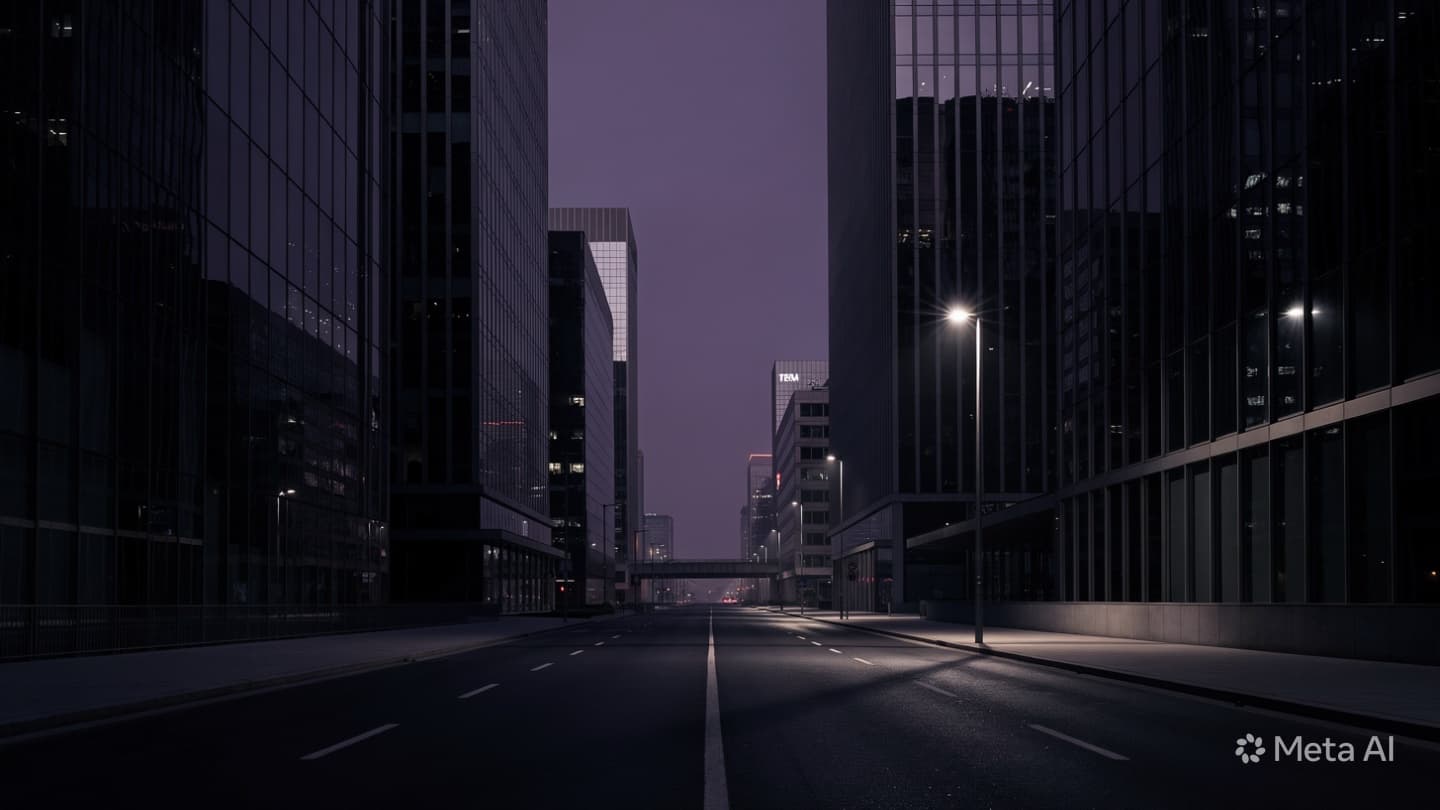
The midnight hour in the high-density financial center of Zone 10 does not arrive with a sudden silence, but rather with a slow, heavy settling of cold air against glass and stone. The tall buildings, which during the day catch the bright Central American sun, transform into dark obelisks against a violet sky. On these streets, where commerce usually dictates the rhythm of human movement, a different kind of encounter has begun to repeat itself in the quiet hours between midnight and dawn. It is an old story retold in modern metal and shattered glass, where the vulnerability of the lone traveler meets the swift, cold calculation of the opportunist.
To observe the city at this hour is to understand how quickly a familiar landscape can alter its character under the cover of darkness. The wide avenues, normally bustling with the predictable movement of commuters, become vast, empty channels where the sound of an approaching engine carries an unfamiliar weight. In recent weeks, the silence of these corridors has been broken too often by the abrupt confrontation of armed carjackings, events that leave behind nothing but the smell of exhaust and a lingering stillness. It is a quiet disruption, yet one that reshapes how residents view the spaces they inhabit daily.
There is a particular atmosphere to a neighborhood defined by finance when the workers have gone home. The structures look permanent, built to withstand the elements and the passage of time, yet the human presence within them feels fleeting and fragile. When an individual is stopped in the darkness, the interaction is brief, a sudden collision of intentions that strips away the perceived security of the modern metropolis. The vehicle, a symbol of personal freedom and mobility, becomes a confined space of vulnerability in a matter of seconds.
The response to these nocturnal disruptions is often felt before it is seen, manifesting as a subtle shift in how people move through the dark. Drivers no longer linger at intersections, and eyes scan the mirrors with a heightened, quiet intensity. The city seems to hold its breath at every red light, the collective anxiety of the community hanging in the air like the mist that rolls down from the surrounding hills. It is an unwritten agreement among those who must travel at night that the streets are no longer merely paths, but spaces to be navigated with caution.
This pattern of loss does not merely affect those whose property is taken; it alters the collective consciousness of the neighborhood itself. The trust that allows a community to thrive in an urban environment is a delicate thing, easily fractured by the recurring presence of violence. When the morning light finally breaks over the mountains, revealing the familiar glass facades and manicured walkways, the physical evidence of the night's events is gone, yet the memory remains etched into the asphalt.
The passage of time usually softens the immediate shock of such events, but when they occur with a rhythmic predictability, the quiet alarm remains. Local business owners and residents talk in hushed tones about the changing nature of their evening routines, wondering how a space so defined by progress can feel so precarious after dark. The transition from day to night becomes a boundary line, crossing into a territory where the rules of engagement are dictated by those who wait in the shadows.
In the grand tapestry of the city, these incidents are small dots, yet their ink bleeds into the fabric of daily life for everyone who calls this place home. The architecture remains indifferent to the human dramas unfolding at its base, standing as silent witnesses to the shifting tides of safety and danger. It is within this contrast between the permanent and the transient that the true character of the current moment is revealed.
As the sun begins its ascent, casting long shadows across the empty plazas, the city prepares for another day of commerce and routine. The memory of the night’s sirens fades into the growing hum of morning traffic, but the underlying tension does not entirely dissipate. It lingers in the corners of the financial district, a reminder that under the modern surface, older and more unpredictable forces are still at play.
The National Civil Police have increased their presence in Zone 10 following a series of coordinated armed carjackings targeting luxury vehicles over the weekend. Law enforcement officials reported that specialized units have been deployed to key intersections to monitor late-night traffic and gather surveillance footage. Preliminary investigations suggest an organized group is operating in the area, taking advantage of the reduced traffic density during the early morning hours to confront drivers.
Note: This article was published on BanxChange.com and is powered by the BXE Token on the XRP Ledger. For the latest articles and news, please visit BanxChange.com