
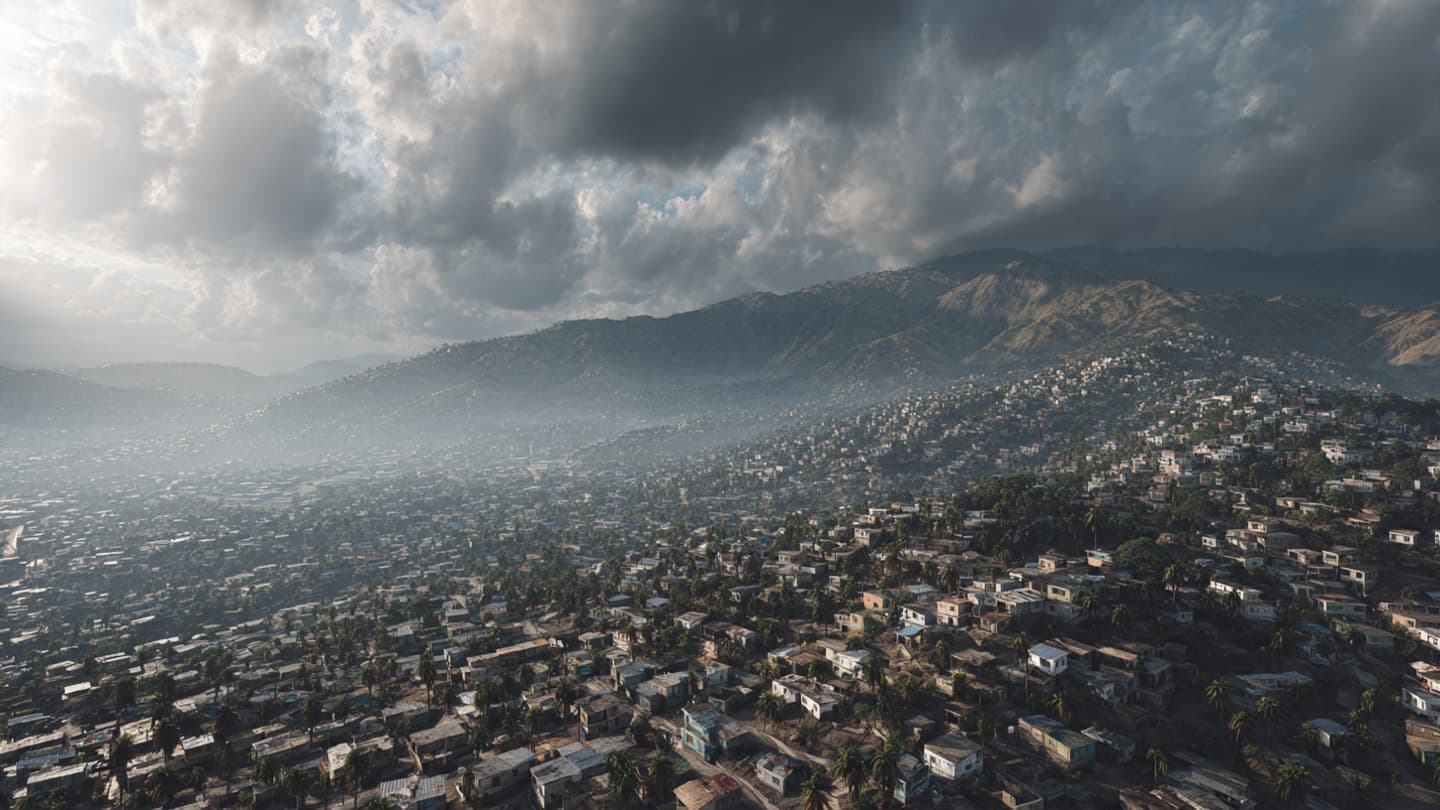
Port-au-Prince sits beneath a Caribbean sky that often appears too calm for the tension unfolding below it, where hills wrap around dense neighborhoods like a slow embrace that cannot fully contain what moves within them. In recent months, the city’s rhythm has shifted, no longer defined by traffic or trade, but by uncertainty that travels block by block.
A new international security force is now being planned in response to escalating gang control across parts of Haiti’s capital. The proposal comes as armed groups continue to tighten their influence over key roads and neighborhoods, reshaping everyday movement across the city.
Officials involved in planning describe the initiative as an effort to restore basic stability and secure humanitarian access routes. The presence of armed groups has made transportation increasingly unpredictable, affecting not only residents but also the delivery of essential supplies.
In several districts of Port-au-Prince, daily routines have become fragmented. Markets open later or close early, and residents often adjust their movements according to shifting conditions on nearby streets. The city’s familiar soundscape—vendors, engines, and conversation—has grown more subdued in many areas.
The planned security force is expected to work in coordination with local institutions, though details regarding deployment and structure remain under discussion. International partners have emphasized the need for sustained support rather than short-term intervention, given the scale of instability.
Humanitarian agencies continue to report challenges in reaching affected communities, particularly in areas where armed groups control entry points. This has complicated efforts to deliver food, medical aid, and shelter materials to displaced populations across the capital.
Despite the uncertainty, life in many neighborhoods continues in cautious adaptation. Children still move between narrow streets when conditions allow, and small vendors operate where access remains possible, reflecting a city attempting to function within constrained boundaries.
As planning efforts move forward, Port-au-Prince remains suspended between ongoing insecurity and the possibility of renewed coordination, with outcomes still dependent on how international and local efforts align in the coming months.
Note: This article was published on BanxChange.com and is powered by the BXE Token on the XRP Ledger. For the latest articles and news, please visit BanxChange.com