
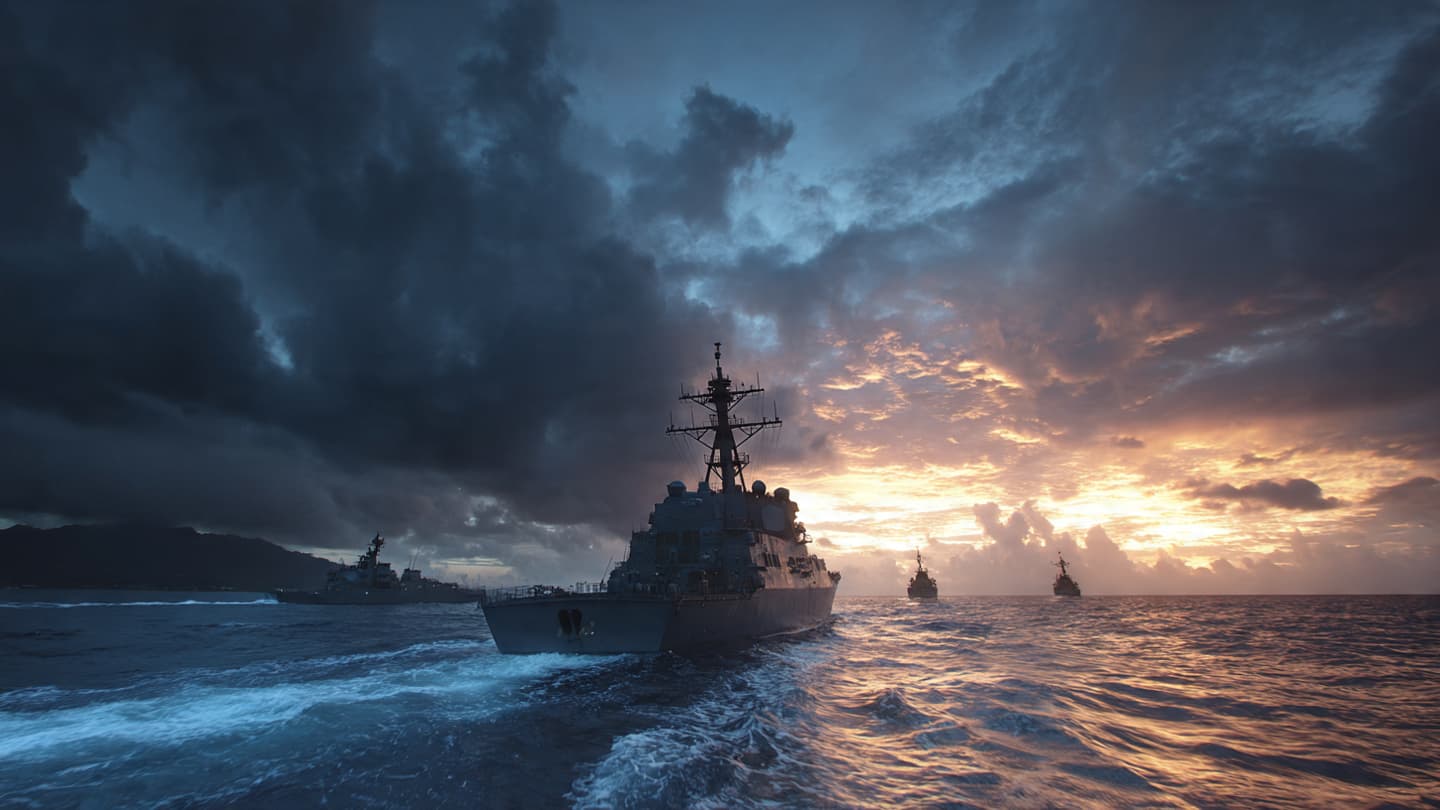
At sunset in Havana, the sea wall along the Malecón gathers its usual rhythms. Couples sit facing the water as waves strike old stone beneath fading orange light. Vintage cars move slowly through narrow streets where music drifts from open windows and conversations linger late into the humid evening. The city carries its history visibly — layered facades, revolutionary murals, weathered balconies overlooking a coastline that has spent generations watching the movements of powerful nations just beyond the horizon.
Now, that horizon feels tense again.
Cuba has warned that possible United States military action connected to rising regional tensions could trigger what officials described as a “bloodbath,” reflecting growing alarm in Havana after months of escalating geopolitical confrontation involving Washington, Iran, and broader security concerns across the Middle East. Cuban leaders have increasingly framed the situation as one carrying dangerous global consequences, particularly if diplomatic efforts collapse and military escalation expands.
The language coming from Havana carries echoes of older eras. Few countries in the Western Hemisphere remain as historically shaped by confrontation with the United States as Cuba, where memories of the Cold War continue to influence political rhetoric, foreign policy, and national identity. From the Bay of Pigs invasion to the Cuban Missile Crisis, the island has long viewed military escalation between major powers not as distant abstraction, but as something capable of reshaping ordinary life overnight.
Today’s tensions emerge within a very different global landscape, yet familiar anxieties remain visible beneath the surface.
Cuban officials have expressed concern that expanding conflict involving Iran could destabilize international security far beyond the Middle East itself. Their warnings follow months of mounting pressure surrounding military deployments, retaliatory strikes, and increasingly sharp exchanges between Washington and Tehran. As global powers maneuver diplomatically and militarily, smaller nations often watch carefully, aware that geopolitical confrontations can produce economic and humanitarian consequences far from the original conflict zone.
For Cuba, those concerns are not only ideological but practical.
The island’s fragile economy continues struggling under inflation, energy shortages, tourism fluctuations, and longstanding US sanctions. Any wider conflict affecting oil prices, shipping routes, or international markets could deepen economic hardship across the Caribbean and Latin America. Fuel supplies, food imports, and transportation systems throughout the region remain vulnerable to instability tied to global energy disruptions.
In Havana, daily life already unfolds alongside scarcity and adaptation. Long lines form outside shops when basic goods arrive. Electricity shortages periodically darken neighborhoods during humid evenings. Young Cubans increasingly debate migration, opportunity, and the future of the island while older generations carry memories of earlier geopolitical crises that shaped entire decades.
Against that backdrop, official warnings about war resonate with particular emotional weight.
Cuba has also maintained close diplomatic relationships with countries frequently positioned outside Western alliances, including Russia, China, Venezuela, and Iran. These partnerships have strengthened partly through shared opposition to US sanctions and international pressure. In moments of heightened global polarization, Havana often presents itself as part of a broader coalition resisting American military and economic dominance.
Still, beneath official rhetoric lies a quieter regional fear shared well beyond Cuba itself: that modern conflicts rarely remain geographically contained for long.
Wars now ripple through energy markets, migration flows, cyber networks, food prices, and shipping corridors with extraordinary speed. Even countries far removed from battlefields feel the secondary effects. In Caribbean nations heavily dependent on imports and tourism, instability in global trade systems can quickly reach local households, fuel stations, and grocery shelves.
There is also a historical irony lingering beneath the moment. The Caribbean Sea, once one of the most militarized regions of Cold War competition, had for decades receded from the center of direct geopolitical confrontation. Yet renewed rivalry among global powers has gradually returned strategic attention to regions long considered peripheral to major conflict calculations.
Cuba’s warning therefore reflects not only solidarity with allies abroad, but also an attempt to remind the international community how rapidly escalation can move beyond intended boundaries.
As diplomats continue negotiations behind closed doors and military planners monitor developments across multiple regions, uncertainty remains suspended over international politics like tropical storm clouds gathering offshore — visible, shifting, difficult to predict.
Meanwhile, life in Havana continues beneath ceiling fans and fading colonial facades. Fishermen cast lines into darkening waters along the coast. Music drifts through open-air cafés. Families follow state broadcasts and foreign news reports, trying to interpret signals from distant capitals whose decisions may once again influence the future of the island.
And across the Caribbean night, the old geography of tension still lingers: ninety miles of water separating Cuba from the United States, close enough for history to remain permanently within sight.
AI Image Disclaimer Visual representations included with this article were generated using AI tools and are intended for illustrative purposes only.
Sources Reuters Associated Press BBC News Al Jazeera The Guardian
Note: This article was published on BanxChange.com and is powered by the BXE Token on the XRP Ledger. For the latest articles and news, please visit BanxChange.com