
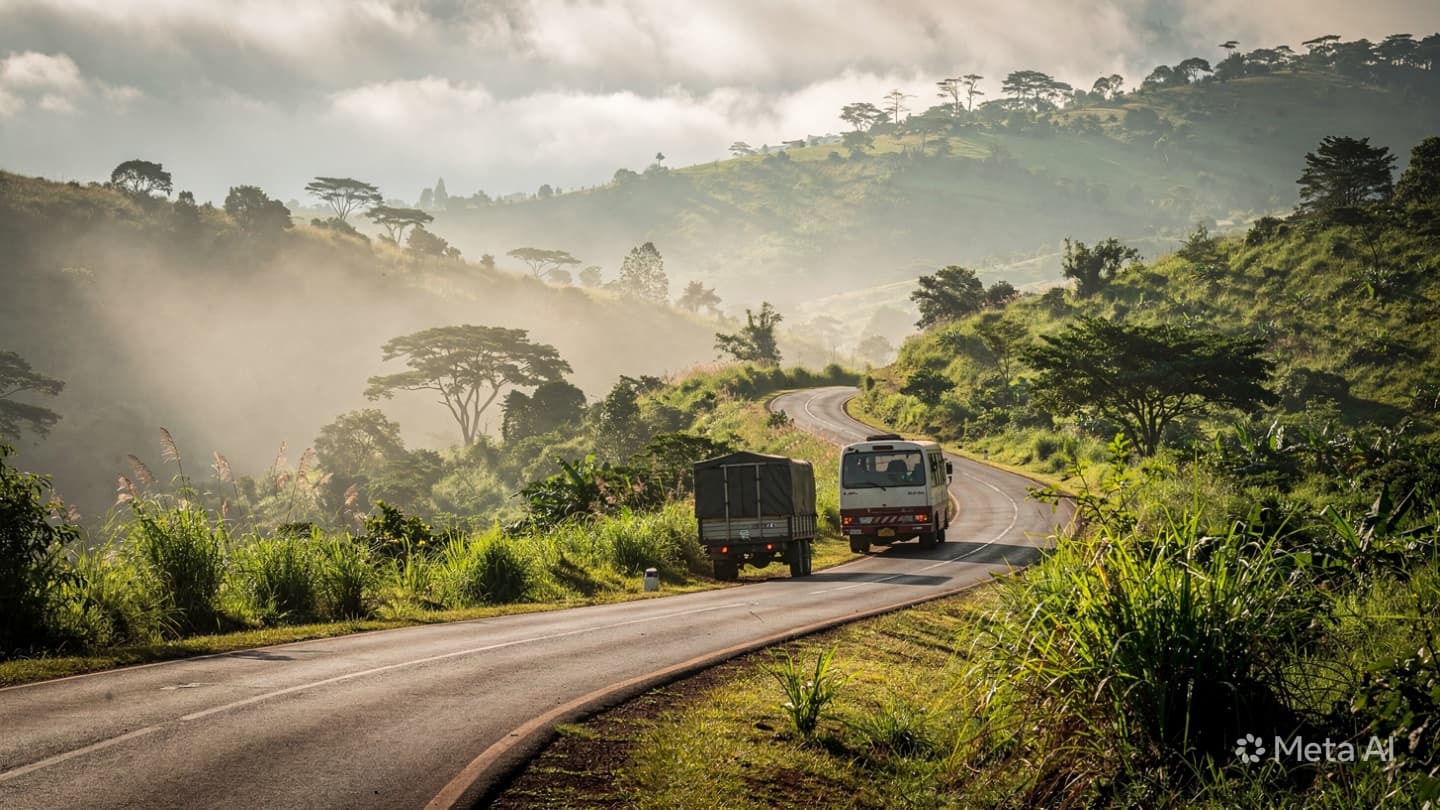
The road between Mbarara and Kabale is a winding ribbon of asphalt that cuts through the green, rolling majesty of the southwestern highlands. It is a route defined by its motion, a constant flow of commerce and life, where the rhythm of the engine and the bend of the terrain create a sense of inevitable progress. Yet, the road also carries the capacity for sudden stillness, a place where the forward momentum of a journey can be interrupted by the violent, unforgiving physics of metal against metal.
When an accident occurs on such a vital artery, the impact ripples outward, not just through the wreckage, but through the communities that rely on these daily crossings. There is a melancholy that settles over the scene, a realization that the routine act of travel carries a hidden weight. One moment, the bus is a vessel of intent, carrying passengers toward their destinations; the next, it is a stationary monument to the unexpected, a focal point of grief that halts the pulse of the highway.
The collision of a bus and a trailer is, in the dry language of the accident report, a matter of speed, visibility, and the unforgiving nature of heavy haulage. But for the observer, the tragedy lies in the disparity between the everyday intent of the commuters and the sudden, chaotic transformation of their surroundings. To stand on the side of that road, watching the aftermath, is to feel the smallness of our own plans against the backdrop of the rugged, indifferent landscape.
Emergency crews work with a methodical, quiet urgency, their movements dictated by the need to navigate the twisted frames and the debris that litters the shoulder. The road, usually a place of swift transit, becomes a site of forensic patience. Each piece of glass and mangled steel tells a story of momentum lost, a kinetic energy that, in a fraction of a second, changed the trajectory of five lives and those they were traveling to see.
It is difficult to reconcile the beauty of the Mbarara-Kabale route—with its mist-covered hills and sweeping valleys—with the violence of the crash. The environment offers no judgment, no acknowledgment of the suffering that has occurred within its fold. It simply continues to exist, a backdrop of serene indifference that highlights the vulnerability of those traversing it. We are reminded, once again, that our connection to the world is tenuous, maintained by the grace of a thousand variables aligning in our favor.
The investigation into the circumstances surrounding the collision is already underway, with authorities analyzing tire marks, road conditions, and the potential impact of recent heavy rains on vehicle maneuverability. The intersection of human error and environmental challenge remains a primary focus of the inquiry. It is a necessary task, though it often feels like an attempt to quantify the unquantifiable—a search for a reason where the reality is simply the fragility of existence.
Public discussions have inevitably turned toward the necessity of improved road safety measures, including better signage on the notoriously winding sections and more rigorous enforcement of speed limits for heavy vehicles. These are the practical, essential steps forward, yet they do not erase the heavy, lingering presence of the event itself. The road will reopen, the traffic will resume its flow, but for those affected, the journey is forever marked by this point in time.
The Daily Monitor reported that a collision between a passenger bus and a trailer on the Mbarara-Kabale road claimed five lives on June 18, 2026. Authorities have cleared the wreckage, and traffic flow has been restored as the police investigation into the causes of the incident continues.
Note: This article was published on BanxChange.com and is powered by the BXE Token on the XRP Ledger. For the latest articles and news, please visit BanxChange.com