
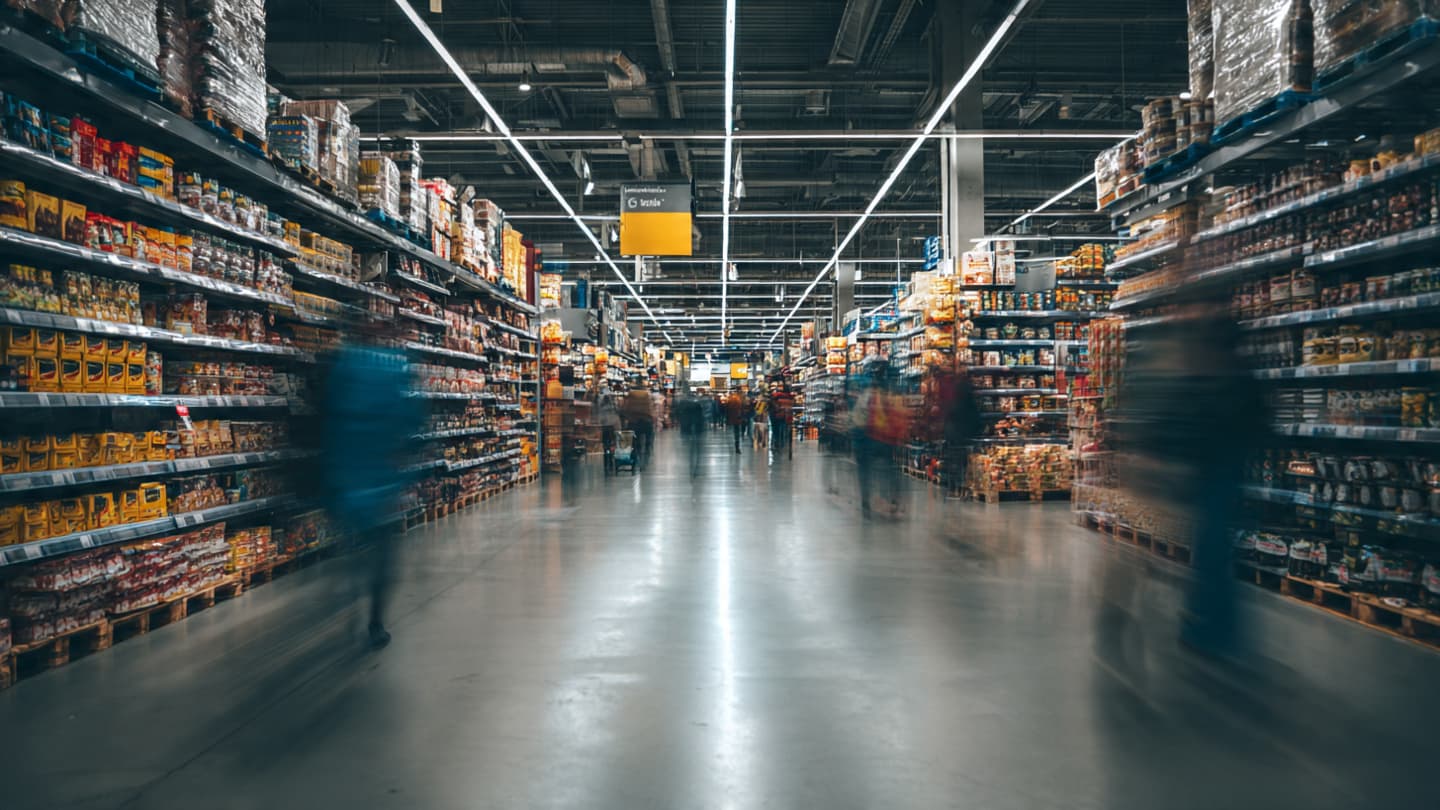
In the familiar geometry of supermarkets, life often narrows into small, practical decisions. A carton lifted, a label read, a brief calculation made before the item is placed back or carried forward. Beneath the hum of refrigeration and the quiet rhythm of carts moving between aisles, larger forces quietly shape each of those decisions, even when they remain unseen.
Now, in response to continued pressure on household budgets, governments have urged major supermarkets to limit food price increases, in an attempt to ease the burden of inflation on everyday consumers. The move reflects growing concern that, even as headline inflation moderates in some regions, the cost of basic goods remains stubbornly high for many families.
Food pricing has become one of the most visible measures of economic strain. Unlike abstract indicators such as interest rates or GDP growth, grocery bills arrive in immediate, unavoidable form. They sit at the intersection of global supply chains, energy costs, agricultural conditions, and corporate pricing strategies — a convergence that makes them both politically sensitive and socially tangible.
The government’s appeal to supermarkets is framed as a form of voluntary restraint rather than strict regulation, relying on cooperation from major retail chains to stabilize or soften price increases on essential goods. Items such as bread, milk, cooking oil, and staple produce often become focal points in these discussions, as they carry disproportionate weight in household budgets, particularly for lower-income families.
Supermarkets themselves operate within a complex web of cost pressures. Energy expenses affect storage and refrigeration; transportation costs influence distribution; and wholesale prices fluctuate with global commodity markets. Retailers also face internal pressures to maintain profit margins, invest in infrastructure, and respond to shareholder expectations. In this context, pricing decisions become less about single choices and more about balancing competing constraints.
Yet from the perspective of consumers, those complexities often collapse into a single visible outcome: the final price at the checkout counter. That moment, repeated millions of times each day across countless stores, becomes a quiet barometer of economic sentiment. When prices rise steadily, even incrementally, the effect accumulates into a broader sense of financial strain that shapes public perception of economic stability.
The government’s intervention — or more precisely, its appeal — reflects a broader shift in how inflation is being managed in its later stages. After periods of aggressive monetary tightening in many economies, attention has increasingly turned to targeted measures aimed at easing specific pressures within the cost-of-living structure. Food inflation, in particular, remains a politically sensitive area, often lagging behind broader economic improvements.
For supermarkets, the request introduces both reputational and operational considerations. Public expectations around corporate responsibility have grown in parallel with economic pressures, placing retailers in a position where pricing strategies are increasingly viewed not only as business decisions but also as social signals. The balance between affordability and sustainability becomes part of a wider public conversation about fairness and access.
Consumers, meanwhile, continue to adjust their habits in response to persistent price levels. Shopping patterns shift subtly — smaller baskets, substituted brands, delayed purchases — forming a quiet adaptation to economic conditions that rarely announces itself in formal statistics. These micro-adjustments accumulate into broader behavioral trends that reflect the lived reality of inflation more than any single indicator.
In this environment, the supermarket becomes more than a place of commerce. It functions as a meeting point between global economic systems and individual experience. Trade policies, climate impacts, labor costs, and energy markets all converge in the pricing of everyday goods, making the grocery aisle an unexpected stage for macroeconomic forces.
Whether the government’s request will meaningfully influence pricing trends remains uncertain, as much depends on market conditions beyond domestic control. However, the gesture itself signals an acknowledgment that inflation is not only a matter of economic policy, but also one of perception, trust, and daily experience.
As households continue to navigate this landscape, the question of affordability remains closely tied to the most ordinary of routines. Each visit to the supermarket becomes a small negotiation between necessity and constraint, shaped by decisions made far beyond the aisles themselves.
And so, beneath the steady fluorescent light of everyday commerce, the broader economic story continues to unfold — not in sudden shifts, but in the quiet accumulation of prices, choices, and the effort to keep them within reach.
AI Image Disclaimer These visuals were generated using AI tools and are intended as conceptual representations of economic and consumer conditions.
Sources Reuters BBC News Financial Times The Guardian OECD
Note: This article was published on BanxChange.com and is powered by the BXE Token on the XRP Ledger. For the latest articles and news, please visit BanxChange.com