
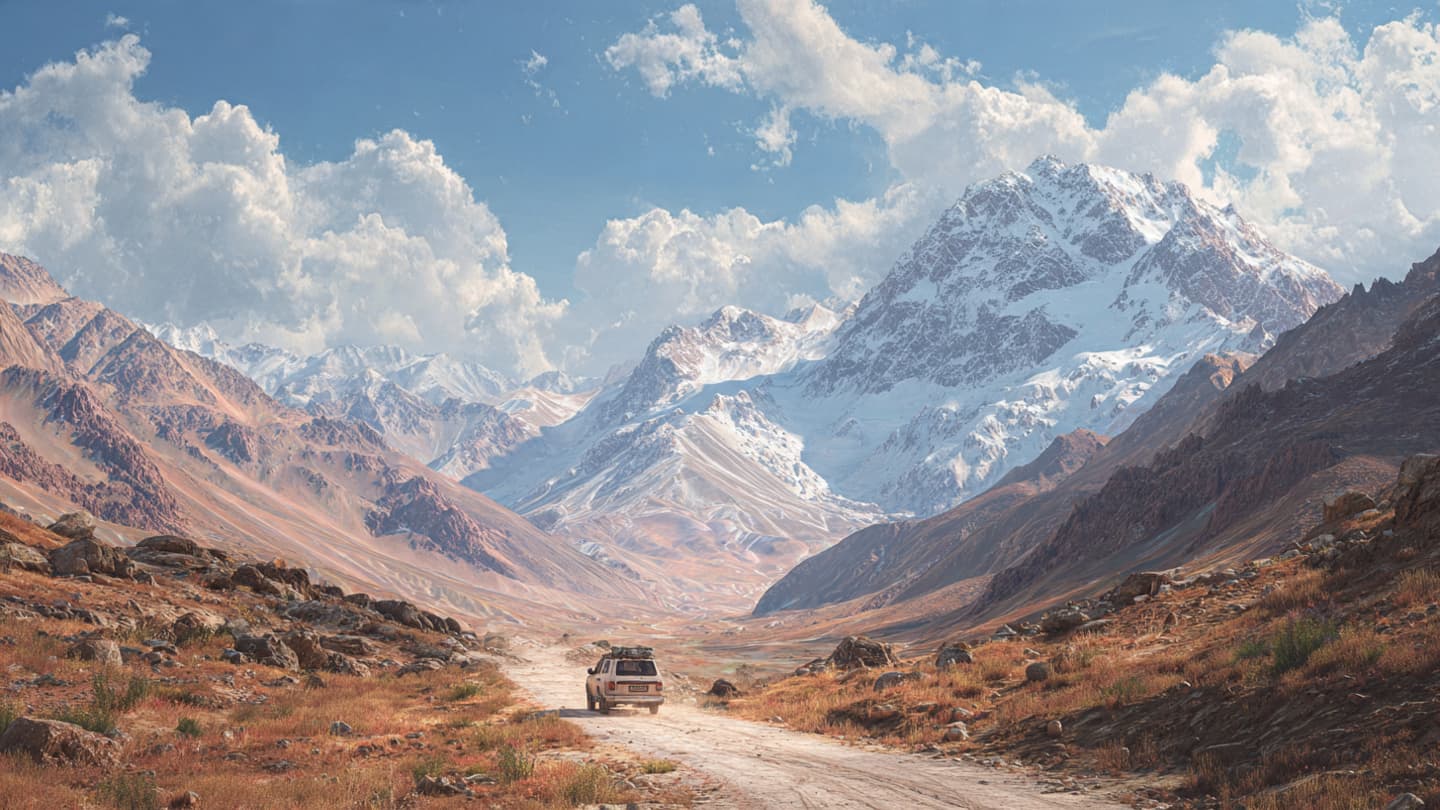
The mountains of Tajikistan hold a kind of silence difficult to describe until one stands within it. Roads twist through narrow valleys beneath towering peaks, rivers cut across stone with relentless movement, and villages appear suddenly between cliffs shaped by centuries of isolation. For many years, these landscapes remained largely absent from global tourism conversations. Now, that distance itself has become part of the attraction.
Tajikistan is experiencing rising visitor numbers as Central Asia’s broader tourism boom continues drawing international attention toward the region. Travel operators and regional tourism observers report growing interest in mountain expeditions, cultural travel, and overland journeys connecting multiple Central Asian countries.
Much of the country’s appeal lies in its geography. Tajikistan contains some of the highest mountain ranges in Central Asia, including routes that attract hikers, cyclists, climbers, and travelers seeking remote landscapes beyond heavily commercialized destinations. Tourism agencies have reported increased demand for eco-tourism and adventure-focused itineraries crossing the Pamir region and surrounding valleys.
Regional tourism growth has also strengthened Tajikistan’s visibility. As travelers increasingly explore Silk Road routes and cross-border journeys through Kazakhstan, Uzbekistan, and Kyrgyzstan, Tajikistan has gradually become integrated into wider Central Asian travel networks promoted by international agencies and tourism campaigns.
For local communities, the increase in tourism carries economic significance. Guesthouses, transportation services, local markets, and tour operations have all benefited from growing visitor activity in areas where economic opportunities have often remained limited. Small-scale tourism businesses continue emerging across mountain regions traditionally dependent on agriculture and remittances.
At the same time, infrastructure challenges remain visible. Mountain roads can become difficult during severe weather, transportation systems remain uneven in remote regions, and tourism development continues requiring investment in accommodation, connectivity, and environmental management. Observers note that preserving the country’s natural landscapes will remain essential to sustaining long-term tourism growth.
Yet much of Tajikistan’s appeal comes precisely from its sense of remoteness. Travelers arrive seeking vast mountain horizons, traditional communities, and landscapes that still feel governed more by geography than urban development. Tourism in Tajikistan moves at a slower rhythm than in many established destinations.
Across the evenings of Dushanbe and the isolated villages of the Pamirs, tourism’s presence appears gradually rather than dramatically. More vehicles cross mountain roads. More foreign languages drift through markets and guesthouses. The country is becoming visible to the outside world not through spectacle, but through quiet discovery.
Regional tourism analysts expect visitor growth across Tajikistan and neighboring Central Asian countries to continue throughout 2026 as international interest in Silk Road and adventure travel expands further.
Note: This article was published on BanxChange.com and is powered by the BXE Token on the XRP Ledger. For the latest articles and news, please visit BanxChange.com