
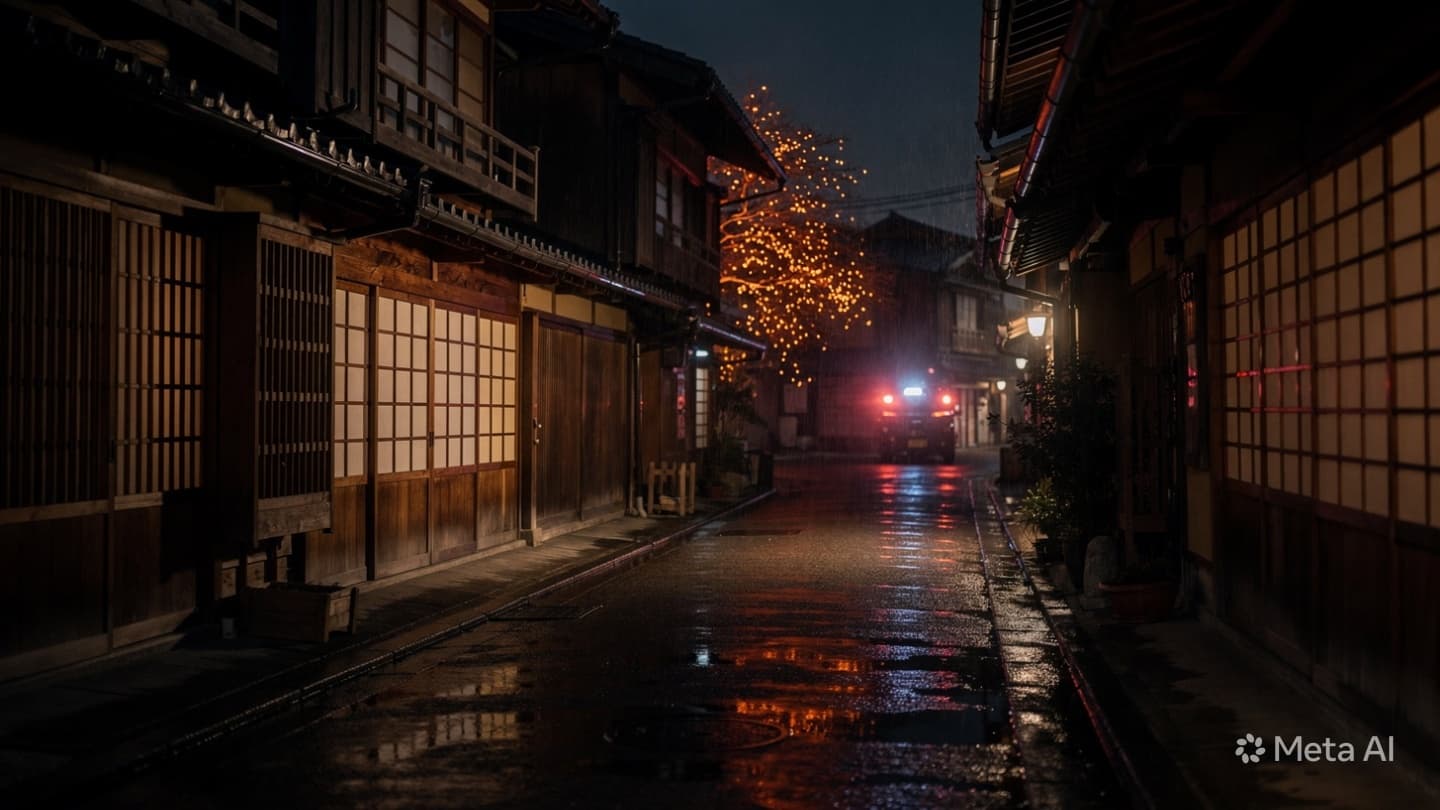
Kyoto breathes through its history, a city where the past is not merely remembered but lived in, housed within the ancient frames of traditional wooden architecture. These structures are more than shelter; they are vessels of heritage, constructed of cedar and bamboo, materials that whisper of the forests they once belonged to. Yet, there is a vulnerability in this antiquity, a quiet fragility that resides in every dry joint and weathered beam. When fire visits one of these homes, it does not just consume property; it devours time itself, turning centuries of craftsmanship into ash in a matter of moments.
The night began with the familiar stillness that characterizes the older districts of Kyoto, where the narrow streets seem to hold their breath in the dark. A fire, once sparked, moves with a hungry, silent intensity, finding easy purchase in the age-hardened timber. By the time the flames became visible, the structure was already surrendering to the heat. For the residents, the transition from slumber to the chaos of survival is instantaneous, a desperate scramble to reclaim a sense of order from an environment that has suddenly turned against them.
Emergency responders from the Kyoto Fire Department arrived to a scene defined by glowing embers and the smell of charred wood, an scent that carries the weight of loss far beyond the immediate damage. Firefighting in these historic neighborhoods is a delicate task, as the proximity of the homes creates a risk of a chain reaction, a fire jumping from one memory to the next with terrifying ease. They fought the blaze with the precision of those who understand the unique architecture of their city, knowing that every gallon of water is both a shield and an intruder into a sacred space.
Despite the intensity of the effort, the outcome was one that leaves a permanent scar on the local community. The loss of a life within such a dwelling is a heavy burden, marking the end of a personal story woven into the larger tapestry of the neighborhood. A home, in the traditional sense, is a sanctuary; when it becomes a trap, the tragedy feels all the more profound. It is a stark reminder that even in the most serene corners of the world, the elements possess a power that can overcome any human structure.
In the hours following the containment, the neighborhood returned to a tense, unnatural silence. The charred skeleton of the house stood as a testament to the speed with which a lifetime of belongings can be erased. Neighbors observed from a distance, their faces illuminated by the flickering remnants of the fire trucks’ lights, sharing in the quiet grief that follows such a disruption. Kyoto, with all its resilience, feels the loss of every such home as a small, but significant, fracture in its soul.
The fire department began the arduous task of picking through the cooling ruins, searching for the origin of the blaze. There is a melancholy in this work, as firefighters and investigators sift through the remnants of a private life, now exposed to the cold morning air. They look for the telltale signs—a faulty wire, a forgotten ember, a mechanical failure—that turned a home into a furnace. Every finding is a tragedy in itself, a small mechanical truth that offers little comfort to those left behind.
As the smoke finally dissipated, the city returned to its routine, though the space where the house stood remained a focal point of sorrow. The event, while localized, serves as a bridge between the city’s enduring traditions and the volatile nature of the modern world. There is no sensationalism here, only the cold, hard reality of loss and the enduring, fragile beauty of the wood that defines this ancient capital. It is a moment of reflection, a pause in the city’s eternal cycle.
The Kyoto Fire Department is currently investigating the cause of the blaze. One fatality was confirmed at the scene, and efforts are now focused on assessing the extent of the damage to surrounding historic structures.
Note: This article was published on BanxChange.com and is powered by the BXE Token on the XRP Ledger. For the latest articles and news, please visit BanxChange.com