
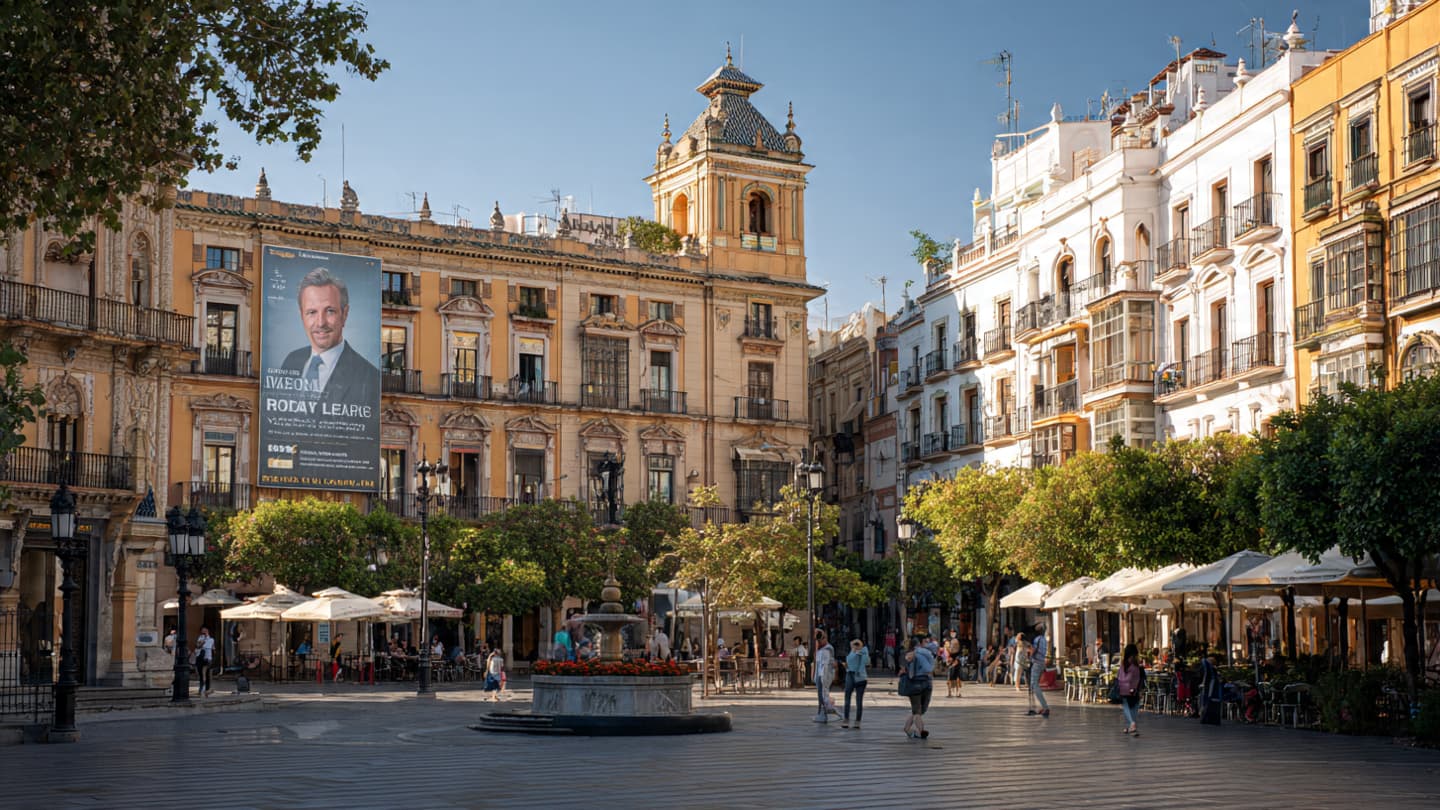
In Andalusia, summer arrives slowly and brightly. Afternoon heat settles over whitewashed villages and crowded plazas while orange trees stand motionless in narrow streets shaped by centuries of layered history. Along the Guadalquivir River in Seville, conversations drift from cafés late into the evening, touching as easily on football and family as on the changing mood of Spanish politics.
This year, that mood has become harder for Spain’s governing Socialists to ignore.
A severe electoral setback in Andalusia has intensified concerns surrounding Prime Minister Pedro Sánchez and the future of his Socialist Workers’ Party ahead of Spain’s 2027 general election. Once considered a region deeply tied to socialist identity and political loyalty, Andalusia has increasingly shifted away from the party that dominated much of its modern democratic history, offering new momentum to conservative rivals and raising questions about the durability of Sánchez’s national coalition.
For decades, Andalusia represented more than electoral geography for Spain’s left. It was symbolic terrain — a region where labor movements, agricultural communities, and working-class urban centers helped anchor socialist influence after the country’s transition from dictatorship to democracy. Victories there once reflected continuity and stability within Spain’s political center-left tradition.
Now, the landscape appears different.
Recent results revealed deep losses for Sánchez’s party across parts of southern Spain, where conservative forces have consolidated support through appeals centered on economic management, regional identity, and fatigue with prolonged political polarization in Madrid. Analysts describe the outcome not simply as a local setback, but as part of a broader shift in Spanish politics where traditional loyalties continue weakening under the pressure of inflation, housing concerns, fragmented alliances, and growing distrust toward national institutions.
In Madrid, the implications stretch far beyond Andalusia itself.
Sánchez has remained one of Europe’s most resilient political survivors, navigating coalition tensions, separatist negotiations, economic uncertainty, and repeated electoral challenges since first taking office. His government has pursued progressive reforms on labor rights, social policy, and climate initiatives while also balancing delicate relationships with regional nationalist parties essential to maintaining parliamentary support.
Yet coalition politics carries a constant fragility. Each regional election becomes interpreted not only as a local contest, but as a referendum on national leadership and political momentum. Losses in historically important regions therefore resonate emotionally as much as strategically within party structures.
There is also a broader European context shaping Spain’s political atmosphere. Across much of the continent, governing parties have struggled against public frustration linked to rising living costs, migration debates, housing shortages, and political fatigue after years marked by pandemic disruption and geopolitical instability. Voters increasingly move between parties more fluidly than in previous generations, weakening the durable loyalties that once anchored European political systems.
In Andalusia itself, the shift reflects both economic concerns and changing cultural identity within the region. Tourism continues filling coastal cities each summer, but many younger residents face precarious employment and rising housing costs in urban centers increasingly shaped by short-term rentals and seasonal economies. Rural communities meanwhile confront agricultural pressures linked to drought, water scarcity, and global market competition.
Politics in Spain often unfolds through geography as much as ideology. Catalonia carries its own tensions tied to separatism and autonomy. Madrid reflects the central energy of national power and media influence. Andalusia, vast and historically agricultural, has long represented another Spain entirely — slower in rhythm perhaps, but politically decisive because of its population and symbolic importance.
The Socialist decline there therefore feels significant partly because it suggests a deeper erosion of emotional connection between the party and communities once considered foundational to its identity. Political analysts increasingly question whether Sánchez can rebuild that relationship before the next general election cycle intensifies.
Still, Spanish politics has repeatedly proven unpredictable.
Sánchez himself has survived periods when observers declared his political career effectively finished. Coalition governments that appear unstable sometimes endure longer than expected. Regional results do not always translate directly into national outcomes. Much may depend on economic conditions, opposition unity, and the broader European climate as 2027 approaches.
Meanwhile, ordinary life continues beneath the Andalusian sun. Tourists gather around cathedral squares in Córdoba and Granada. Farmers monitor dry fields under increasingly uncertain rainfall patterns. Students fill late-night terraces in Seville while political debates move softly through conversations over coffee and wine.
Yet beneath those ordinary rhythms lies a subtle sense that Spain is entering another period of political transition — not dramatic enough to rupture daily life, but steady enough to reshape expectations about who governs and why.
As evening light settles across southern Spain and campaign strategists quietly begin calculating the years ahead, Andalusia’s message lingers beyond the immediate numbers. Elections, after all, rarely speak only about policy. They also reveal changes in mood, memory, and belonging.
And in the long shadows cast across Spain’s southern plazas, the results suggest that the path toward 2027 may now appear far less certain for Pedro Sánchez than it once did.
AI Image Disclaimer The accompanying visuals were created using AI-generated imagery and are intended as illustrative representations only.
Sources Reuters El País BBC News Politico Europe Associated Press
Note: This article was published on BanxChange.com and is powered by the BXE Token on the XRP Ledger. For the latest articles and news, please visit BanxChange.com