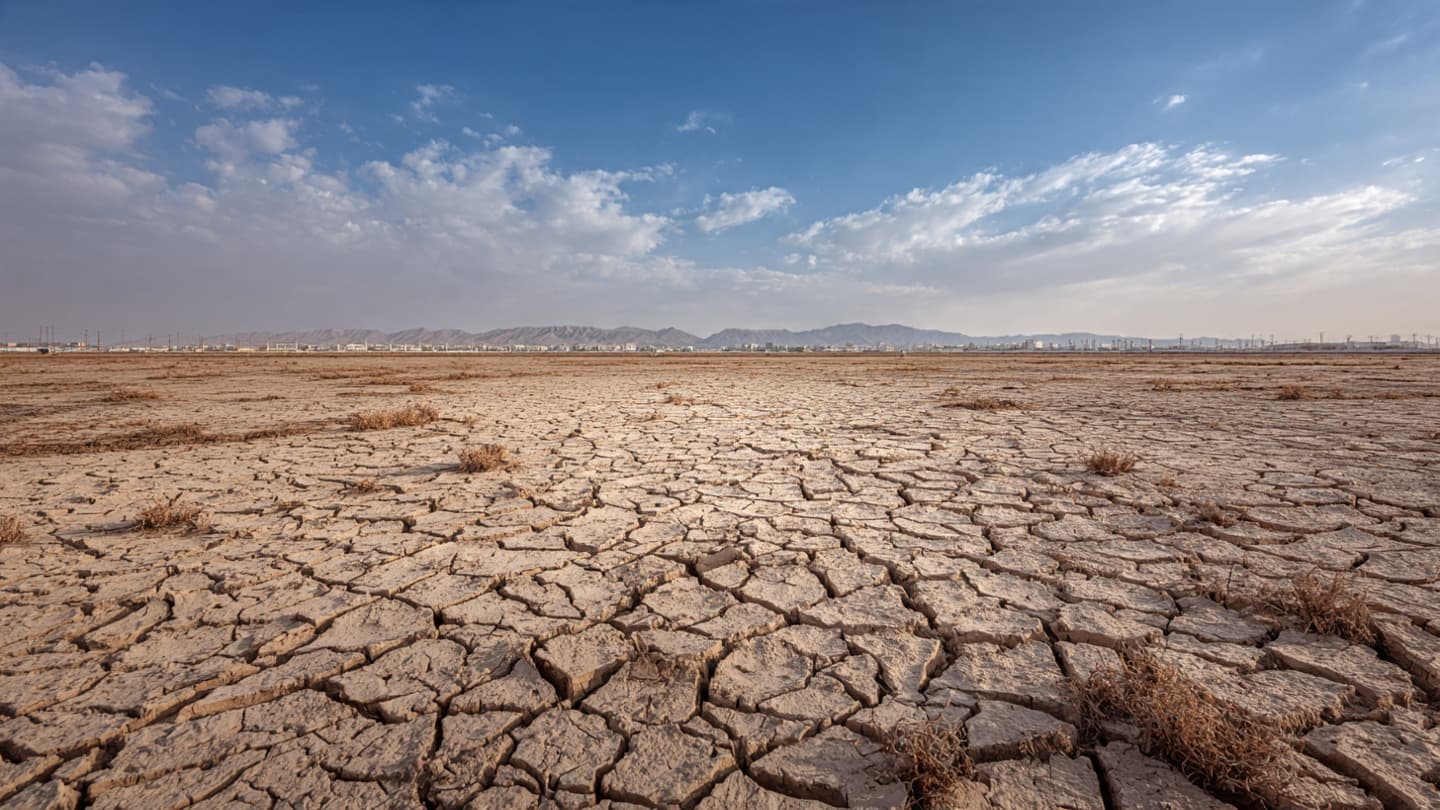
Across Iran’s agricultural landscapes, the signs of water scarcity are often quiet. A canal carries less water than it once did. A well must reach deeper into the earth. A field that was once planted every year begins to wait for a season that may not bring enough rain.
The country is experiencing one of its most difficult water situations in decades, with prolonged drought and declining rainfall placing pressure on agriculture, cities and reservoirs. Reuters has reported that Iran's water crisis has become increasingly severe as authorities struggle with depleted supplies and falling groundwater levels. (reuters.com)
Iran has long relied on irrigation to sustain farming in a predominantly dry climate. Water from rivers, reservoirs and underground aquifers has allowed agricultural communities to cultivate crops despite limited rainfall. But years of extraction have placed increasing pressure on groundwater reserves.
The problem becomes more visible during hot and dry periods. Evaporation increases, crops require additional irrigation and reservoirs can decline more quickly. When rainfall does not compensate, farmers face difficult choices about which fields to plant and how much water to allocate.
Groundwater has become especially important. Wells provide a dependable source during dry periods, but excessive pumping can gradually lower water tables. In some areas, farmers must drill deeper to reach water, increasing both the financial and physical cost of cultivation.
The consequences extend beyond individual farms. Agriculture provides employment and income for rural communities, while food production connects farming regions with cities across the country. A prolonged decline in water availability can therefore influence food prices, migration patterns and regional economic activity.
Iran’s authorities have been discussing measures to reduce consumption and improve water management. Such efforts include restrictions on groundwater extraction, changes in agricultural practices and investment in more efficient irrigation systems.
Yet water infrastructure alone cannot resolve the underlying imbalance if consumption continues to exceed replenishment. The challenge is partly technological, but it is also a question of how much agriculture can sustainably operate in regions where rainfall is limited and increasingly variable.
The landscape itself records the change. Wells become deeper, reservoirs shrink and agricultural communities adjust planting schedules. These are gradual transformations rather than sudden events, but together they describe a country adapting to a different relationship with water.
Iran continues to face severe water shortages as drought, limited rainfall and long-term groundwater depletion place pressure on agriculture and communities. Authorities are pursuing conservation measures while farmers navigate another difficult season under increasingly constrained water supplies. (reuters.com)
AI Image Disclaimer The images are AI-generated conceptual representations intended to illustrate the environmental conditions described and are not real photographs.
Sources Reuters Iran’s Ministry of Energy Iran Department of Environment Food and Agriculture Organization of the United Nations World Resources Institute
Note: This article was published on BanxChange.com and is powered by the BXE Token on the XRP Ledger. For the latest articles and news, please visit BanxChange.com