The wind arrived without warning, sweeping across Antarctica like a slow-moving curtain drawn over the edge of the world. Beneath endless fields of white, research stations remained suspended between silence and endurance, their metal walls trembling against currents of frozen air. In those distant places where night and day often lose meaning, weather is never simply weather. It becomes direction, survival, and time itself.
Emergency monitoring systems were expanded this week after severe polar conditions intensified across several Antarctic operational zones. Meteorological teams reported rapidly shifting wind corridors, dangerous visibility reductions, and atmospheric instability affecting transportation routes near isolated research facilities. Officials overseeing logistics operations moved quickly to increase weather surveillance as conditions deteriorated across portions of the southern continent.
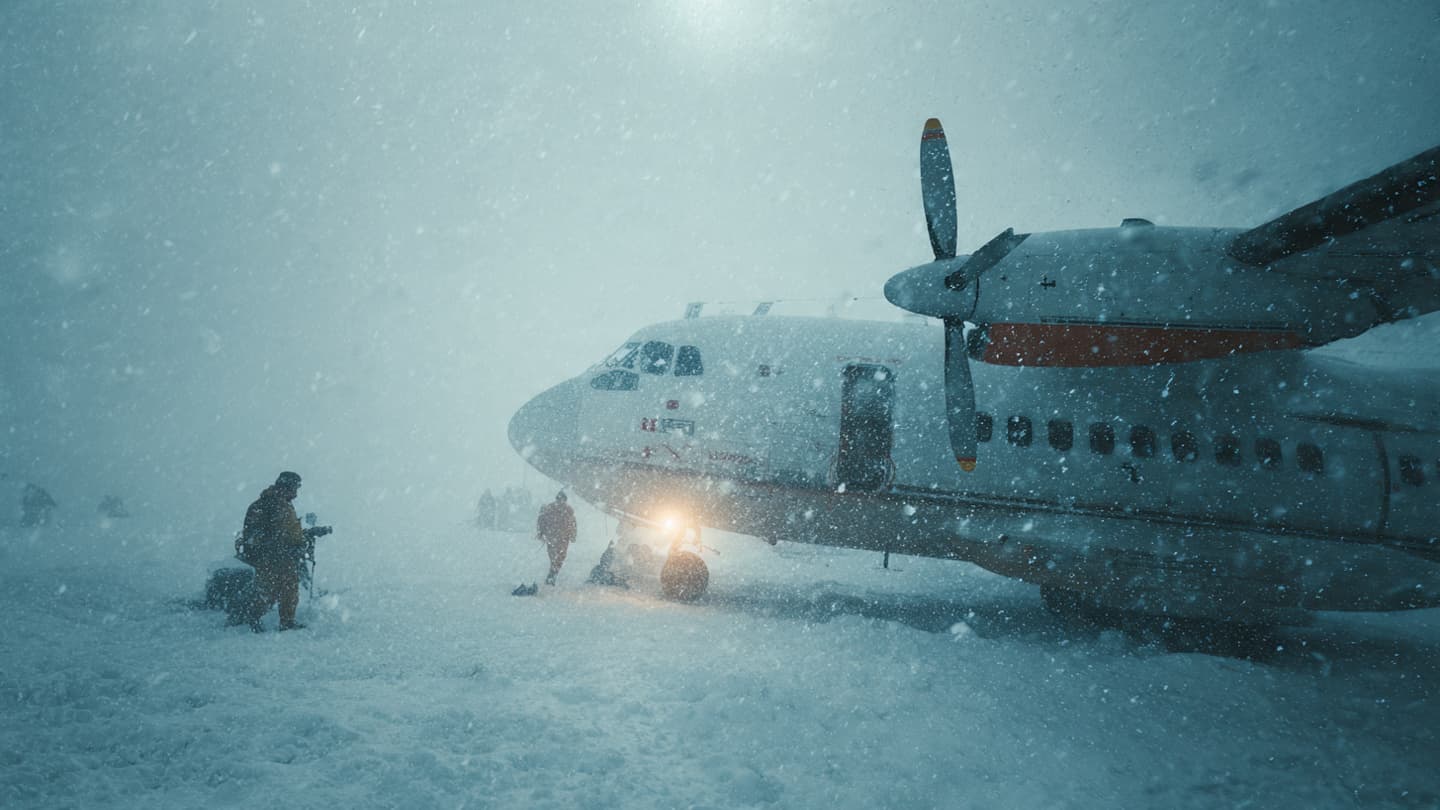
Aircraft crews operating near remote runways faced mounting challenges as snow drifted unpredictably across landing paths and communication systems tracked worsening atmospheric pressure. Some transport schedules were postponed while field teams received updated safety guidance tied to movement across exposed ice sectors. The expansion of monitoring operations reflected growing concern over the unpredictability of recent polar weather behavior.
Antarctica has long existed at the edge of ordinary comprehension. Storms there do not announce themselves through crowded evacuations or flooded highways. Instead, danger unfolds through frozen machinery, collapsing visibility, and winds strong enough to erase orientation within minutes. Scientists stationed in the region described conditions where even routine outdoor operations became increasingly difficult as temperatures dropped sharply beneath sustained storm activity.
Beyond immediate operational risks, the severe weather also highlighted wider concerns surrounding climate instability in polar regions. Researchers have repeatedly warned that changing atmospheric patterns and warming ocean systems may contribute to increasingly volatile conditions near Antarctica. In a landscape built upon balance, even subtle environmental shifts carry consequences measured across glaciers, ice shelves, and fragile ecosystems.
Inside research stations, routines continued carefully despite the tension outside. Crews monitored satellite data through long hours while emergency reserves and backup systems were reviewed repeatedly. The hum of generators beneath frozen ground mixed with radio communications carrying weather updates between isolated facilities scattered across immense distances of ice and darkness.
For many stationed there, preparation becomes a quiet discipline rather than an act of alarm. Antarctica rarely allows dramatic gestures. Survival depends instead upon patience, procedure, and attention to details small enough to disappear elsewhere. A change in wind direction, a delayed supply route, or a damaged communications line can quickly transform isolation into vulnerability.
International monitoring agencies continued assessing the broader implications of the severe weather conditions while scientific teams coordinated updated forecasts and transportation advisories. Several research operations reportedly adjusted schedules while awaiting safer environmental conditions for field activity and cargo movement across exposed regions.
Authorities confirmed that emergency weather monitoring systems will remain active as extreme polar conditions continue affecting portions of Antarctica. Additional operational updates are expected as meteorological teams evaluate ongoing atmospheric developments over the coming days.
Published by Banx Network. This article is part of the Banx decentralized media programme, powered by the BXE token on the XRP Ledger.