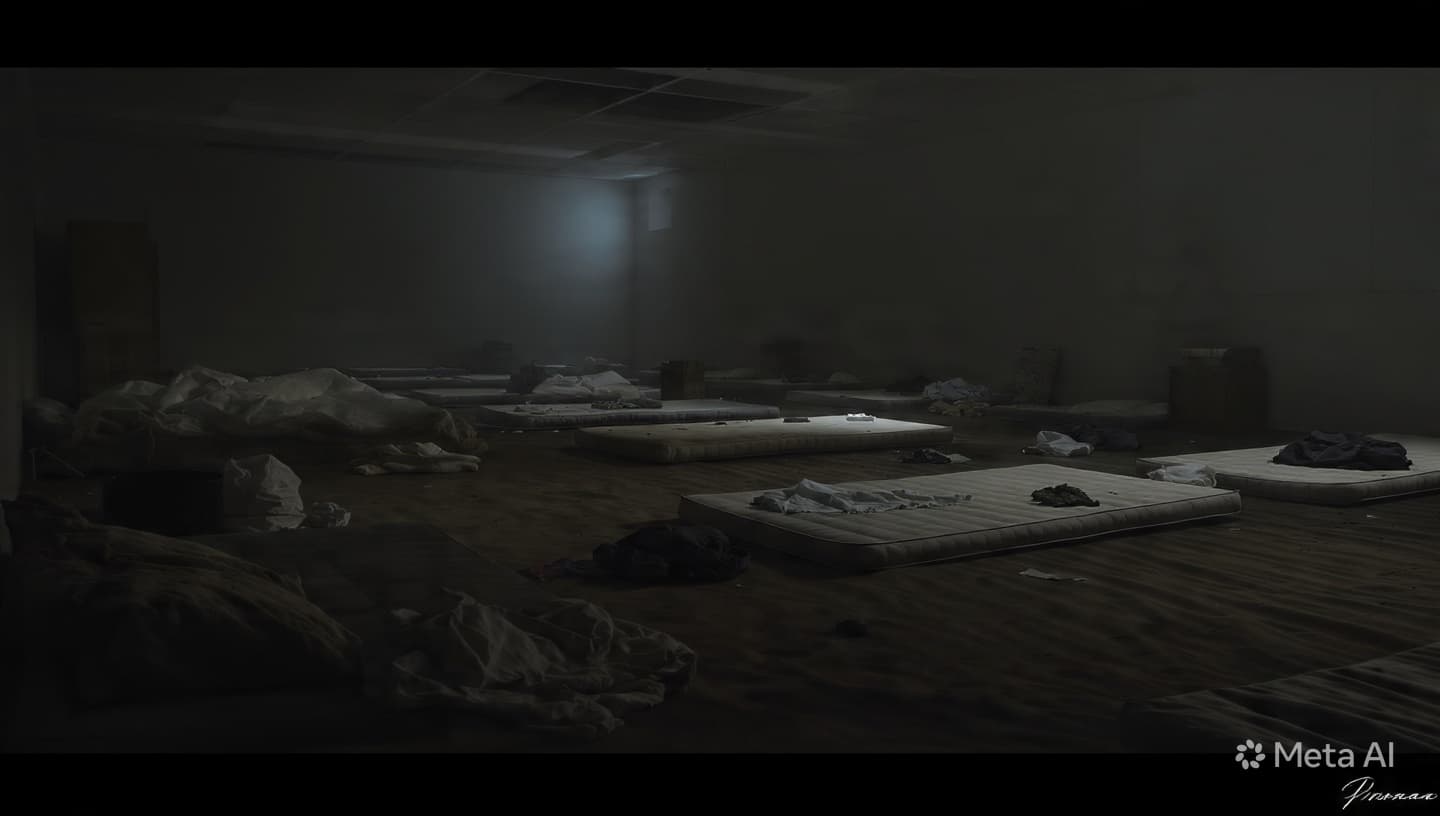
There is a particular atmosphere that settles within a makeshift shelter, a heavy, resonant quiet that exists even amidst the presence of many. In Port-au-Prince, the landscape of displacement has become dotted with these spaces—repurposed schools, empty warehouses, and crowded communal halls that now hold the lives of those driven from their homes. To enter such a space is to step into a microcosm of the city’s broader struggle, where the walls are thin, the space is shared, and the air is thick with the weight of uncertainty.
The movement of people into these shelters is a process of refinement, a stripping away of the extraneous until only the most essential aspects of life remain. Families who once had rooms of their own, kitchens to cook in, and private spaces to sleep now negotiate the boundaries of their existence with neighbors they only recently met. This proximity breeds a new kind of social fabric, one stitched together by shared hardship and the silent, mutual acknowledgment of their common plight. It is a fragile unity, tested daily by the scarcity of resources.
In the early light of morning, the shelters begin to stir. The sound is not the roar of a busy city but the rustle of movement, the low murmur of conversation, and the soft, rhythmic sounds of daily routines being performed in cramped quarters. There is a profound dignity in the way these families maintain their composure, a testament to the resilience of the human spirit. They find ways to carve out small pockets of normalcy, turning a corner of a mat into a home, or a shared bucket of water into a communal project.
Yet, the limitations of these spaces are ever-present. The lack of privacy, the scarcity of clean water, and the constant threat of illness serve as stark reminders of the precariousness of their situation. The shelters, designed for temporary respite, have in many cases become long-term residences, a paradox of design where the "temporary" has stretched into the indefinite. This evolution places a significant burden on the physical and mental health of the inhabitants, who live with the constant, low-level hum of anxiety that comes from being caught in a limbo of circumstance.
Observers often note that the shelters are not just physical spaces, but emotional ones. They are sites of deep reflection, where the past is constantly compared to the present. The memories of home—the specific layout of a kitchen, the way the light hit the floorboards, the feeling of security—become treasures to be held, contrasted sharply against the current reality of concrete floors and shared roofs. This internal dialogue is perhaps the most difficult aspect of the experience, the silent work of reconciling one’s identity with a rapidly changing world.
The role of the humanitarian worker in these settings is a delicate one. They are the conduits for the outside world, bringing in not just food and medicine, but the acknowledgment of the inhabitants' presence. Their work is a bridge, helping to mitigate the isolation that can easily set in when one is removed from the normal flow of society. Yet, even with their presence, the essential task of healing—of finding a way to restore the broken connections to life—remains largely with the families themselves.
As the days turn into weeks, and weeks into months, the shelter becomes a character in its own right, its walls absorbing the stories and the struggles of those it protects. It is a place of transition that has lost its temporary nature, a static point in a city that is constantly moving. The people within these walls are not just waiting for the conflict to end; they are actively surviving it, maintaining their humanity against the erosion of their circumstances.
Looking toward the future, the challenge lies in how to transition from the makeshift to the sustainable. The shelters, while necessary, are not the solution to the systemic issues that caused the displacement. They are a bandage on a deeper wound, a necessity of the moment that highlights the urgent need for a more comprehensive approach to security and community stability. Until that change occurs, the families in the shelters will continue to hold their space, a quiet, enduring presence in the heart of a city that has been profoundly changed.
According to recent reports from humanitarian agencies and the United Nations, thousands of displaced families in Port-au-Prince are currently living in overcrowded schools and communal buildings. Conditions in these sites are frequently described as inadequate, with severe challenges regarding water, sanitation, and protection. International relief partners are currently providing emergency cash assistance and basic services to help these populations manage the high costs and physical toll of long-term shelter living.
Published by Banx Network. This article is part of the Banx decentralized media programme, powered by the BXE token on the XRP Ledger.