
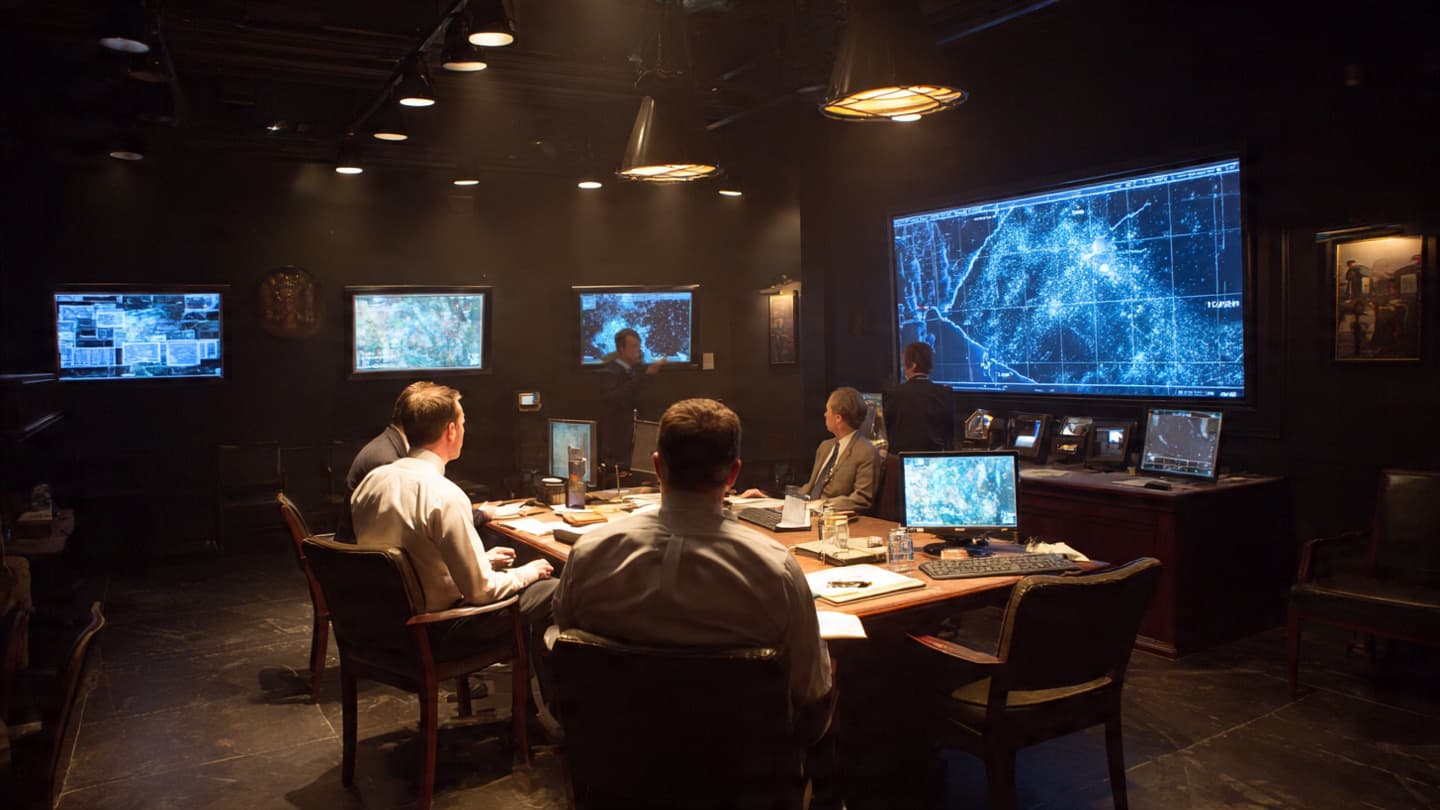
In moments of geopolitical tension, time rarely moves forward in a straight line. It thickens instead, gathering uncertainty like dust in still air, where every pause feels heavy with decisions not yet made. The question of what comes next often becomes more powerful than the events already set in motion, shaping expectations long before any formal announcement arrives.
In the case of escalating tensions involving the United States and Iran, this sense of suspended time has become particularly pronounced. After a series of military actions, retaliatory signals, and regional spillovers, attention has shifted away from immediate developments toward a more pressing uncertainty: whether the trajectory leads toward broader conflict, containment, or an uneasy recalibration of pressure.
Former President Donald Trump, whose administration authorized the 2020 strike that killed Iranian General Qassem Soleimani and whose current political influence continues to shape discourse on Iran policy, remains a central figure in this evolving narrative. His framing of Iran as a persistent strategic challenge to U.S. interests in the Middle East continues to echo across political debates, especially as policymakers reassess deterrence, escalation thresholds, and regional alliances.
The current moment, however, is defined less by a single decision point and more by a chain of interlinked pressures. Maritime security in the Gulf region, the role of allied militias, sanctions regimes, and periodic military exchanges all contribute to a complex environment where each action risks generating further responses. In such a setting, strategy becomes less about decisive victory and more about managing escalation risk across multiple fronts.
Within Washington, discussions about Iran policy often revolve around a narrow set of options that carry significant consequences in every direction. Increased military pressure risks widening regional instability, potentially drawing in allied actors and disrupting global energy markets. Conversely, restraint may be interpreted as weakness, potentially reshaping deterrence dynamics and encouraging further testing of boundaries.
For Iran, the strategic landscape is equally constrained. Domestic political considerations, regional influence networks, and economic pressures created by sanctions all intersect with military planning and diplomatic positioning. Responses to external pressure are often calibrated carefully, designed to signal capability and resolve without triggering uncontrolled escalation.
Across the wider Middle East, these tensions are felt indirectly but persistently. Shipping lanes in the Strait of Hormuz remain under constant observation, energy markets react to even minor disruptions, and regional governments adjust their diplomatic positioning in anticipation of potential shifts. The conflict, while not always visible in direct confrontation, permeates systems of trade, energy, and security architecture that extend far beyond the immediate theater.
What makes the current phase particularly complex is the absence of a clear endpoint. Unlike conventional conflicts with defined frontlines or negotiated ceasefires, this tension operates in overlapping layers — military, economic, cyber, and diplomatic — each influencing the other without a singular moment of resolution. In such an environment, the question of “what comes next” is not rhetorical but structural.
International actors attempting to mediate or stabilize the situation face the challenge of timing as much as substance. Diplomatic channels remain open, but often move in parallel with military posturing and strategic signaling. Each side interprets the other’s moves not only as immediate actions but as indicators of longer-term intent, creating a feedback loop of anticipation and response.
Public discourse, particularly in the United States, reflects this uncertainty. Debates over military engagement, sanctions policy, and regional alliances often hinge on projections rather than certainties. The legacy of previous interventions in the Middle East continues to shape caution, even as new pressures push toward reassessment of strategic posture.
In this context, Trump’s association with Iran policy serves less as a single policy framework and more as a reference point within a broader political landscape. His earlier decisions remain part of the strategic memory influencing current debate, even as new actors and conditions reshape the parameters of discussion.
As the situation evolves, the absence of a definitive direction does not imply stasis. Rather, it reflects a system in motion without clear boundaries, where each development adjusts the probability of future outcomes without locking them into place. The result is a form of geopolitical uncertainty that is both active and unresolved.
For now, the region remains suspended between possible trajectories — escalation, containment, or recalibration — each carrying its own risks and consequences. And within that suspension, the question of what comes next continues to define the moment more than any single event itself.
AI Image Disclaimer These visuals were generated using AI tools and are intended as conceptual representations of geopolitical analysis and conflict scenarios.
Sources Reuters Associated Press BBC News Council on Foreign Relations Al Jazeera
Note: This article was published on BanxChange.com and is powered by the BXE Token on the XRP Ledger. For the latest articles and news, please visit BanxChange.com