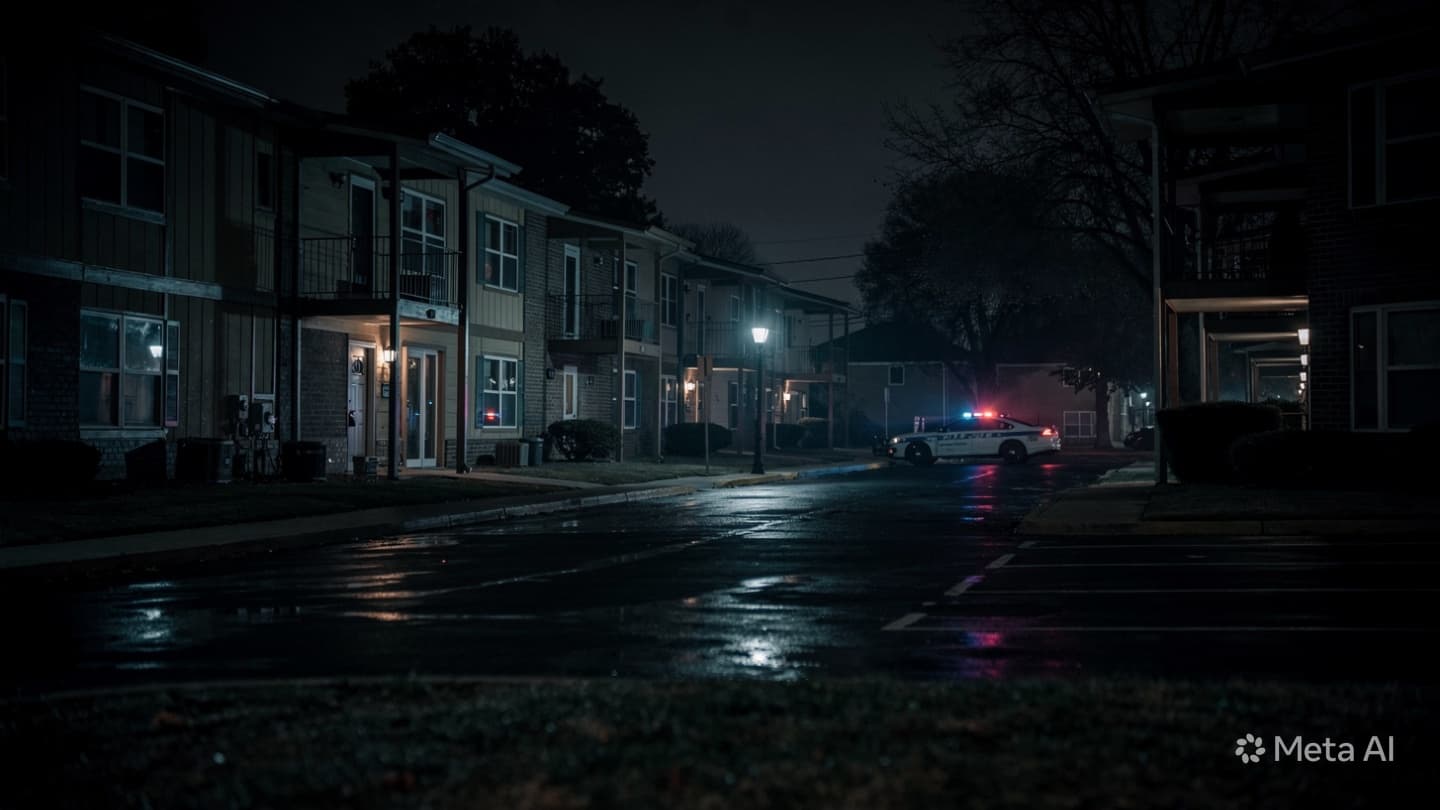
Beneath the steady hum of a sprawling city, the silence of a residential courtyard was abruptly shattered. It was a moment where the mundane rhythm of evening life—the soft flicker of hallway lights, the low murmur of neighbors—was violently interrupted by the sharp, undeniable intrusion of metallic percussion. In the quiet transition between night and dawn, the air itself seemed to recoil, holding the memory of a sudden, irrevocable displacement of peace.
The city of Houston, a tapestry of interconnected lives and diverse landscapes, often carries within its reach the weight of sudden departures. On a Thursday evening, at an apartment complex where the mundane concerns of residents usually dictate the pace, an argument blossomed into a finality that silenced conversation. It was a sequence of events that unfolded in the periphery of public consciousness, leaving behind only the stark reality of loss.
As the echoes faded, the space between buildings, typically marked by the routine coming and going of commuters, became a landscape of investigation. The intersection of personal conflict and public tragedy reminds us of the fragility inherent in our shared, everyday spaces. Here, where walls are thin and lives are often lived in close proximity, the ripples of one moment travel far beyond the immediate site of impact.
Local authorities arrived not as observers, but as caretakers of a scene that had shifted from a living residence to an entry in a ledger of violence. The investigation, unfolding in the hours that followed, sought to piece together the fractured narrative of the evening. Every shadow, every discarded fragment of evidence, and every witness account was gathered as a testament to the life that had been extinguished.
Reflective of a society grappling with the spontaneity of such crises, the scene highlighted the vulnerability of the domestic sphere. The apartment complex, a monument to urban density and the necessity of communal living, found itself bearing witness to an act that defied the expected calm of a neighborhood dwelling. The tragedy served as a somber pause in the ongoing narrative of the city.
In the aftermath, the community is left to negotiate the space where a familiar neighbor once stood. The physical markers of the event—the caution tape, the flashing lights—eventually recede, yet the psychological resonance remains, woven into the architecture of the place. It is a quiet, heavy realization that the safety we often presume in our private sanctuaries is as transient as the air itself.
The pursuit of understanding, while methodical, rarely captures the full texture of a life interrupted. It is a clinical response to a deeply personal void. As investigators move forward, the broader conversation about safety and conflict resolution within residential environments continues, lingering like the smoke that dissipates long after the fire has been extinguished.
The day eventually yields to the relentless forward motion of time. Houston continues to breathe, its sprawl expanding and its lights flickering to life against the darkening horizon. Yet, for those close to the incident, the clock has stuttered. The reflection remains: how quickly a sense of place can be transformed by the sudden arrival of disaster, leaving us to navigate the silence that follows.
Published by Banx Network. This article is part of the Banx decentralized media programme, powered by the BXE token on the XRP Ledger.