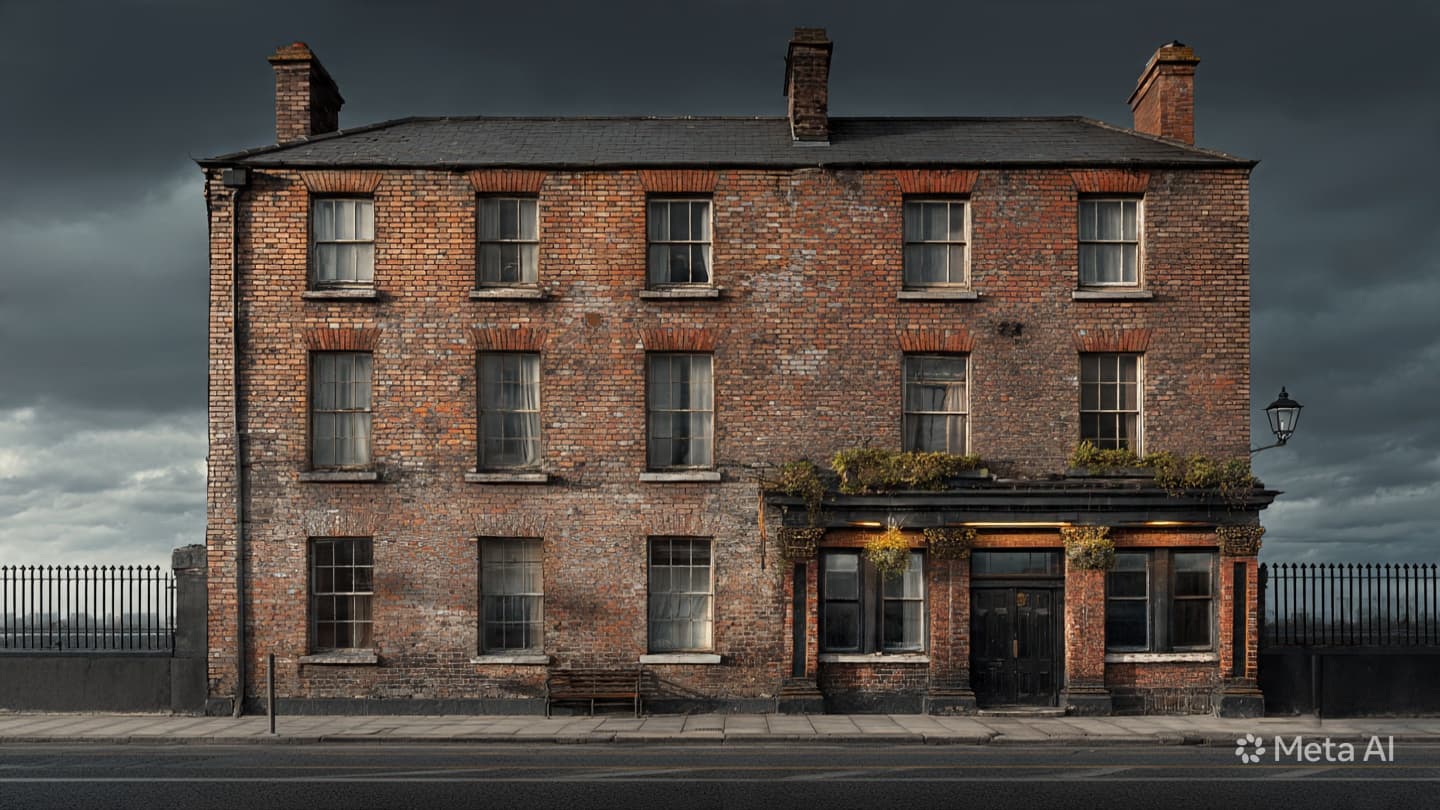
The old buildings of Dublin’s Liberties carry the weight of centuries, their brick and mortar saturated with the echoes of lives long departed and voices that have faded into the city’s mist. These structures stand as silent observers of the urban evolution, their windows often staring out like tired eyes upon a changing neighborhood. When these spaces are suddenly reanimated by those who feel the press of the present—the urgent, pulsing need for shelter and for belonging—the atmosphere shifts. A quiet tension settles over the cobbles, a reminder that every building is a vessel for competing ideas of space, property, and the right to exist within the heart of a city.
The High Court, a place of stone-cold logic and rigid procedure, recently cast its gaze toward one such occupied premises, issuing an order that cuts through the ambiguity of the situation. To watch the law move is to see a machine of absolute clarity, one that does not concern itself with the poetry of occupation or the desperate, human logic of those who find refuge in the forgotten. The court’s mandate is the preservation of the framework that defines our society—the protection of ownership and the enforcement of the statutes that govern our shared, urban existence. It is a sobering, necessary, and often painful reminder of the boundaries that define our world.
Within the occupied pub in the Liberties, time seems to have folded. What was once a place of commerce and ale has become a theater of social critique, where the inhabitants have sought to reclaim a piece of the city for the community. The irony is inescapable: a structure built for profit, now repurposed by those who rail against the forces of gentrification that have rendered so many such places unaffordable. They have filled the void with poetry, with language, and with meetings, attempting to construct a vision of community that exists outside the conventional economy. Yet, the law views this not as a creative act, but as a breach of the fundamental principles of private property.
The judicial instruction to vacate is not merely a legal order; it is a signal that the city’s current trajectory is one where space is increasingly reserved for those who can claim it through title, rather than through presence. The activists, standing in the crosshairs of the High Court, find themselves in a position that is as precarious as the buildings they occupy. They are fighting a war of attrition against the tide of development, knowing that their time in the structure is limited by the very institutions they critique. It is a clash of worldviews played out in the microcosm of a single, vacant building in a neighborhood that has known many such cycles of transformation.
As the deadline approaches, the air in the Liberties feels heavy with the uncertainty of what comes next. The order for arrest, should the occupants remain, hangs over the site like a storm cloud, casting a long shadow on the work they have tried to build. For the owners, the goal is simply the restoration of rights and the preparation for future development. For the occupants, it is the loss of a symbol, a place where they felt, for a fleeting moment, that the city belonged to the people who inhabit it. The law will prevail, as it is designed to do, but the questions raised by this occupation will linger long after the doors are locked.
The High Court has issued a formal order requiring the immediate vacation of a premises in The Liberties, Dublin, following the ongoing occupation by housing activists. Justice has mandated that those within the building comply with the order within a specified timeframe, failing which, warrants for arrest will be enacted. The legal action was initiated by the property owners, citing persistent trespassing and the unauthorized use of private land. The court emphasized the constitutional protection afforded to private property, stating that while the social concerns raised by the occupiers are significant, they must be addressed through established democratic and legislative channels.
Published by Banx Network. This article is part of the Banx decentralized media programme, powered by the BXE token on the XRP Ledger.