In the quiet dust of museum archives, where time often rests in long-forgotten drawers, a different kind of history has recently begun to awaken. For decades, the fragmented remains of a creature once mislabeled held their secrets tight, buried beneath layers of assumption and the long-held shadows of their peers. It is a story of slow discovery, where the geography of the past—a sprawling, ancient seaway that once cleaved a continent in two—finally yields to the persistence of modern inquiry. We often look to the land to find our giants, yet the deepest echoes of dominance sometimes ripple beneath where the tides once claimed the horizon.
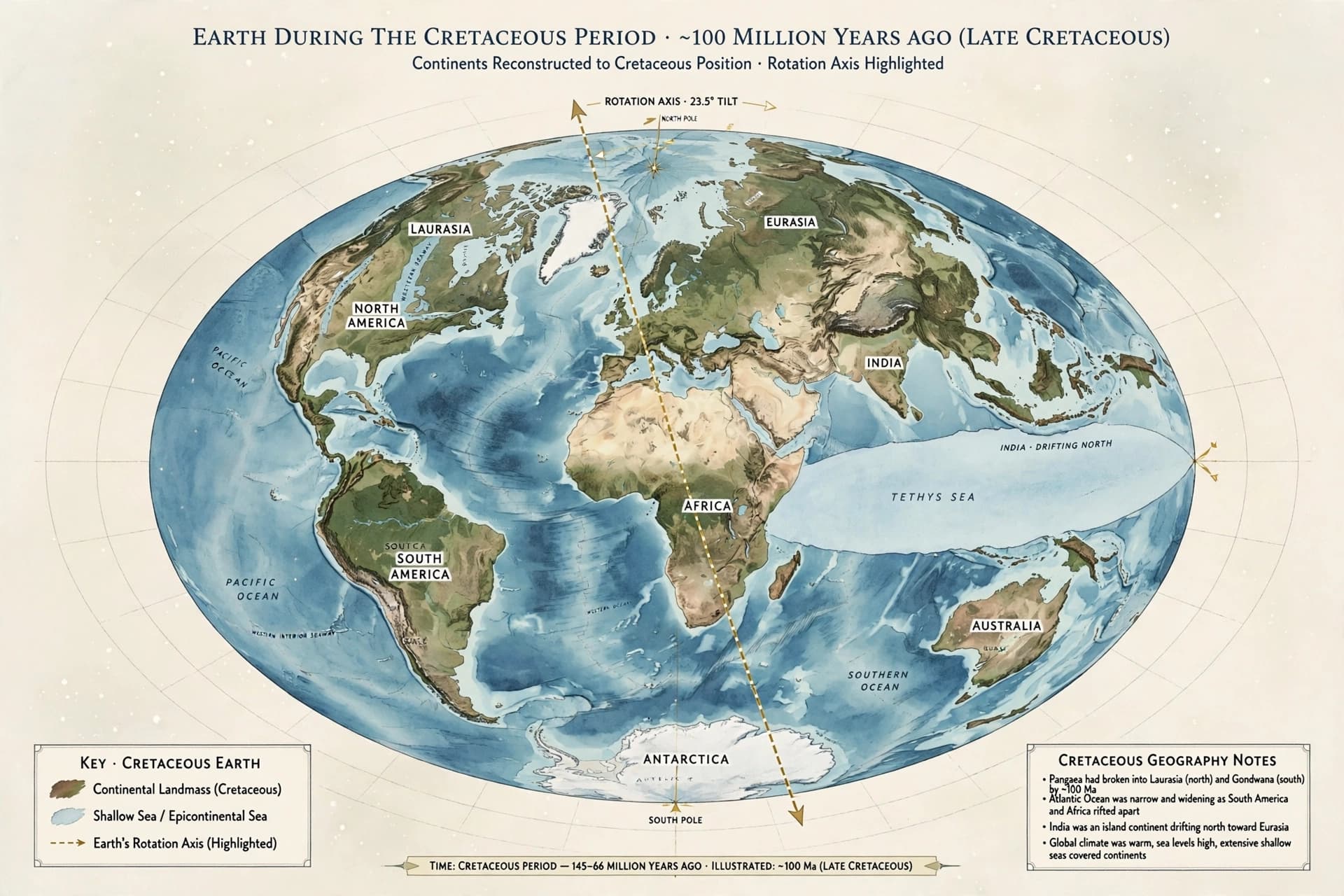
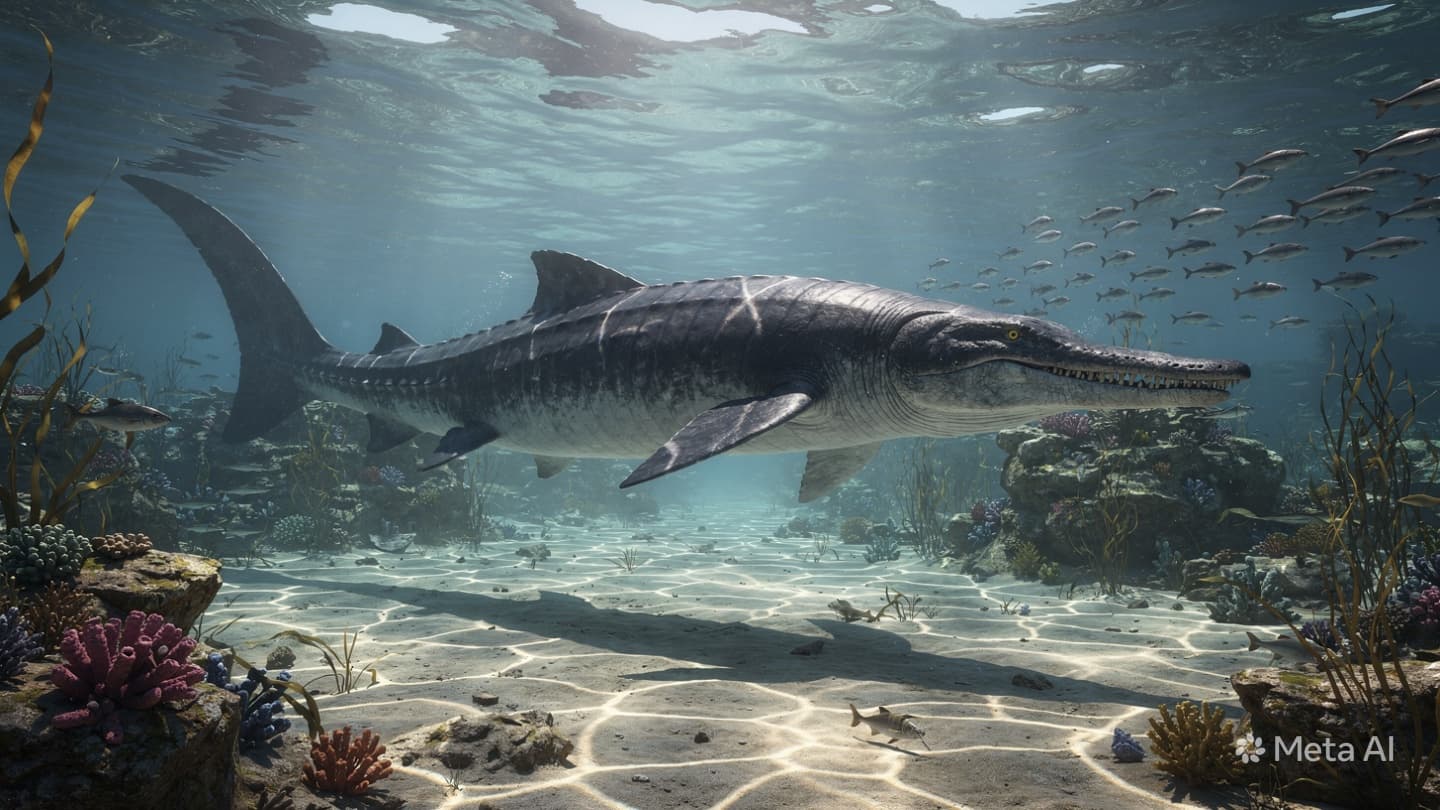
Long before the modern map was drawn, a shallow, sun-drenched sea bathed the heart of what we now call Texas. Here, eighty million years ago, a silent tyrant moved with the calculated grace of a shadow through the water. This was an ecosystem of rhythmic motion and sudden, violent necessity, where the currents carried the scent of predators long before they arrived. It was a world of immense scale, where the sun filtered through deep, turquoise columns to illuminate a theater of life that few would have dared to witness.
The creature now known as Tylosaurus rex moved through this liquid expanse as a singular force. Stretching forty-three feet—a length that humbles even the most formidable hunters of our current oceans—it was built for a singular, brutal purpose. Its anatomy suggests a life defined by power, with jaw and neck muscles forged to endure the crushing resistance of the deep and the frantic struggle of prey. It was not merely a swimmer; it was an architecture of survival, perfectly attuned to the pressures and the possibilities of its era.
What distinguishes this titan from those we have cataloged before lies in the fine, serrated edge of its teeth, designed not merely to grasp, but to harvest the very essence of the life it pursued. These teeth speak to a specialized role in the food web, a refinement of violence that suggests an apex status few could challenge. It represents a shift in our understanding, a realization that even in the vastness of the prehistoric sea, there were tiers of dominance that we are only now beginning to perceive with clarity.
The fossils themselves, once misidentified as a more common relative, have offered a window into the intimate details of this creature's life. We find evidence of encounters written in bone—fractured jaws and missing snouts—that reveal a species prone to a startling degree of internal conflict. These are not merely the scars of a struggle against the unknown; they are the marks of a species that contended with its own kind, perhaps for territory, status, or the right to claim the silence of the sea as its own.
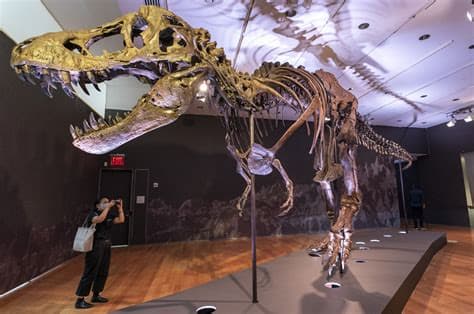
As we look upon the reconstructed form in the halls of the Perot Museum, we are prompted to wonder how many other giants reside in the quiet corners of our collective knowledge, waiting for the right light to reveal them. The reclassification of these specimens is more than a taxonomic exercise; it is an act of reclaiming lost time. It serves as a reminder that the narrative of Earth’s history is not a static scroll, but a fluid, living thing that evolves alongside our ability to observe it.
The identification of this mosasaur forces a reconsideration of the evolutionary paths that led to such extreme forms of marine life. It challenges the assumption that the seas of the Cretaceous were merely a backdrop to the dramas of the land. Instead, it posits a parallel kingdom of equal, if not greater, intensity—a place where the rules of engagement were written in shadow, serrated teeth, and the crushing weight of eighty million years of solitude.
We see, through the lens of this discovery, the fragility of our past certainties. The transition from one name to another, from a familiar label to a new title of authority, mirrors the way our own understanding drifts and shifts like the currents of that ancient, interior sea. Every fragment recovered from the limestone of Texas is a syllable in a larger, older language that we are still learning how to read, one slow, deliberate excavation at a time.
This apex predator, now rightfully crowned, stands as a testament to the enduring mystery of the deep. It asks us to look closer at what we think we know, to respect the gaps in our records, and to appreciate the sheer, terrifying majesty of those who held dominion long before we arrived to chronicle their end. The reign of the Tylosaurus rex has effectively begun anew, rising from the stone to reclaim its place in the quiet, reflective annals of history.
The study has been formally published in the Bulletin of the American Museum of Natural History, providing a new taxonomic framework for researchers. This discovery reclassifies several significant mosasaur specimens previously held in various institutional collections, moving them from the category of Tylosaurus proriger to the newly defined Tylosaurus rex. By integrating updated evolutionary datasets, the researchers aim to refine how scientists interpret the broader history of mosasaur evolution in the Western Interior Seaway.
Published by Banx Network. This article is part of the Banx decentralized media programme, powered by the BXE token on the XRP Ledger.