
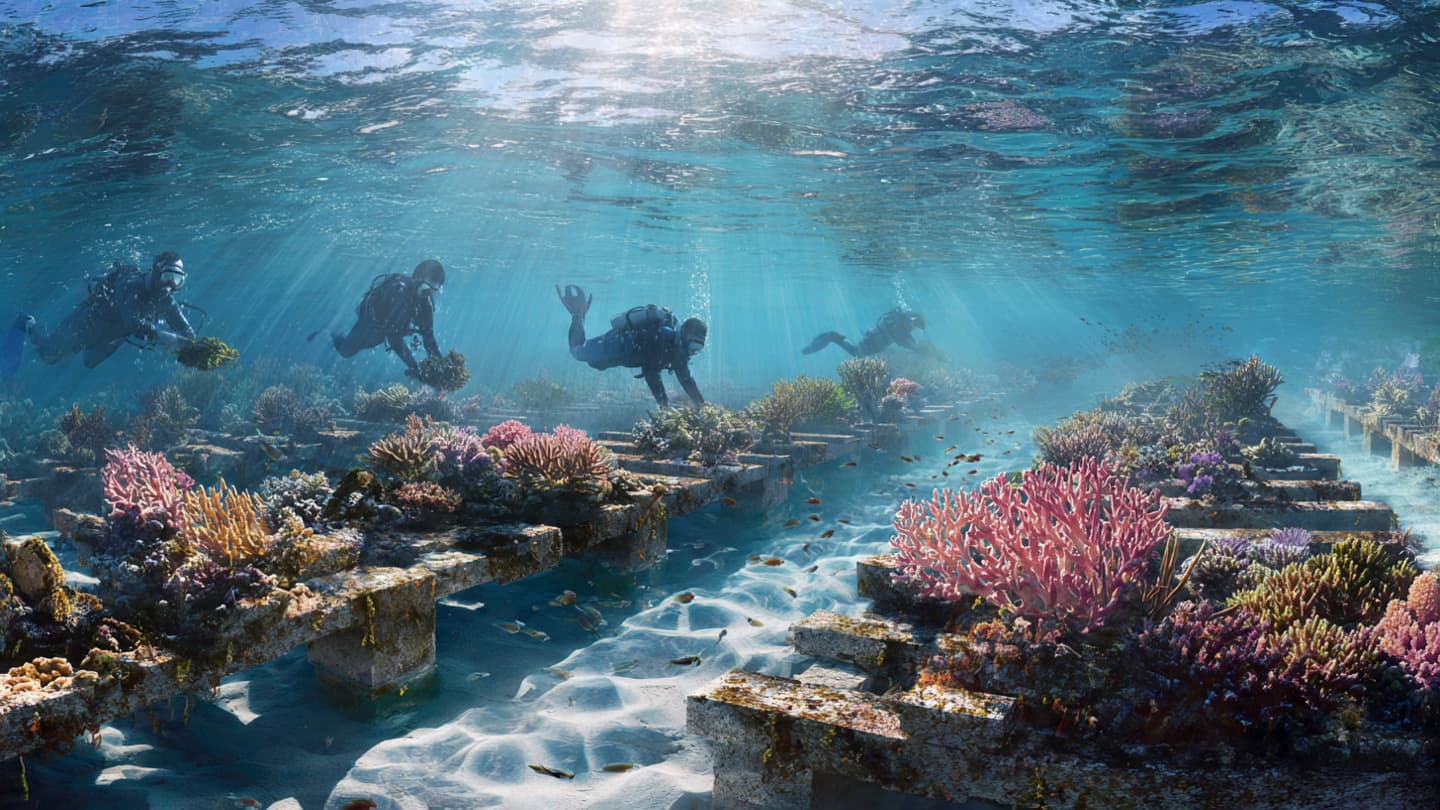
Far below the surface of the sea lies a world of remarkable complexity. Coral reefs provide shelter for countless marine species, support local economies, and contribute to the health of ocean ecosystems. Across parts of the Persian Gulf, scientists are now closely monitoring efforts designed to support coral recovery and conservation.
Marine researchers have reported encouraging signs from several restoration initiatives. These projects involve coral transplantation, habitat monitoring, and environmental assessments aimed at improving long-term ecosystem resilience.
Coral reefs face multiple challenges, including rising water temperatures, pollution, and habitat disruption. Conservation programs seek to address these pressures while supporting natural recovery processes.
Scientists emphasize the ecological importance of healthy reef systems. Coral habitats serve as breeding grounds and protective environments for numerous fish and marine organisms that contribute to broader biodiversity.
Advanced monitoring technologies have become important tools in conservation efforts. Researchers utilize underwater sensors, satellite imagery, and data analysis systems to evaluate environmental conditions and measure progress.
Community participation has also played a role in several restoration projects. Educational initiatives and local partnerships help raise awareness regarding marine conservation and sustainable resource management.
Environmental organizations note that coral restoration often requires long-term commitment. Recovery can take years, making continuous monitoring and adaptive management essential components of success.
Governments and research institutions throughout the region continue investing in marine science programs. These efforts contribute not only to environmental protection but also to scientific understanding of coastal ecosystems.
Experts caution that conservation outcomes depend upon multiple factors, including water quality, climate conditions, and habitat protection measures. Nevertheless, early results have provided reasons for cautious optimism.
As restoration projects continue, scientists remain focused on gathering data and refining conservation strategies. Their work reflects a broader commitment to preserving marine ecosystems that support both biodiversity and human communities.
AI Image Disclaimer Images in this article are AI-generated illustrations, meant for concept only.
Sources Reuters UN Environment Programme National Geographic BBC Science Marine Conservation Society
Published by Banx Network. This article is part of the Banx decentralized media programme, powered by the BXE token on the XRP Ledger.


