
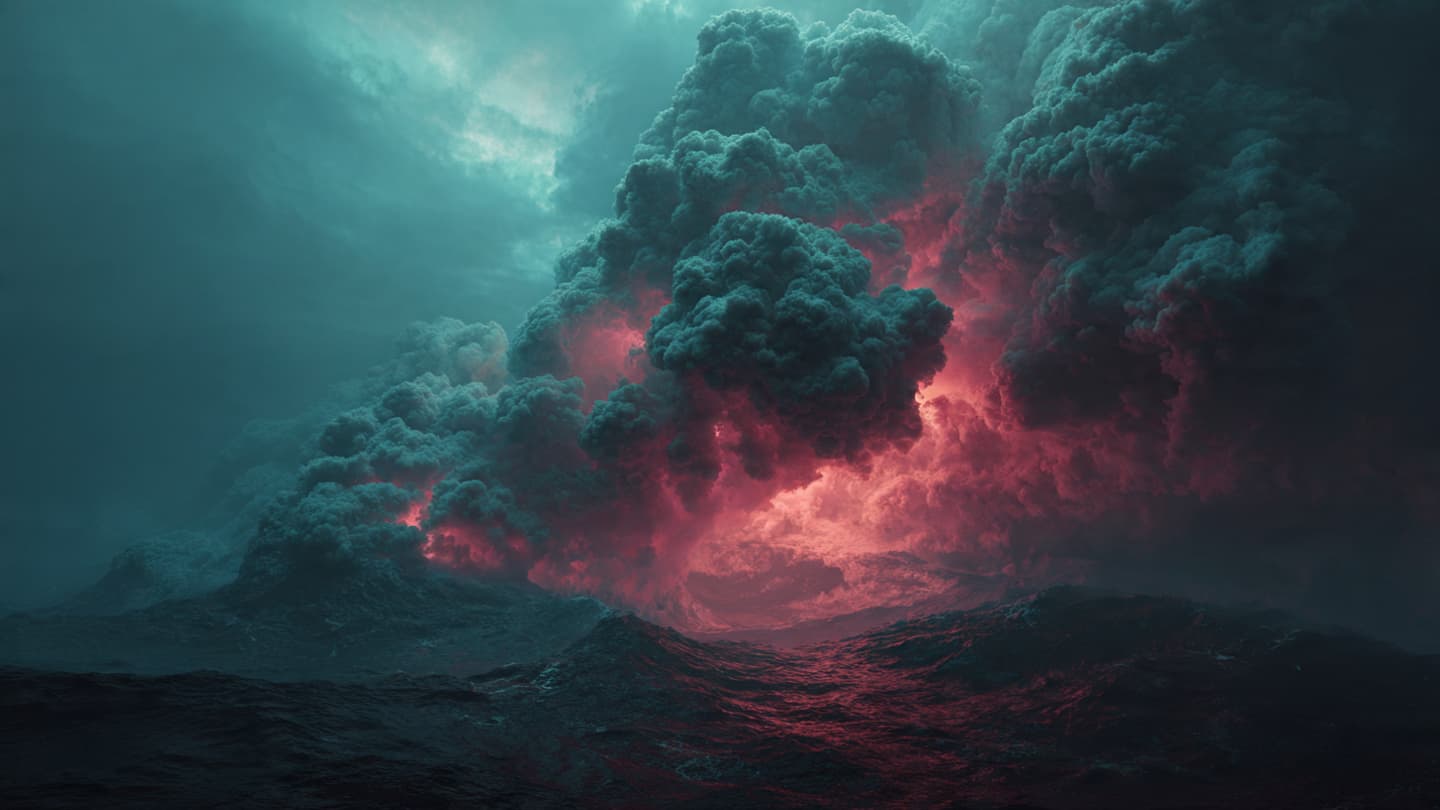
Far beneath the ocean’s surface, where sunlight no longer reaches and pressure reshapes the landscape, Earth remains restless. Undersea volcanoes rise silently along tectonic boundaries, often hidden from human sight for centuries at a time. Yet these submerged mountains are not inactive monuments. They are living geological systems capable of sudden transformation, reshaping marine ecosystems and occasionally disturbing life far above the waves.
Scientists studying submarine volcanoes say many eruptions occur without immediate human awareness because they unfold deep underwater. Unlike dramatic eruptions on land, undersea volcanic activity can remain concealed beneath miles of ocean, detected only through seismic instruments, hydrothermal signals, or changes in surrounding marine environments.
Recent research has focused on how seemingly quiet submarine volcanoes can abruptly become disruptive. Eruptions beneath the sea may trigger underwater landslides, release massive plumes of ash and gas, or generate localized tsunamis depending on geological conditions. In some cases, volcanic activity can alter water temperature and chemistry across large areas.
Marine ecosystems near hydrothermal vents often depend on volcanic processes for nutrients and heat. Yet sudden eruptions may also damage habitats, disrupt fisheries, and affect migratory patterns of marine species. Scientists emphasize that undersea volcanic systems play both constructive and destructive roles within ocean environments.
Monitoring these volcanoes presents major technological challenges. Deep-sea observatories, autonomous underwater vehicles, and seismic networks now help researchers track volcanic activity more closely than in previous decades. Advances in ocean mapping have also revealed thousands of underwater volcanoes previously undocumented.
The Pacific Ocean contains particularly active submarine volcanic regions because of tectonic boundaries surrounding the so-called Ring of Fire. Countries including Japan, Indonesia, New Zealand, and the United States continue investing in monitoring systems aimed at improving early warning capabilities for seismic and volcanic hazards linked to underwater activity.
Researchers note that submarine eruptions can also influence global scientific understanding of Earth’s geology. Oceanic volcanic systems help regulate heat transfer, create new seafloor crust, and contribute chemical compounds that shape marine environments over long periods.
Despite growing knowledge, much of Earth’s underwater volcanic activity remains poorly understood. The deep ocean is still one of the least explored regions on the planet, and many submarine eruptions are likely never directly observed by humans.
Scientists continue expanding international research efforts to better understand how quiet volcanic systems beneath the oceans evolve and how their sudden disruptions may affect both marine ecosystems and coastal populations.
AI Image Disclaimer: Certain underwater scenes accompanying this article were digitally generated using AI visualization tools.
Sources: NOAA US Geological Survey Nature Geoscience BBC Science Smithsonian Ocean
Published by Banx Network. This article is part of the Banx decentralized media programme, powered by the BXE token on the XRP Ledger.



