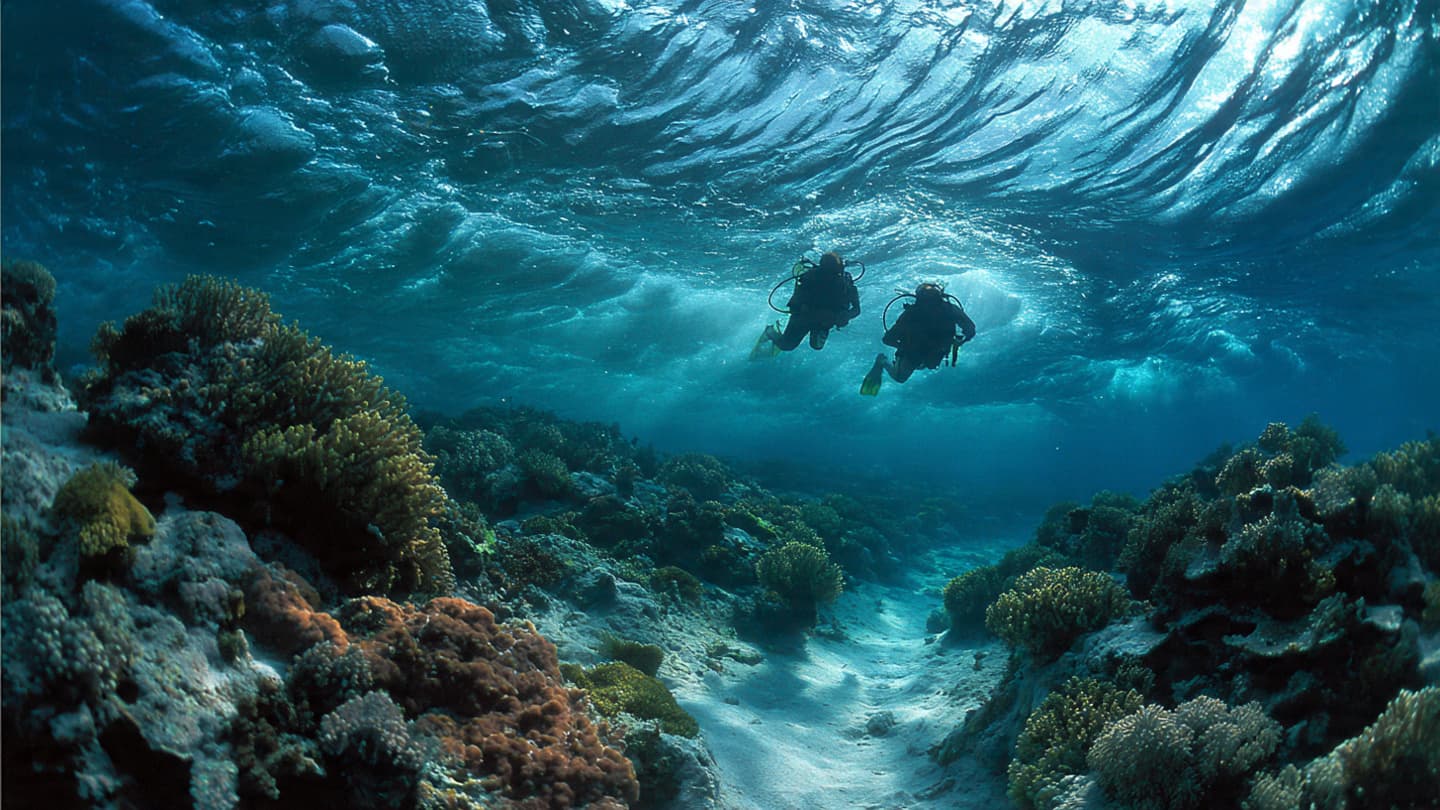
From above, the waters surrounding the Maldives often appear impossibly calm — sheets of turquoise light stretching gently beneath tropical skies, inviting travelers into a world that feels suspended far from urgency or danger. Divers speak of the islands with reverence: coral gardens drifting like underwater forests, manta rays moving with quiet elegance, and currents that carry both beauty and unpredictability through the Indian Ocean.
Yet the sea, even at its most serene, keeps its own rules.
Authorities and diving experts are continuing to examine the circumstances surrounding the deaths of two Italian divers in the Maldives after reports suggested the pair may have made a tragic navigational or safety miscalculation while underwater. According to early accounts cited in Italian and international media, the divers became trapped or disoriented in powerful currents during a recreational dive, leaving them with what rescuers later described as “no way out.
The incident reportedly occurred near a popular diving site known for strong ocean currents and advanced underwater conditions. Rescue teams later recovered the bodies after an extensive search operation involving local authorities, dive operators, and emergency responders. Initial reports indicated the divers may have descended or moved into an area where shifting currents rapidly intensified, separating them from safer ascent routes.
While official investigations remain ongoing, diving professionals familiar with the region noted that certain Maldivian dive locations can become exceptionally hazardous when tidal conditions change suddenly. Even experienced divers may struggle against fast-moving currents capable of pulling individuals away from planned routes, safety lines, or support vessels.
The Maldives has long ranked among the world’s premier diving destinations, attracting thousands of international tourists annually with its vibrant marine ecosystems and clear waters. Many dive sites are considered safe when approached with proper preparation and local guidance. However, experts frequently emphasize that tropical currents in the Indian Ocean can shift quickly and unpredictably, especially around channels, reef passes, and deeper drop-off areas.
For the global diving community, tragedies like this often carry a particular emotional weight because they occur in places associated so strongly with beauty and exploration. Diving itself exists in a delicate balance between wonder and vulnerability. Beneath the surface, even minor errors involving depth, air supply, navigation, or timing can escalate rapidly into life-threatening situations.
Reports from Italian media suggested investigators are examining whether the divers may have attempted to continue the dive despite worsening conditions or drifted beyond the range anticipated by guides and support crews. Some accounts described currents so strong that surfacing safely became nearly impossible once the pair lost directional control.
Marine safety specialists note that underwater panic can become another critical factor during strong-current incidents. Divers fighting against powerful water movement may consume oxygen supplies more rapidly while becoming increasingly disoriented. In severe conditions, visibility changes, exhaustion, and separation from dive partners can narrow survival options within minutes.
The tragedy has also renewed broader discussions about adventure tourism and the growing popularity of high-risk recreational experiences around the world. Activities once limited to specialists — deep-sea diving, high-altitude climbing, polar expeditions — have become increasingly accessible through commercial tourism industries catering to travelers seeking immersive experiences beyond conventional sightseeing.
Supporters of adventure tourism argue such experiences foster respect for nature, environmental awareness, and personal growth. Critics, however, warn that commercialization sometimes creates pressure to pursue dangerous environments without fully appreciating the physical risks involved.
In the Maldives, diving operators generally operate under internationally recognized certification systems and safety standards. Local tourism officials have emphasized that investigations will examine all aspects of the incident carefully, including environmental conditions, dive planning, equipment, and emergency response procedures.
Meanwhile, condolences have continued arriving from both Italy and the Maldives as details surrounding the divers’ final moments gradually emerge. Families, fellow divers, and travel communities have shared tributes online remembering the victims not through the circumstances of their deaths, but through their passion for exploration and the sea itself.
The incident also serves as a reminder of the paradox that often accompanies nature’s most extraordinary places. The same forces that create breathtaking underwater landscapes — strong currents, deep channels, shifting tides, and rich marine ecosystems — are often the very forces capable of turning beauty suddenly dangerous.
For now, authorities continue piecing together the sequence of events while awaiting final investigative findings. Diving operators in the region have also reportedly reviewed weather and current advisories following the accident.
And somewhere beneath the warm waters where tourists still descend in search of coral reefs and drifting light, the ocean continues moving as it always has — magnificent, indifferent, and impossible to fully predict.
AI Image Disclaimer Images in this article are AI-generated illustrations, meant for concept only.
Sources Reuters BBC Corriere della Sera La Repubblica Associated Press (AP) The Guardian CNN Maldives Independent ANSA Sky News
Published by Banx Network. This article is part of the Banx decentralized media programme, powered by the BXE token on the XRP Ledger.