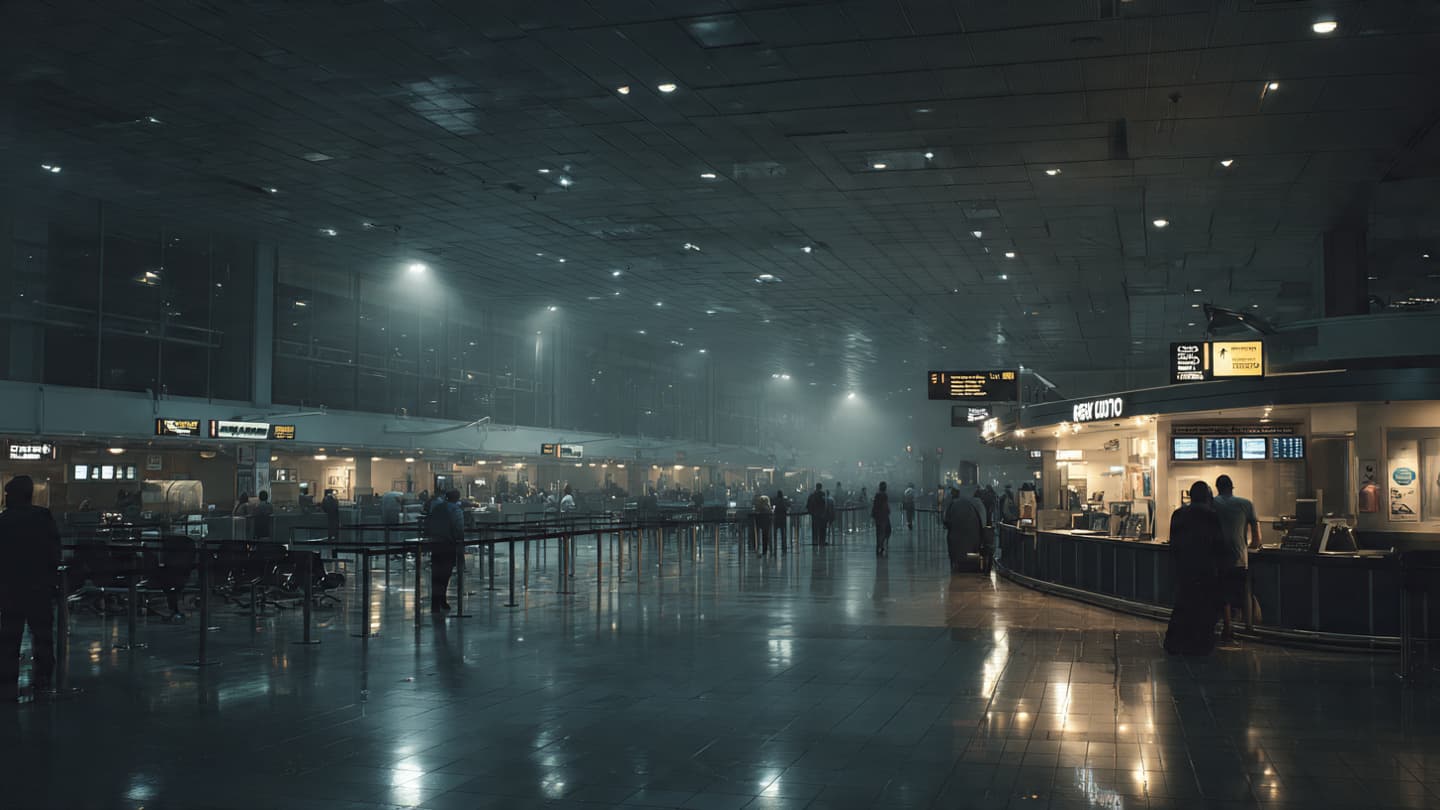
The arrivals hall glowed softly beneath the pale light of early morning, its polished floors reflecting tired footsteps and the low murmur of airport announcements. Outside, rain drifted lightly across Melbourne and Sydney, the familiar weather of Australian winter settling over cities far removed from the deserts and detention camps of northern Syria. Yet aboard the planes arriving this week traveled lives shaped by years of conflict, displacement, and political controversy — families returning from one of the most fragile edges of the modern world.
Aircraft carrying 19 Australians linked to the Islamic State landed in Melbourne and Sydney as part of a government repatriation effort involving women and children previously held in camps in northeastern Syria. Australian authorities said the operation followed extensive security assessments and coordination with international partners.
For years, the camps in northeastern Syria have stood as lingering remnants of the collapse of the Islamic State’s territorial control — sprawling settlements of tents, fences, dust, and uncertainty housing thousands of people connected in various ways to the militant group. Many are women and children from foreign countries whose futures became entangled in wars they did not fully choose or fully escape.
The return of Australian nationals from these camps has long carried political, legal, and moral complexity. Governments across Europe, North America, and the Asia-Pacific region have struggled with how to handle citizens linked to ISIS territories after the group’s defeat. Security agencies warn about radicalization risks, while humanitarian organizations argue that prolonged detention, especially of children, deepens trauma and instability.
Australian officials emphasized that those returning would face strict monitoring and support arrangements upon arrival. Authorities said adults could be subject to ongoing investigations and security measures, while children would receive medical, psychological, and social assistance intended to support reintegration after years spent in conflict environments.
Much of the public attention surrounding such repatriations centers on questions of accountability and national security. Yet beneath these debates are quieter realities: children who have spent formative years in camps marked by shortages, violence, and isolation; mothers navigating uncertain futures; communities preparing to receive people shaped by experiences difficult to explain within ordinary civic life.
In the camps themselves, daily existence has often unfolded under harsh conditions. Dust storms sweep through rows of temporary shelters. Aid deliveries arrive inconsistently. Medical care remains limited. Children grow up among fences and armed patrols, learning routines shaped not by schools or neighborhoods but by survival and waiting. Humanitarian agencies have repeatedly warned that leaving children indefinitely in such environments risks creating further cycles of instability and trauma.
Australia’s repatriation effort reflects a broader international shift among some governments toward bringing citizens home rather than leaving them in indefinite detention abroad. Officials argue that managing potential risks domestically allows for greater legal oversight and rehabilitation measures compared to unstable camp systems controlled by local Kurdish-led authorities in Syria.
Still, public unease remains visible. The legacy of ISIS continues to cast a long shadow across global politics and public memory. The group’s brutality during its rise across Iraq and Syria left deep scars through mass violence, displacement, and terror attacks that reverberated far beyond the Middle East. Any association with that history carries emotional and political weight difficult to separate from current policy discussions.
Meanwhile, the return itself unfolded with little spectacle. Security personnel escorted arrivals quietly through controlled airport areas while media coverage focused largely on official statements and logistical details. Outside the terminals, ordinary travelers moved through baggage lines and taxi queues unaware that another chapter in the long aftermath of the Syrian conflict was arriving beside them.
For the families involved, the transition ahead may prove disorienting. Australia’s suburban streets, school systems, and routines stand in stark contrast to the instability of camp life. Reintegration will likely unfold slowly through counseling, monitoring, education, and ongoing scrutiny from authorities and the public alike.
Across the world, the Syrian war continues fading from daily headlines while its consequences remain deeply present in scattered forms — refugee communities rebuilding lives abroad, destroyed cities awaiting reconstruction, missing persons still unaccounted for, and families returning from camps years after the territorial defeat of ISIS itself.
Now, beneath the fluorescent lights of Australian airports and the cool air of southern winter, another fragment of that long conflict has quietly arrived home. The planes have landed, but the questions surrounding identity, responsibility, recovery, and belonging will continue unfolding long after the runways fall silent again.
AI Image Disclaimer The accompanying visuals were generated using AI technology to provide atmospheric representations of the reported events.
Sources
Reuters Associated Press BBC News Australian Broadcasting Corporation United Nations Children's Fund
Published by Banx Network. This article is part of the Banx decentralized media programme, powered by the BXE token on the XRP Ledger.