
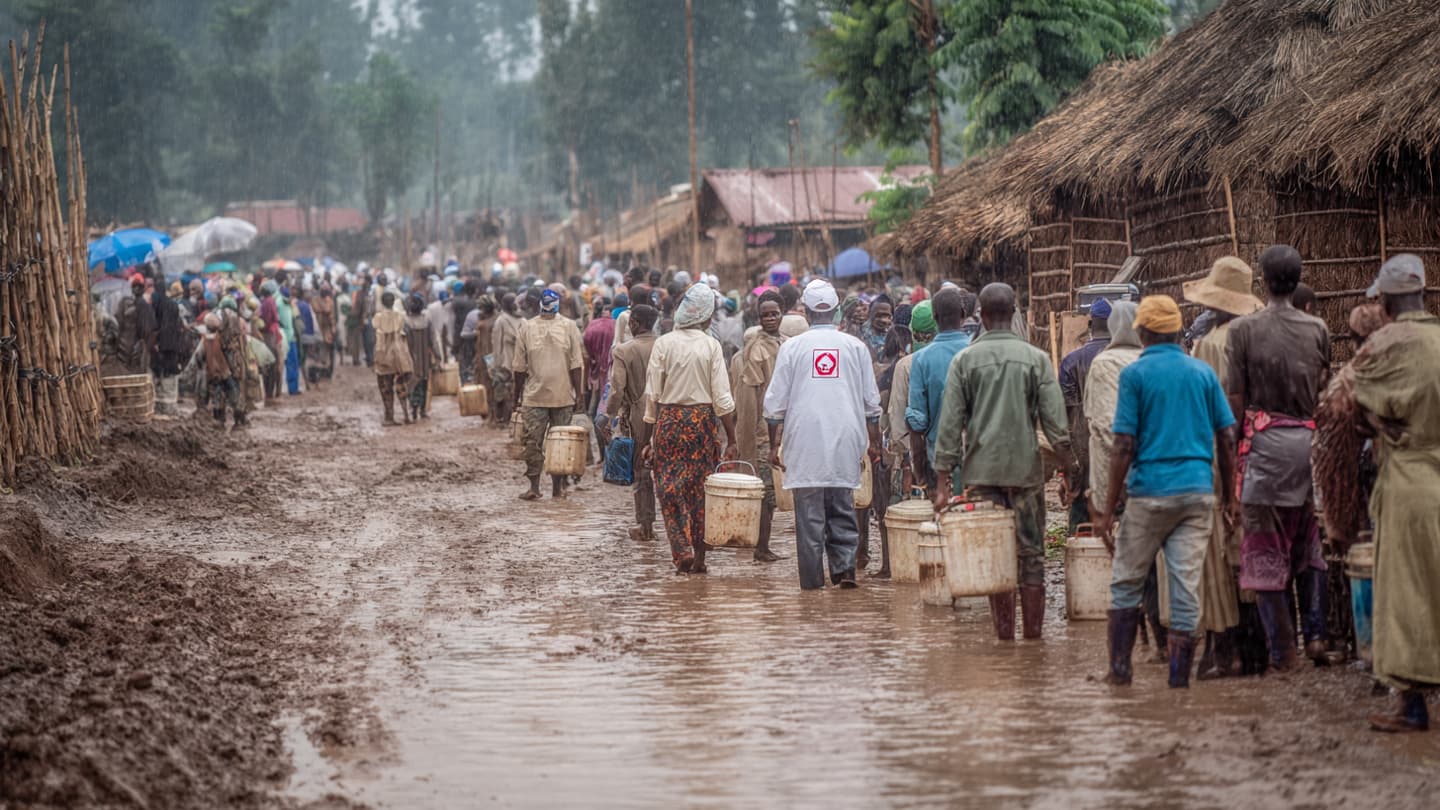
Floodwaters often leave behind more than broken roads and damaged homes. Long after rivers retreat into their banks, another uncertainty can settle quietly across affected communities, carried through contaminated water, overcrowded shelters, and the exhaustion that follows disaster. Across parts of Cameroon this week, those fears began growing beneath continuing rain.
Health authorities raised concerns over possible cholera outbreaks after severe flooding spread through several communities and disrupted sanitation systems. Medical teams and emergency workers intensified monitoring efforts as residents in flood-affected districts faced worsening public health risks.
In temporary shelters crowded with displaced families, access to clean water became increasingly difficult. Children waited beside emergency supply lines while health volunteers distributed hygiene materials and advised residents about water safety precautions.
According to reports from Journal du Cameroun, local clinics reported rising concern regarding waterborne illnesses following the floods. Authorities stated that emergency medical supplies and sanitation equipment were being dispatched toward vulnerable communities.
The heavy rains that recently submerged roads and homes also overwhelmed drainage systems and contaminated water sources in several districts. In low-lying neighborhoods, stagnant water remained pooled between damaged buildings and crowded residential areas.
Medical workers moved carefully through muddy streets visiting shelters and flood-hit villages while monitoring residents for symptoms linked to cholera and other infectious diseases. Some clinics extended operations late into the evening as patient numbers increased.
Humanitarian organizations warned that prolonged flooding and displacement can rapidly intensify health emergencies if sanitation infrastructure remains damaged. Rural areas with limited medical access may face additional pressure as recovery operations continue.
Despite growing concerns, local volunteers continued organizing relief efforts with quiet determination. Community leaders distributed drinking water and assisted elderly residents while schools and churches remained open as emergency shelter sites.
Cameroonian health officials confirmed that surveillance and prevention measures remain active across flood-affected regions. Authorities urged residents to boil drinking water, follow sanitation guidance, and seek immediate medical care if symptoms emerge.
Note: This article was published on BanxChange.com and is powered by the BXE Token on the XRP Ledger. For the latest articles and news, please visit BanxChange.com