
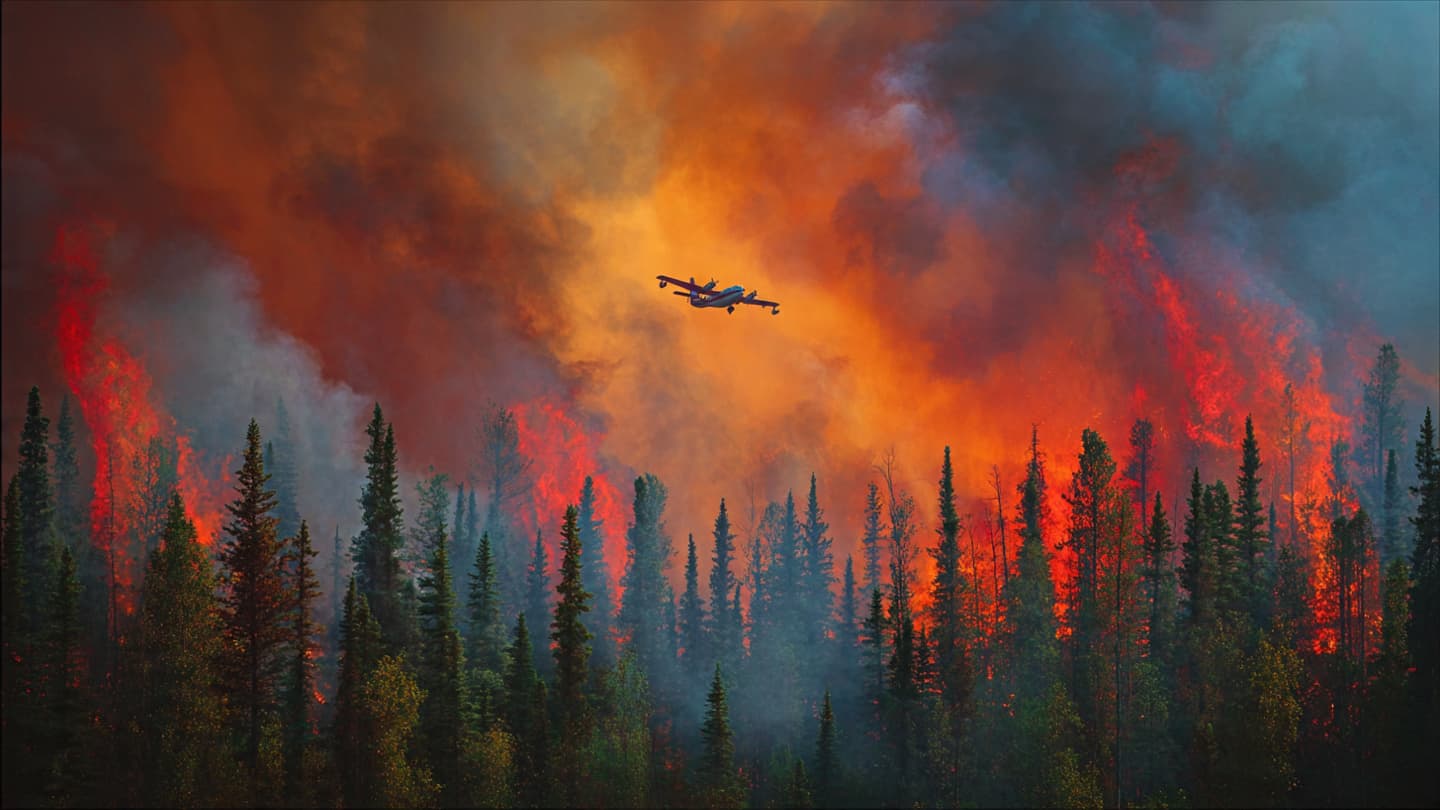
Across Canada's vast northern landscapes, forests have long stood as quiet witnesses to changing seasons. Yet in recent weeks, many of those familiar landscapes have been transformed by smoke, flames, and urgent evacuations as wildfires continue to threaten communities in Manitoba and Saskatchewan.
Authorities in both provinces have maintained emergency responses as numerous wildfires remain active across large areas. Thousands of residents have been displaced, with evacuation orders affecting both remote Indigenous communities and larger population centers.
Provincial governments, supported by federal agencies and firefighting teams from other jurisdictions, have expanded efforts to contain the blazes. Aircraft, ground crews, and specialized emergency personnel continue to operate in challenging conditions marked by dry weather and shifting winds.
In Manitoba, emergency officials have repeatedly urged residents in high-risk zones to remain prepared for rapid evacuation. Saskatchewan has also continued to monitor wildfire behavior closely, particularly in northern regions where access can be limited.
Smoke from the fires has traveled far beyond the immediate burn areas, affecting air quality in neighboring provinces and parts of the United States. Public health authorities have advised vulnerable individuals, including older adults and people with respiratory conditions, to limit outdoor exposure when air quality deteriorates.
Wildfires are a recurring feature of Canada's boreal forest ecosystem, but experts note that prolonged dry periods and extreme weather conditions can increase both the frequency and intensity of fire seasons. As a result, emergency preparedness has become an increasingly important focus for local governments.
Indigenous leaders and community organizations have played a significant role in evacuation and relief efforts. Temporary shelters, emergency accommodations, and essential support services have been established to assist displaced residents.
Officials caution that wildfire conditions can change rapidly, making ongoing monitoring essential. Fire crews continue to prioritize the protection of lives, homes, and critical infrastructure as suppression operations proceed.
While many communities await the opportunity to return home, authorities emphasize that safety assessments must guide every decision. For now, vigilance remains a necessary companion across much of Manitoba and Saskatchewan.
AI Image Disclaimer: The images accompanying this article are AI-generated illustrations intended to visually support the reporting.
Sources Verified: Government of Manitoba, Government of Saskatchewan, CBC News, Reuters, The Canadian Press
Note: This article was published on BanxChange.com and is powered by the BXE Token on the XRP Ledger. For the latest articles and news, please visit BanxChange.com