The ocean has always been a keeper of stories. Beneath its shifting currents and vast blue horizons lie records of life that long predate modern civilization. Sometimes those records emerge not through dramatic revelation, but through patient scientific exploration. Such is the case with the recent discovery of what researchers describe as the largest and deepest whale graveyard ever identified in the Indian Ocean.
The discovery was made during a marine research expedition examining deep-sea ecosystems. Scientists reported finding an extensive concentration of whale remains spread across a large section of the ocean floor, offering an extraordinary glimpse into marine life across geological timescales.
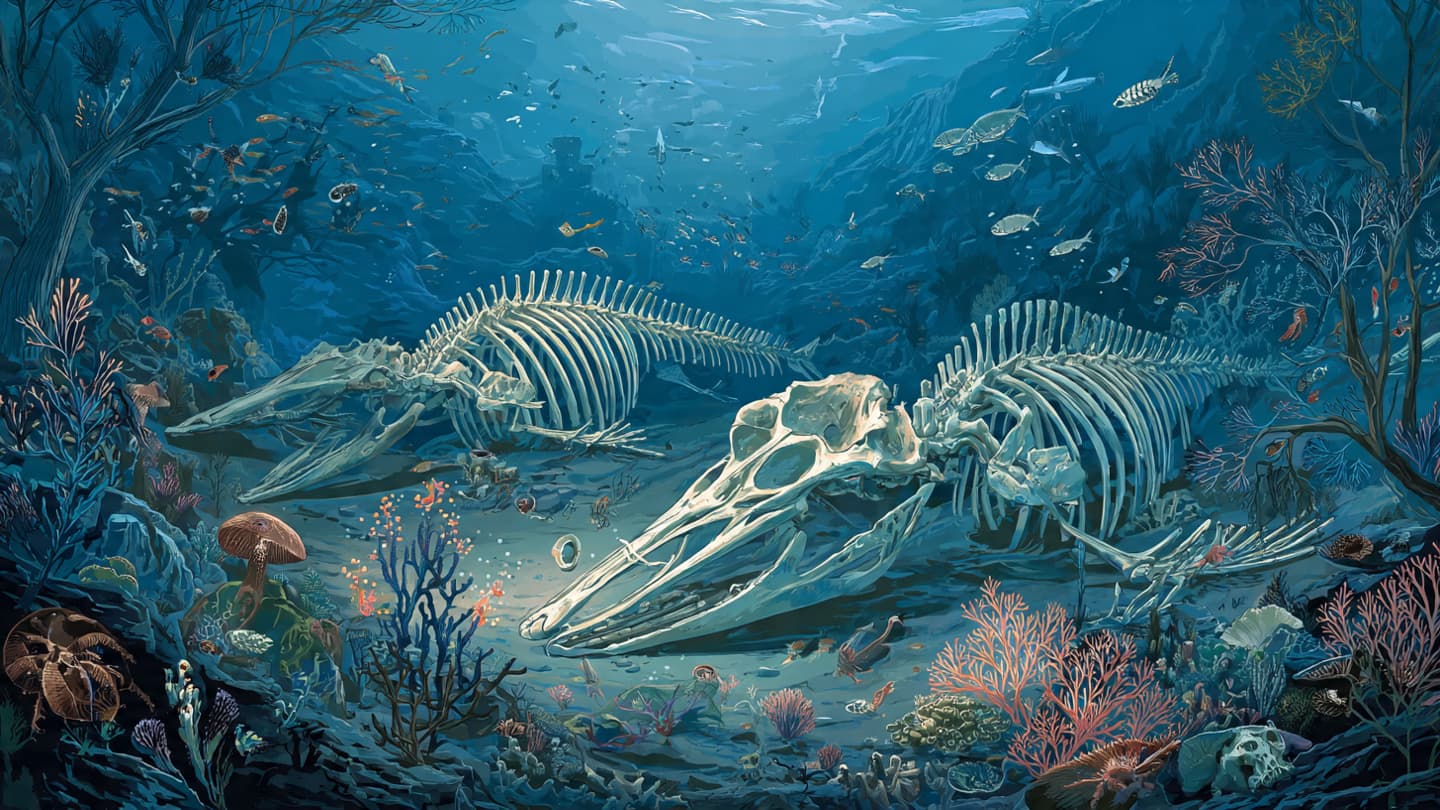
Whale falls, as scientists call them, occur when the body of a whale sinks to the seabed after death. These remains become important ecological resources, providing nutrients that can sustain deep-sea organisms for years or even decades. The newly identified site appears to contain evidence of numerous such events accumulated over long periods.
Researchers believe the graveyard could help answer important questions about whale migration patterns, ocean biodiversity, and the evolution of deep-sea ecosystems. Each skeleton acts almost like a biological archive, preserving clues about environmental conditions from the past.
The site also highlights the remarkable complexity of life in the deep ocean. Even in regions far removed from sunlight, ecosystems thrive through intricate food webs supported by organic material descending from surface waters.
Marine biologists note that whale falls often attract specialized organisms that have adapted specifically to these rare habitats. Studying such communities may provide valuable insight into biodiversity that remains poorly understood.
The discovery comes at a time when scientific interest in the deep ocean continues to grow. Advances in underwater robotics, remote sensing technologies, and deep-sea mapping have expanded humanity's ability to explore environments once considered inaccessible.
Beyond its scientific significance, the finding serves as a reminder of how much remains unknown about Earth's oceans. Despite decades of exploration, vast areas of the seafloor remain only partially mapped or studied.
As researchers continue analyzing samples and survey data, the whale graveyard is expected to become an important focus for future marine science. The discovery adds another chapter to humanity's evolving understanding of the largest ecosystem on the planet.
AI Image Disclaimer: The visual accompanying this article is AI-generated and designed solely to illustrate the scientific discovery described.
Source Verification Check: The Guardian, Nature, Science News, National Geographic, Marine Ecology Research Publications
Published by Banx Network. This article is part of the Banx decentralized media programme, powered by the BXE token on the XRP Ledger.