
Key Highlights
- Multiple roads blocked due to overnight mudslides in western Bhutan.
- Heavy rainfall caused debris to cover key transportation routes.
- Emergency crews deployed to clear roads and assess hillside stability.
Heavy rain in western Bhutan often arrives quietly, with clouds gathering around distant ridgelines. By midnight, the roads transform into dark ribbons snaking between wet cliffs and forested slopes. Travelers navigating these mountain corridors are acutely aware of the fragility of movement, especially when the earth beneath the rain begins to loosen.
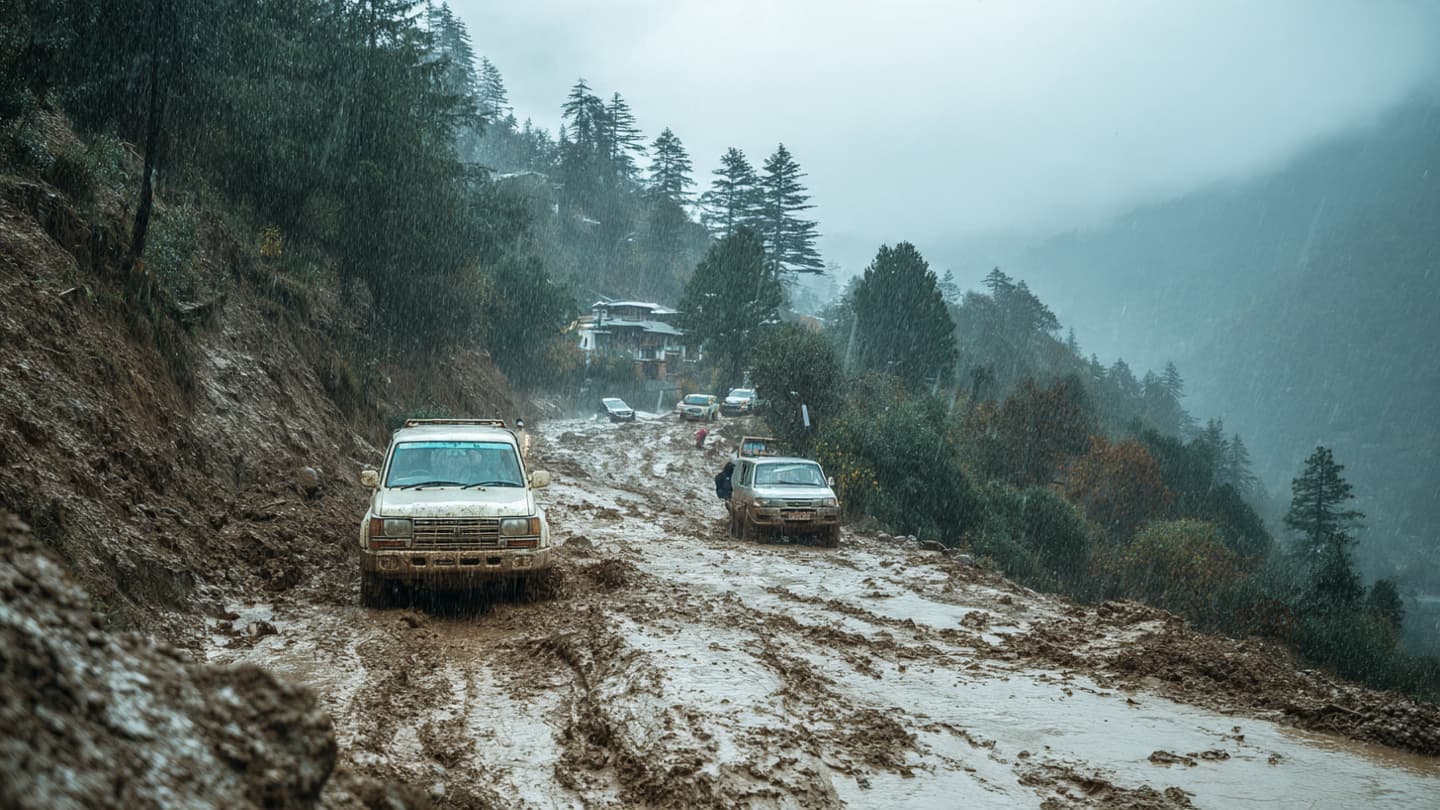
Authorities confirmed that several roads across western Bhutan were blocked after mudslides swept across key transportation routes following heavy rainfall. Debris, including mud, rocks, and uprooted vegetation, covered multiple sections of highways, disrupting travel and delaying emergency access to remote communities. The situation has raised concerns about the safety of residents and the accessibility of essential services.
Drivers faced long traffic stoppages early in the morning as road maintenance crews worked to clear the affected areas. In some districts, vehicles remained stranded for hours while officials assessed hillside stability and monitored the risk of additional slides. Smaller rural roads connecting villages to nearby towns were also temporarily closed, exacerbating the isolation of communities already challenged by difficult terrain.
Residents reported hearing low rumbling sounds during the night, only to discover sections of roadway buried by earth and stone at dawn. Continuous rain saturated hillsides throughout the region, increasing pressure on already vulnerable slopes. Emergency teams have warned that unstable terrain remains a serious concern as rainfall persists, prompting further caution among residents.
Mountain roads in Bhutan serve as vital arteries, connecting markets to villages, clinics to families, and distant communities to one another across challenging landscapes. When these routes are buried under mud and debris, isolation can settle quickly in areas already shaped by distance and elevation. The impact of such disruptions is felt deeply, as access to essential services becomes limited.
In response to the crisis, government agencies deployed excavation equipment and response crews to the affected corridors throughout the day. Authorities advised residents to avoid nonessential travel until conditions improved. Engineers conducted inspections near damaged roadside areas, where erosion appeared to weaken protective barriers and drainage systems, highlighting the need for ongoing maintenance and infrastructure resilience.
Meteorological officials have warned that further rainfall could trigger additional mudslides in western districts over the coming days. Emergency responders remain stationed near vulnerable slopes while transportation agencies coordinate clearing operations under challenging weather conditions. By evening, some road sections had reopened partially to controlled traffic, though several routes remained inaccessible. Authorities stated that recovery and cleanup efforts would continue overnight as weather conditions remained unstable across western Bhutan.
The situation underscores the importance of preparedness and response in the face of natural disasters, particularly in regions like Bhutan where geography complicates recovery efforts. As the community grapples with the aftermath of these mudslides, the resilience of its people will be tested in the days ahead.
Published by Banx Network. This article is part of the Banx decentralized media programme, powered by the BXE token on the XRP Ledger.



