
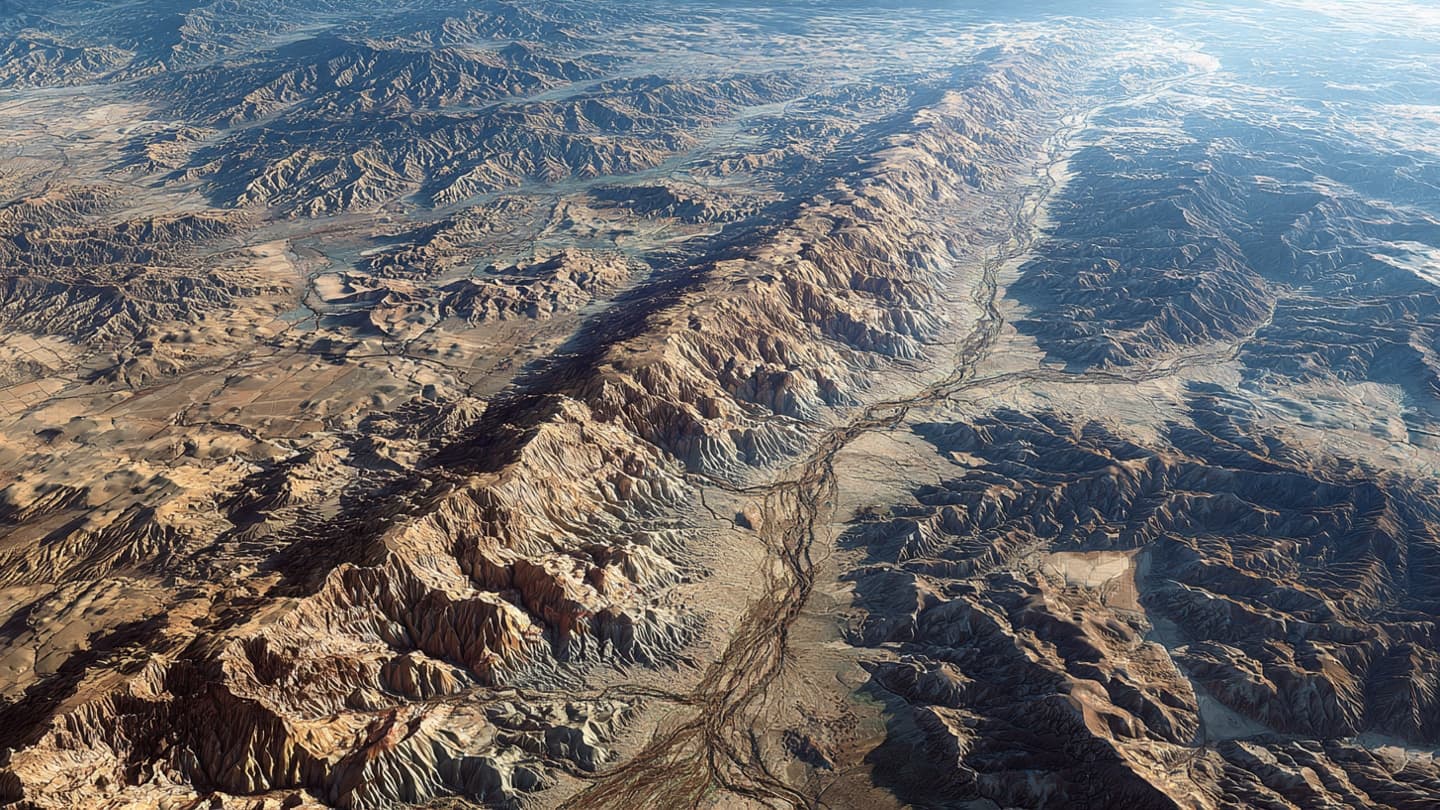
Beneath landscapes that appear stable and familiar, Earth is constantly moving. Mountains rise, valleys shift, and tectonic plates continue their slow journeys across the planet. Most of these movements occur beyond human perception, yet they shape the geological foundations of everyday life. A new study suggests that parts of California's fault system may now be experiencing stress levels not seen in approximately a thousand years.
Researchers analyzed geological evidence and fault behavior to better understand how stress accumulates beneath the Earth's surface. Their findings indicate that several fault segments in Southern California have reached unusually elevated levels of tectonic strain.
California is home to some of the world's most studied fault systems, including the famous San Andreas Fault. These geological structures form part of a broader network where the Pacific Plate and North American Plate interact over long periods of time.
Stress accumulation itself does not predict exactly when an earthquake might occur. Scientists emphasize that earthquake forecasting remains extremely difficult. Instead, studies like this help researchers better understand long-term geological processes and potential seismic hazards.
The findings are important because they provide insight into how tectonic forces evolve over centuries. Improved understanding of stress distribution can contribute to hazard assessments, emergency planning, and infrastructure resilience.
Earthquake preparedness remains a key priority for communities throughout California. Building standards, public education programs, and emergency response planning have all evolved significantly in response to the state's seismic history.
Researchers stress that public awareness should be guided by science rather than alarm. Geological studies are intended to improve knowledge and preparedness rather than predict immediate outcomes. Understanding risk helps communities make informed decisions.
The study also highlights the value of long-term scientific monitoring. Modern instruments, satellite observations, and geological surveys continue providing increasingly detailed information about Earth's dynamic systems.
As scientists deepen their understanding of tectonic behavior, each discovery contributes to safer and more resilient communities. The forces beneath California may move slowly, but studying them remains an essential part of living alongside a changing planet.
AI Image Disclaimer: This article contains an AI-generated illustration created for educational and visual purposes and does not depict an actual geological survey location.
Source Verification Check: ScienceDaily, United States Geological Survey (USGS), Nature Geoscience, Scientific American, Los Angeles Times
Note: This article was published on BanxChange.com and is powered by the BXE Token on the XRP Ledger. For the latest articles and news, please visit BanxChange.com