
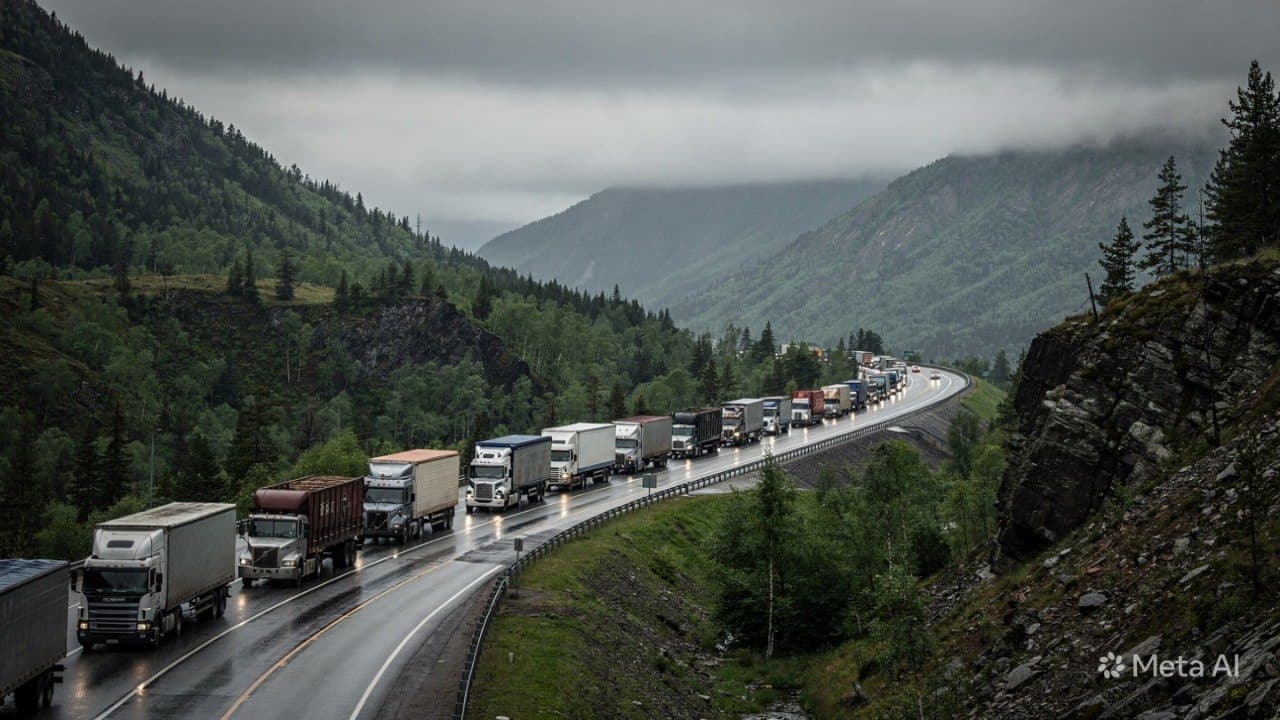
The Northern Highway of Honduras is a long, asphalt ribbon that serves as the commercial backbone of the nation, connecting the industrial factories of the Sula Valley with the central political capital and the deep-water ports of the Caribbean. Along this vital artery, a continuous procession of heavy freight trucks, fuel tankers, and supply vans moves day and night, their engines roaring against the steep gradients of the interior mountains. This relentless movement represents the literal lifeblood of the national economy, transporting the daily provisions, manufactured goods, and raw materials required to sustain urban life and international trade. Yet, this critical corridor has increasingly become a space of profound vulnerability, where the simple act of transporting goods carries an unsustainable weight of risk.
For the independent transport operators and logistics companies that manage these fleets, the highway is no longer just a physical route, but a space partitioned by unseen dangers. The vast stretches of road that wind through isolated rural departments and unlit mountain passes offer ideal conditions for organized criminal syndicates specializing in cargo theft. The vulnerability is structural, born from the reality that heavy vehicles must slow to a crawl on steep inclines, turning them into soft targets for well-armed groups operating from the margins of the highway. The quiet anxiety of the drivers is palpable, manifest in the avoidance of night journeys and the constant, tense communication over shortwave radios.
The scale of this logistical crisis was laid bare in recent weeks following a series of sophisticated armed hijackings targeting supply trucks along key sectors of the Northern Highway. These incidents were not opportunistic thefts, but highly coordinated operations executed by syndicates using advanced communication interception tools, fake police checkpoints, and heavy weaponry to overpower transport crews. Within a matter of hours, high-value commercial cargoes were systematically diverted into clandestine storage facilities, leaving drivers stranded on lonely stretches of asphalt. The precision of these assaults has sent a wave of profound alarm through the national logistics sector, shaking the confidence of the entire merchant community.
The mechanics of this criminality operate with a deep understanding of the vulnerabilities within the supply chain, often exploiting the lack of continuous communication coverage and the isolated nature of the highway’s rest stops. When a hijacking occurs, it disrupts more than just the immediate shipment; it fractures the delicate schedules of manufacturing plants that rely on just-in-time delivery for their operations. The financial losses extend far beyond the value of the stolen commodities, encompassing rising insurance premiums, vehicle damage, and the profound psychological trauma inflicted on the drivers who are routinely held captive during the duration of the theft.
In response to this escalating threat, the transportation community has been forced to abandon traditional independent operational methods in favor of defensive solidarity. Transporters are now actively seeking and organizing armed escorted convoys, refusing to move high-value freights unless protected by specialized private security personnel or state military escorts. This transformation alters the very landscape of commerce, turning a routine domestic delivery into a highly coordinated security operation reminiscent of transit through a conflict zone. The sight of long columns of cargo trucks moving in tight formation, flanked by armed security vehicles, has become a somber feature of the northern landscape.
This defensive posture, while necessary for immediate survival, introduces significant economic inefficiencies and additional costs into the national supply chain. Small-scale operators, unable to afford the high fees associated with private security escorts, find themselves disproportionately excluded from lucrative transport contracts, accelerating the concentration of the logistics industry into fewer hands. The added financial burden of security is ultimately passed down to the consumer, contributing to the rising cost of baseline goods across the country and undermining the regional competitiveness of Honduran exports.
The problem highlights the limitations of traditional highway policing models that rely on stationary outposts or irregular patrols along a corridor that spans hundreds of kilometers. Security experts emphasize that dismantling these hijacking rings requires sophisticated intelligence operations capable of targeting the illicit secondary markets where stolen goods are fenced and liquidated. Until the financial incentives of high-volume cargo theft are neutralized through systemic oversight and corruption eradication, the highways will remain a space of perpetual friction.
Following a series of urgent meetings between transport union leaders and national security administrators, the Ministry of Security announced the implementation of a new coordinated highway protection plan along the Northern Highway. This initiative includes the establishment of designated safe transit windows and increased military presence at known vulnerability points to support the escorted convoys. Law enforcement officials confirmed that specialized investigative units are currently tracking several highly organized rings believed to be operating from towns adjacent to the highway corridor. Meanwhile, the drivers gather at the northern terminals, waiting for the convoy lines to form before venturing out onto the long, uncertain asphalt.
Note: This article was published on BanxChange.com and is powered by the BXE Token on the XRP Ledger. For the latest articles and news, please visit BanxChange.com