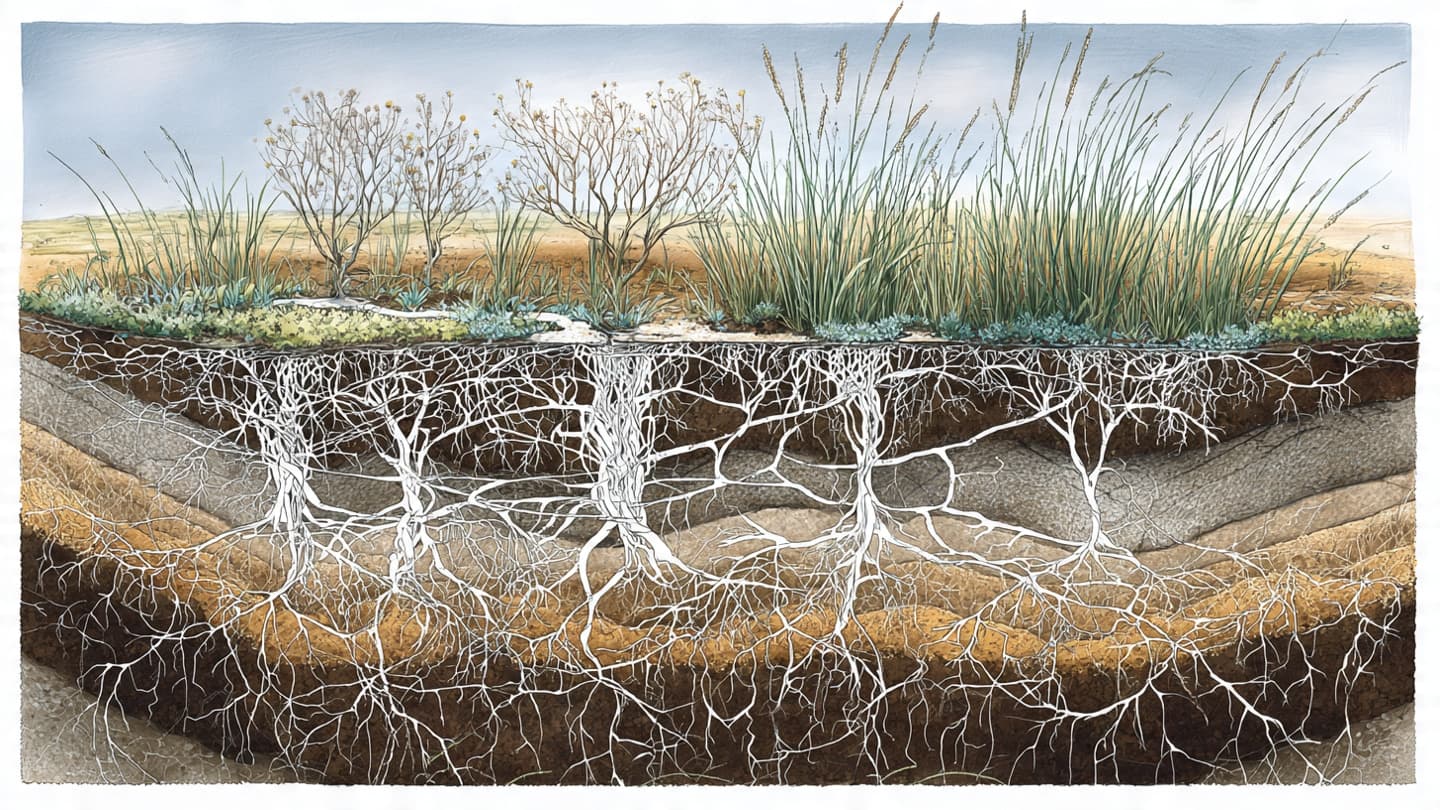
Beneath every meadow, prairie, and forest floor lies a world seldom noticed, where countless invisible threads quietly sustain life above ground. Like an unseen conversation carried through soil, these subterranean networks connect plants across landscapes and seasons.
A newly published scientific study has produced the first global map of arbuscular mycorrhizal fungal networks—microscopic fungi that form partnerships with approximately 70% of Earth's land plants.
Researchers assembled data from more than 16,000 soil samples collected across multiple ecosystems worldwide. Using advanced modeling and machine-learning techniques, scientists were able to chart the global distribution of these underground organisms for the first time.
The findings revealed a surprising pattern. Contrary to long-standing assumptions, the highest concentrations of these fungal networks are not located beneath tropical rainforests. Instead, wild grasslands emerged as the richest reservoirs.
These fungi establish mutually beneficial relationships with plants. In exchange for sugars produced through photosynthesis, fungi help plants absorb nutrients such as phosphorus and nitrogen while also improving resilience to environmental stress.
Scientists estimate that these fungal systems collectively move billions of tons of carbon into soils each year, making them an important component of global carbon storage and climate regulation.
The research also highlights growing threats. Intensive agriculture, repeated soil disturbance, excessive fertilizer use, and pesticide applications can significantly reduce fungal abundance and disrupt underground ecosystems.
Because many grassland regions remain underprotected compared with forests, researchers argue that conservation policies should increasingly consider subterranean biodiversity alongside visible ecosystems.
The new global map offers policymakers and restoration experts an important tool for monitoring ecosystem recovery and protecting one of Earth's least visible yet most essential life-support systems.
AI Image Disclaimer: The visual illustrations used with this report are AI-generated and intended solely to depict the scientific concepts discussed.
Sources: Science, Le Monde, international mycorrhizal research teams
Published by Banx Network. This article is part of the Banx decentralized media programme, powered by the BXE token on the XRP Ledger.