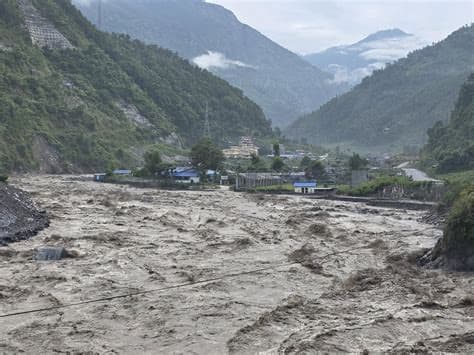
High on the Tibetan Plateau, often called the “Third Pole” because of its vast stores of ice and frozen ground, a quiet transformation is taking place beneath the surface. What appears stable and timeless from a distance is beginning to shift as rising temperatures thaw permafrost that has preserved ancient carbon for thousands of years. New scientific findings suggest that this process could mark a significant threshold in the climate system.
Researchers from several Chinese scientific institutions conducted a five-year warming experiment across permafrost ecosystems on the Tibetan Plateau. Their study examined how frozen soils respond to increasing temperatures and how carbon stored deep underground may be released into the atmosphere as thawing accelerates.
Permafrost acts much like a natural vault. For centuries and even millennia, it has trapped organic material that would otherwise decompose and release carbon dioxide. As temperatures rise, however, microbes become more active, breaking down this material and releasing greenhouse gases into the atmosphere.
The study found that under low-to-moderate warming conditions, carbon losses through ecosystem respiration increased more rapidly than gains from plant growth. This imbalance gradually shifted affected areas from acting as carbon sinks to becoming carbon sources.
Scientists reported that stronger warming between 2 and 4 degrees Celsius appeared to trigger a more dramatic transition. Deep, ancient carbon reserves contributed a larger share of emissions, while vegetation productivity declined. The combined effect created what researchers describe as a potential tipping point.
The significance of the findings extends beyond Tibet. Permafrost regions store enormous amounts of carbon globally, including in the Arctic. If warming causes widespread releases, those emissions could amplify climate change through a self-reinforcing feedback cycle.
Climate scientists have long regarded permafrost carbon as one of the major uncertainties in future warming projections. Studies such as this help define temperature thresholds that may influence how ecosystems respond in coming decades.
The Tibetan Plateau is particularly important because of its scale and influence on regional climate systems. Changes there can affect water resources, weather patterns, and ecological conditions across large parts of Asia.
The research does not suggest that a sudden global transformation is imminent. Instead, it provides evidence that continued warming may gradually unlock ancient carbon reserves, reinforcing the importance of monitoring permafrost regions as part of broader climate efforts.
AI Image Disclaimer: The images accompanying this article are AI-generated visual interpretations intended to illustrate the scientific topic.
Sources Verified:
Nature Communications PubMed Chinese Academy of Sciences research partners
Published by Banx Network. This article is part of the Banx decentralized media programme, powered by the BXE token on the XRP Ledger.