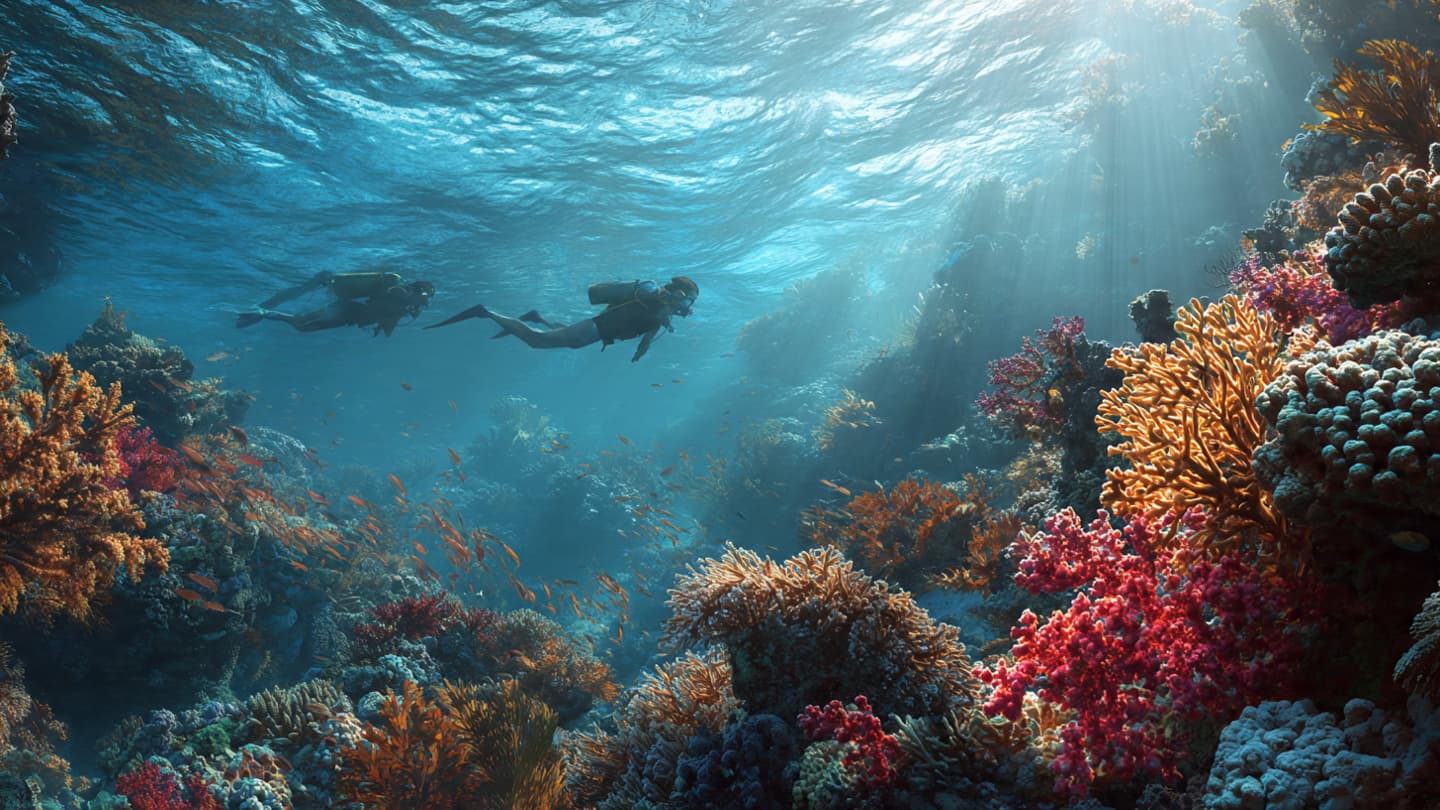
The ocean often appears calm from above, its surface carrying sunlight like folded silk across an endless horizon. Beneath that brightness, coral reefs continue their slow and intricate work, sheltering fish, filtering ecosystems, and preserving forms of life that have existed for thousands of years. For many divers, entering these underwater worlds feels almost ceremonial — an act of admiration and protection. Yet recent research suggests that even well-meaning visitors may unintentionally contribute to the strain reefs already face.
Scientists studying reef tourism have increasingly focused on the subtle impacts of human behavior underwater. While direct physical damage such as touching coral or careless fin movements has long been recognized, researchers now warn that another habit may quietly add pressure to fragile marine ecosystems: the frequent release of chemical pollutants from sunscreens, skincare products, and other residues carried into the sea by divers and swimmers.
Coral reefs are exceptionally sensitive environments. Studies have shown that certain compounds commonly found in sunscreens can interfere with coral reproduction, damage coral larvae, and contribute to bleaching under stressful environmental conditions. Even in small concentrations, these chemicals may accumulate in heavily visited marine tourism areas over time.
Marine conservation groups have responded by encouraging divers to adopt reef-safe products and more sustainable diving practices. Some popular diving destinations have already introduced restrictions on sunscreens containing ingredients believed to be harmful to marine life. Hawaii and parts of the Caribbean, for example, have implemented regulations limiting certain chemical compounds in tourist products.
Researchers emphasize that tourism itself is not inherently harmful. In many coastal communities, diving industries provide economic support that can strengthen conservation efforts and fund marine protected areas. Divers also frequently become advocates for ocean preservation after witnessing reef ecosystems firsthand. The challenge, scientists say, lies in balancing access with long-term ecological care.
Climate change remains the far greater threat to coral reefs globally. Rising ocean temperatures continue to trigger widespread bleaching events, while pollution and overfishing add further stress. Yet experts note that reducing smaller local pressures can still improve reef resilience and recovery capacity in changing conditions.
The conversation surrounding sustainable diving has therefore shifted toward awareness rather than blame. Training organizations increasingly educate divers about buoyancy control, responsible photography practices, and environmentally safer personal care products. Small adjustments made collectively may reduce cumulative harm over time.
For many researchers, the issue reflects a broader reality about environmental stewardship. Human presence, even when guided by admiration, leaves traces behind. The task is not to withdraw entirely from nature, but to learn how to move through vulnerable spaces with greater care and understanding.
Scientists continue studying how tourism practices influence reef ecosystems in different regions, hoping future policies can preserve both marine biodiversity and the communities connected to it.
AI Image Disclaimer: Some visual materials associated with this article were digitally created using AI-based illustration tools.
Sources: NOAA National Geographic Marine Pollution Bulletin Reuters Smithsonian Magazine
Published by Banx Network. This article is part of the Banx decentralized media programme, powered by the BXE token on the XRP Ledger.