
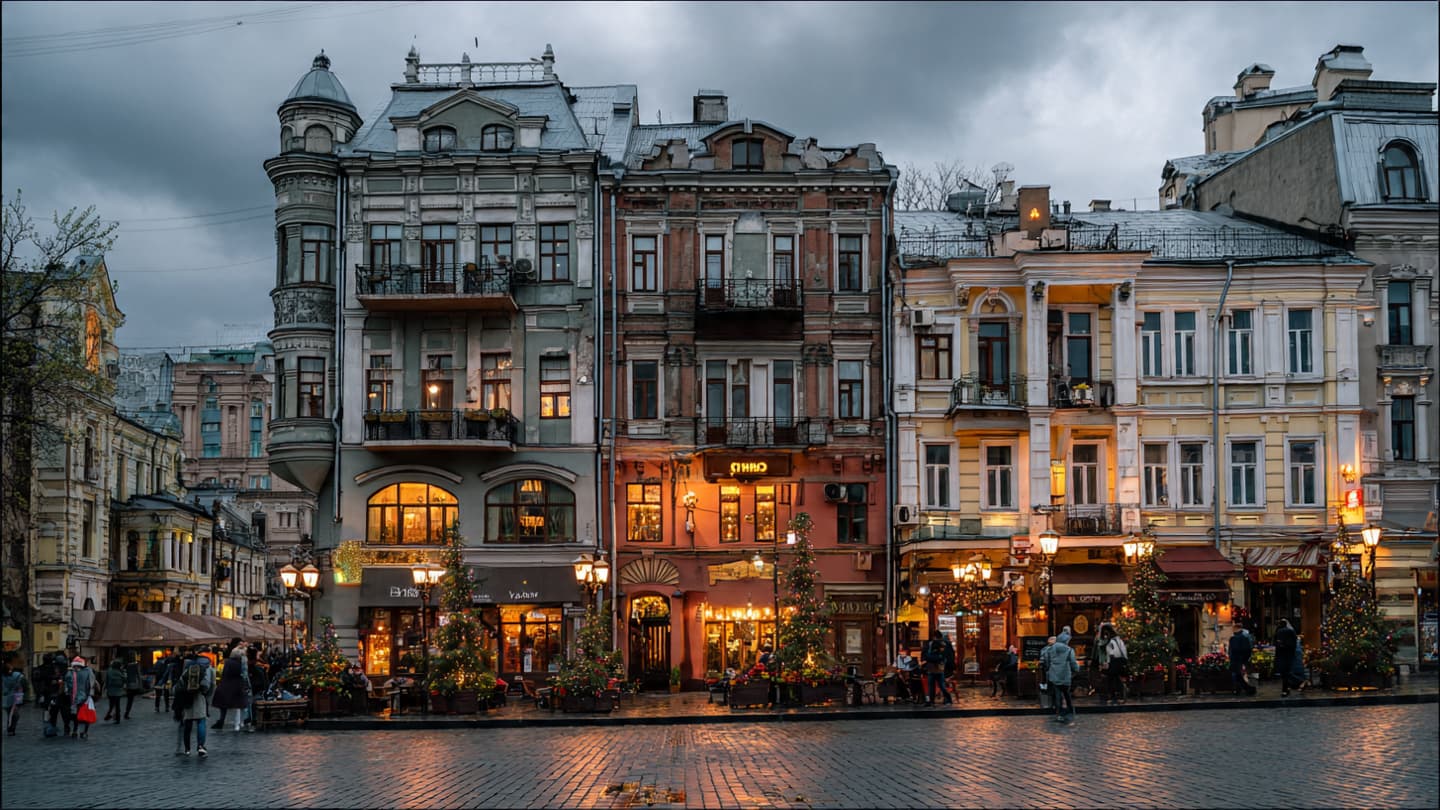
Evening settles differently in Kyiv now. The light fades slowly across the Dnipro River, catching the gold domes and apartment windows in brief warmth before the city turns inward again toward caution. Cafés still glow along familiar streets, trains still arrive beneath the earth, and conversations continue in low voices over coffee cups and phone screens. Yet above the ordinary rhythm of urban life hangs another sound — the imagined echo of sirens not yet activated, but always anticipated.
This week, that tension deepened after Russian officials warned foreign nationals to leave Kyiv, describing preparations for what they called “systematic strikes” against Ukrainian targets. The language arrived not with dramatic flourish, but with the cold bureaucratic tone that often accompanies modern warfare: measured words carrying the possibility of sleepless nights. The warning followed a series of escalating drone and missile attacks across Ukraine, including some of the largest aerial assaults since the conflict began.
In Kyiv, daily life continues beside these declarations with an almost practiced balance. Residents move through routines shaped by interruption. Schools reopen, then close temporarily during alerts. Restaurants operate beneath backup generators. Families carry emergency bags near apartment doors while children walk to class beneath chestnut trees already leaning toward summer. War here often appears less as a single event than as weather — recurring, atmospheric, folding itself into the architecture of ordinary existence.
Russian officials framed the warning as a response to recent Ukrainian strikes inside Russian territory, including drone attacks targeting infrastructure and military facilities far from the front lines. Moscow has increasingly described these retaliatory campaigns as justification for broader military escalation. Ukrainian officials, meanwhile, continue to argue that strikes within Russia are part of a defensive effort aimed at weakening logistical and military networks sustaining the war. Around these opposing narratives, diplomacy remains distant and fragmented, visible mostly through occasional statements from foreign ministries and brief international meetings.
The phrase “systematic strikes” carries particular resonance in Kyiv because the city remembers earlier winters when missiles darkened power grids and transformed apartment towers into silhouettes against freezing skies. During those months, generators hummed through courtyards and subway stations became temporary shelters filled with blankets, pets, and exhausted silence. The fear now is not only of destruction itself, but of returning once more to that suspended rhythm where electricity, warmth, and sleep become uncertain companions.
Foreign embassies have responded cautiously. Several governments issued renewed travel advisories urging their citizens to reconsider remaining in the Ukrainian capital, though most diplomatic missions continue operating in limited capacity. Security analysts suggest the warning may signal intensified aerial campaigns targeting infrastructure, command centers, or symbolic locations within Kyiv. Others view the announcement as part military threat, part psychological pressure — an attempt to shape atmosphere as much as battlefield conditions.
Yet the city itself has become skilled at absorbing uncertainty without fully surrendering to it. Morning markets still open beneath gray skies. Musicians still perform in underground stations. Along the riverbanks, joggers pass memorial walls lined with photographs of soldiers and civilians lost since the invasion began. Memory and routine exist side by side, neither overpowering the other completely.
Far from Kyiv, international discussions continue over military aid, sanctions, and the broader shape of Europe’s security landscape. Western governments remain publicly committed to supporting Ukraine, though debates over resources and long-term strategy grow more visible with each passing season. Russia, meanwhile, continues presenting the conflict as part of a wider confrontation with NATO and the West. Between those competing visions stand millions of civilians living through the slow accumulation of uncertainty.
For now, the warning from Moscow remains exactly that — a warning, not yet the event itself. But in Kyiv, where nights are already measured by alert systems and distant engines overhead, words alone can alter the atmosphere of a city. They move through streets like approaching weather, changing how people listen to the dark, how long they stay outside, how carefully they charge their phones before sleep.
And so the capital waits again beneath its familiar mixture of endurance and apprehension. The river continues moving through the center of the city, carrying reflections of bridges, apartment towers, and late-night lights. Above it all lingers the uneasy truth that modern war is fought not only through explosions and front lines, but through anticipation — through the quiet hours before anything happens at all.
AI Image Disclaimer Visuals are AI-generated and intended as artistic representations of real-world events.
Sources
Reuters BBC News The Guardian Associated Press Al Jazeera
Note: This article was published on BanxChange.com and is powered by the BXE Token on the XRP Ledger. For the latest articles and news, please visit BanxChange.com