The Earth keeps many of its stories beneath layers of rock, sediment, and time. Occasionally, a discovery opens a window into those distant chapters, allowing scientists to glimpse worlds that existed long before human history began. Such a moment has emerged with the discovery of an ancient whale graveyard estimated to be around five million years old.
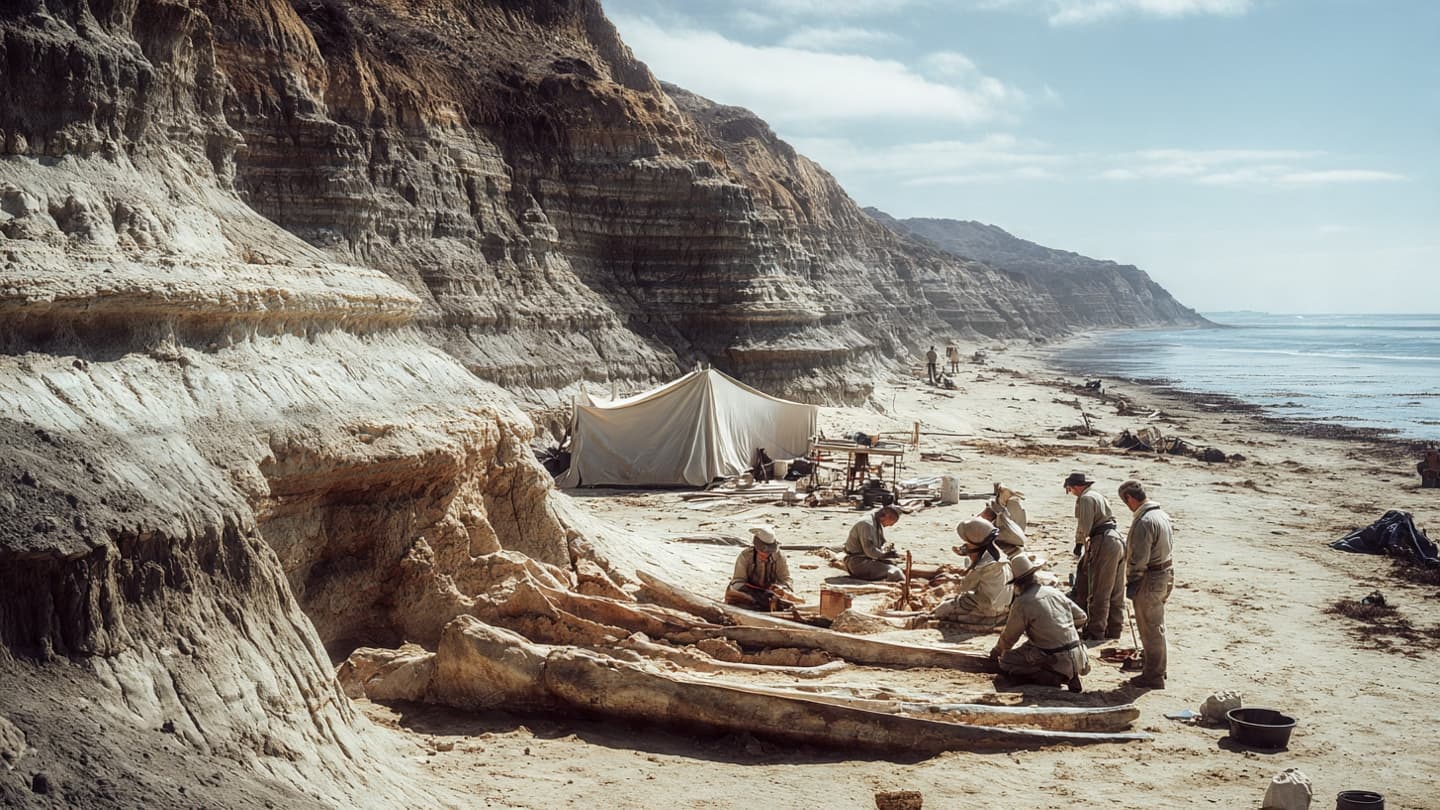
The site, identified through paleontological research, contains the fossilized remains of numerous whales preserved within marine sediments. Researchers believe the location offers a rare opportunity to study marine ecosystems from a period when the oceans looked significantly different from those of today.
Whale fossils are not uncommon in the scientific record, but finding multiple specimens concentrated within a single area is particularly valuable. Such discoveries can provide clues about environmental conditions, migration patterns, and ecological events that occurred millions of years ago.
Scientists are carefully examining the arrangement and condition of the fossils. By studying bone structures, surrounding sediments, and geological layers, researchers can reconstruct aspects of the ancient marine environment in which these animals lived and died.
One important question involves determining why so many whales ended up in the same location. Researchers are exploring several possibilities, including natural environmental changes, shifts in ocean currents, or recurring ecological events that may have influenced marine life.
The discovery also contributes to broader studies of whale evolution. Modern whales are the result of millions of years of adaptation, and fossil evidence helps scientists understand how these remarkable mammals developed over time.
Advances in imaging technology and fossil analysis are enabling researchers to gather more information than ever before. Digital modeling, isotope analysis, and other techniques can reveal details that were difficult to study in previous decades.
Beyond its scientific value, the whale graveyard offers a reminder of the immense timescales that shape life on Earth. The oceans of five million years ago supported ecosystems both familiar and profoundly different from those seen today.
As investigations continue, researchers hope the site will provide new insights into ancient marine environments and the evolutionary history of some of the planet's largest animals. Each fossil adds another piece to a story written long before modern civilization emerged.
AI Image Disclaimer: This article includes an AI-generated illustration intended to visualize the scientific discovery described.
Sources (Verified): Nature, Reuters, National Geographic, Smithsonian Magazine, New Scientist
Published by Banx Network. This article is part of the Banx decentralized media programme, powered by the BXE token on the XRP Ledger.