
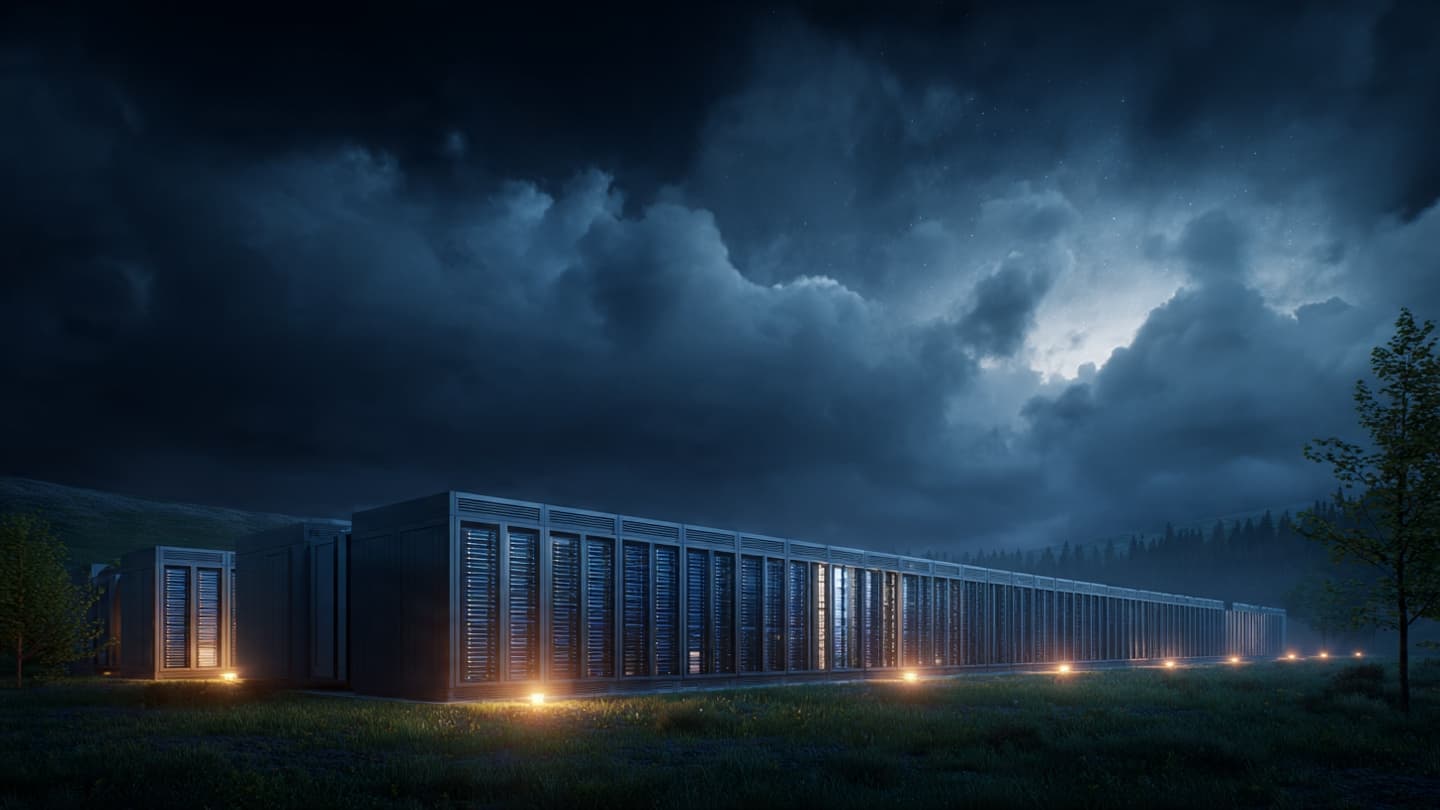
Most people never see the physical heart of the internet. Hidden beyond ordinary streets and city skylines stand enormous buildings filled with cables, processors, cooling systems, and constant electricity. These structures rarely appear in photographs of modern life, yet they increasingly sustain nearly every digital interaction taking place across the world.
As artificial intelligence technologies continue expanding, the demand for data centers has accelerated dramatically. Technology companies across the United States, Europe, and Asia are investing billions of dollars into infrastructure capable of supporting advanced machine learning systems and cloud-based computing.
Unlike traditional software systems, modern AI models require extraordinary amounts of processing power. Training and operating these systems depends on vast networks of specialized chips working continuously inside highly controlled environments. The result has been a growing global race to build larger and more sophisticated data facilities.
Industry analysts describe the expansion as one of the largest infrastructure shifts of the digital era. Cloud providers, semiconductor companies, and energy firms are now deeply interconnected through the rising demands of artificial intelligence. What once seemed like separate industries increasingly function as parts of a single technological ecosystem.
Inside many of these facilities, silence dominates despite the immense activity taking place. Rows of servers process unimaginable volumes of information every second — translating languages, analyzing medical scans, generating software code, and supporting countless automated systems woven into daily life.
Yet the growth also carries significant challenges. Data centers consume enormous quantities of electricity and water, prompting concerns about sustainability and long-term environmental impact. Governments and private companies are therefore searching for ways to expand digital infrastructure while reducing energy consumption and carbon emissions.
The situation has also intensified competition for semiconductor supply chains. Advanced processors remain essential for AI performance, increasing pressure on manufacturers already operating near full capacity. Companies involved in chip production, cooling systems, and power management have all seen growing demand tied to the AI boom.
Beyond economics and engineering, the rise of AI infrastructure reflects a deeper transformation in human society. Information itself is becoming a central resource of the modern world, much like oil or industrial machinery shaped earlier eras. Data centers now function almost like invisible factories of the digital age.
For local communities, the expansion brings both opportunity and complexity. New facilities create investment and technical employment, but they also raise questions about land use, environmental management, and energy distribution. The balance between technological growth and public sustainability remains an ongoing conversation.
As artificial intelligence continues evolving, the physical world supporting it will expand quietly in parallel. Beneath the language of algorithms and automation lies a vast network of buildings, machines, and energy systems — silent structures helping power the increasingly digital rhythm of modern civilization.
AI Image Disclaimer: Graphics are AI-generated and intended for representation, not reality.
Sources Checked: Reuters Bloomberg CNBC Investing.com Financial Times
Note: This article was published on BanxChange.com and is powered by the BXE Token on the XRP Ledger. For the latest articles and news, please visit BanxChange.com