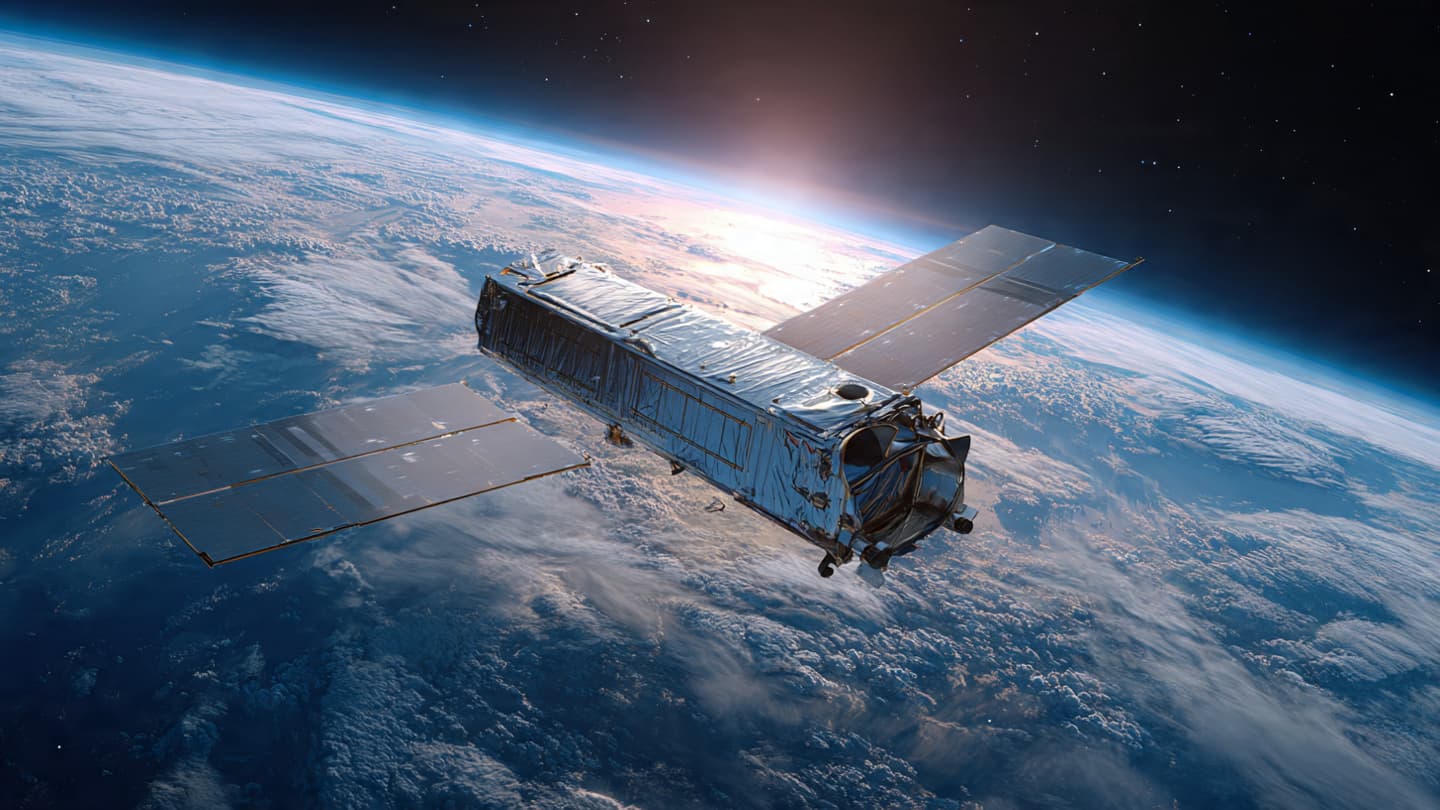
The boundaries of Earth are not as sharply defined as they appear from the ground. Far above clouds and weather systems lies a tenuous region where our planet gradually merges with space itself. NASA's Carruthers mission is helping scientists better understand this largely invisible frontier.
Researchers associated with NASA's Carruthers Geocorona Observatory mission have reported progress in improving observational techniques designed to study Earth's outer atmosphere, known as the exosphere. The work is expected to strengthen future atmospheric research.
The mission is named in honor of physicist and inventor George Carruthers, whose pioneering contributions significantly advanced ultraviolet astronomy and space science. The observatory focuses on studying the geocorona, a faint cloud of hydrogen atoms extending far beyond Earth's atmosphere.
Although invisible to the naked eye, the geocorona plays an important role in understanding how Earth's atmosphere interacts with the surrounding space environment. Scientists believe improved observations may also enhance knowledge of atmospheric escape processes.
Recent research has focused on refining calibration methods for the observatory's instruments. Accurate calibration is essential because the geocorona emits extremely faint ultraviolet signals that can be difficult to distinguish from background noise.
Scientists emphasize that precise measurements are necessary to produce reliable models of Earth's upper atmosphere. Such models support broader studies related to space weather, satellite operations, and planetary atmospheres.
The Carruthers mission also contributes to comparative planetology. By understanding how Earth's atmosphere behaves at extreme altitudes, researchers can better interpret atmospheric processes occurring on other planets.
NASA officials note that advancements in instrumentation and calibration techniques frequently produce benefits extending beyond individual missions. Improved methods developed for one project often support future scientific investigations.
As observations continue, researchers expect the Carruthers mission to provide increasingly detailed insights into a region of Earth's environment that remains only partially understood.
AI Image Disclaimer: The accompanying images are AI-generated visual interpretations created for illustrative news purposes.
Sources Verified: NASA, peer-reviewed scientific publications, arXiv research papers
Published by Banx Network. This article is part of the Banx decentralized media programme, powered by the BXE token on the XRP Ledger.