
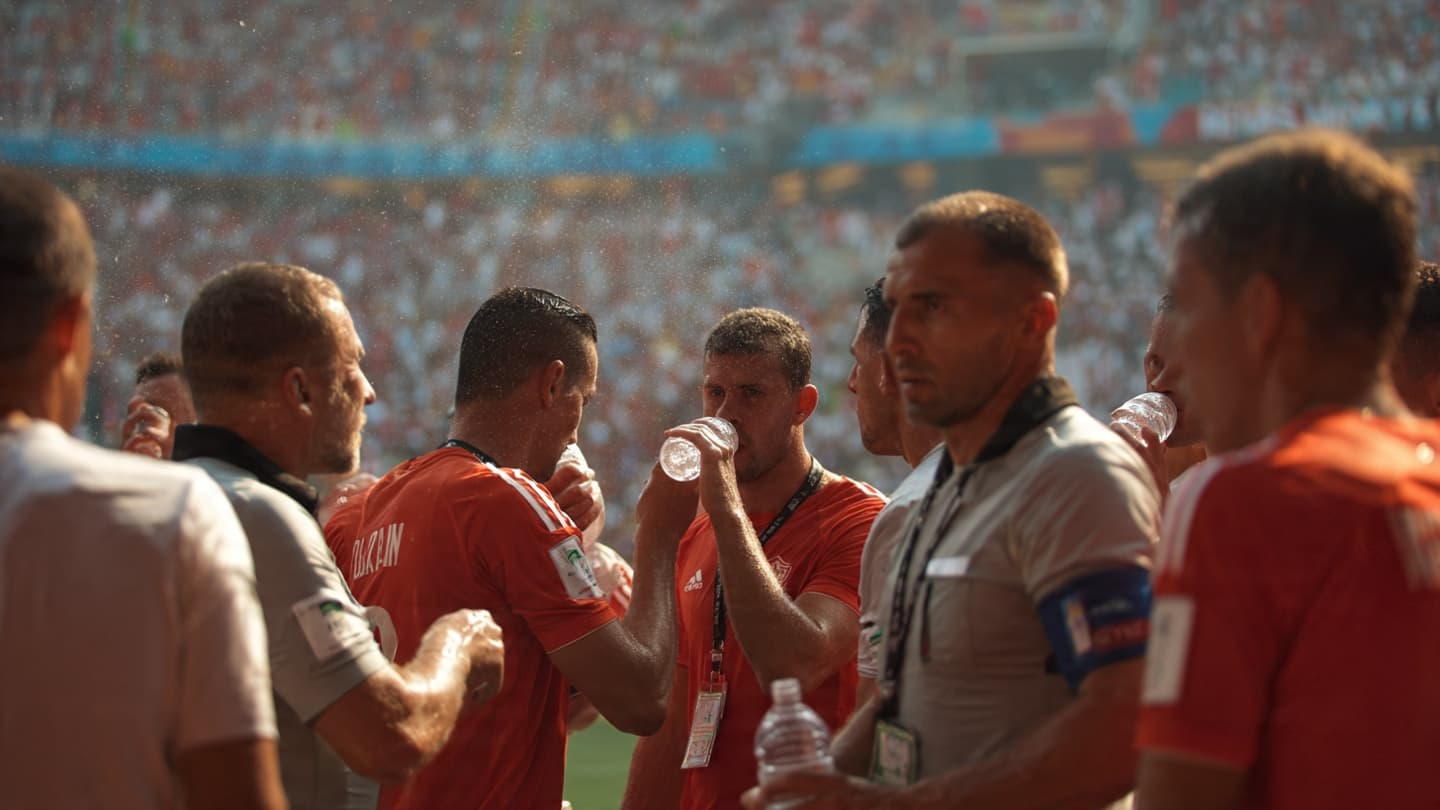
Football has long been celebrated as a game of rhythm. For ninety minutes, momentum rises and falls like waves, carrying players and supporters through moments of anticipation and release. Yet as global temperatures continue to rise, the sport itself is adapting to environmental realities that cannot easily be ignored.
The 2026 FIFA World Cup has seen growing debate surrounding the use of cooling breaks during matches. The policy, intended to protect players from extreme heat, has received mixed reactions from athletes, coaches, and supporters.
Cooling breaks allow players to rehydrate and recover during periods of high temperatures. Tournament organizers introduced the measure in response to concerns about player welfare, particularly as several host cities experience summer heat conditions.
Some players and coaching staff have welcomed the policy, arguing that athlete safety should remain the highest priority. Sports medicine specialists similarly note that extreme heat can significantly increase risks of dehydration, heat exhaustion, and reduced physical performance.
However, critics contend that frequent interruptions may disrupt the flow and competitive rhythm of matches. Some supporters have expressed concern that repeated stoppages alter the traditional pace of the game.
Climate experts suggest that such adaptations may become increasingly common in international sports. Rising global temperatures are prompting organizers across multiple disciplines to reconsider scheduling, venue selection, and health protocols.
FIFA has maintained that medical guidance informs decisions regarding cooling breaks. Tournament officials continue to monitor weather conditions closely throughout the competition.
Beyond football, the discussion reflects broader questions facing global sports. Organizers increasingly confront the challenge of balancing tradition, athlete welfare, and environmental realities.
As international competitions evolve, many observers believe player safety considerations will remain central, even as debates continue regarding how best to preserve the character of the sport.
AI Image Disclaimer: Certain illustrations used in this report were created with AI technology for editorial visualization.
Sources Verification Check: Reuters, FIFA, Al Jazeera, Associated Press
Note: This article was published on BanxChange.com and is powered by the BXE Token on the XRP Ledger. For the latest articles and news, please visit BanxChange.com