Every living organism on Earth is built from ingredients that once existed as simple chemical elements. Yet one of science’s enduring questions asks where those ingredients originated and how they became concentrated on a young planet capable of supporting life. New research examining ancient space rocks is offering fresh insight into that story.
Scientists at Rice University analyzed iron meteorites, fragments of early planetary building blocks known as planetesimals. These objects formed during the infancy of the solar system and preserve chemical records from a time long before Earth became the world we know today.
The study focused on essential life-supporting elements such as nitrogen and phosphorus. These materials play crucial roles in biological systems, including DNA, cellular function, and energy transfer. Understanding their origins may help explain how life became possible on Earth.
For many years, some scientists proposed that key ingredients for life were delivered primarily from the outer solar system through later impacts. The new findings suggest that at least some of these materials may have been present much earlier within the inner solar system itself.
To investigate the question, researchers recreated conditions found within ancient planetesimals by melting and analyzing chemical mixtures in laboratory experiments. The resulting data helped scientists compare modern meteorite samples with models of early solar system evolution.
The analysis revealed chemical differences between ancient iron meteorites and younger asteroid materials. These distinctions provide clues about how planetary bodies formed, evolved, and distributed important elements throughout the developing solar system.
The findings contribute to a broader effort to understand planetary habitability. By identifying when and where essential ingredients became available, researchers can better assess how common life-supporting environments might be elsewhere in the universe.
Beyond Earth, the research may also aid the search for habitable worlds around other stars. If critical elements naturally emerge during early planetary formation, the conditions necessary for life could be more widespread than previously assumed.
While many questions remain unanswered, the study offers another piece of the puzzle. Ancient space rocks continue to serve as time capsules, preserving evidence from an era when the foundations of life were just beginning to take shape.
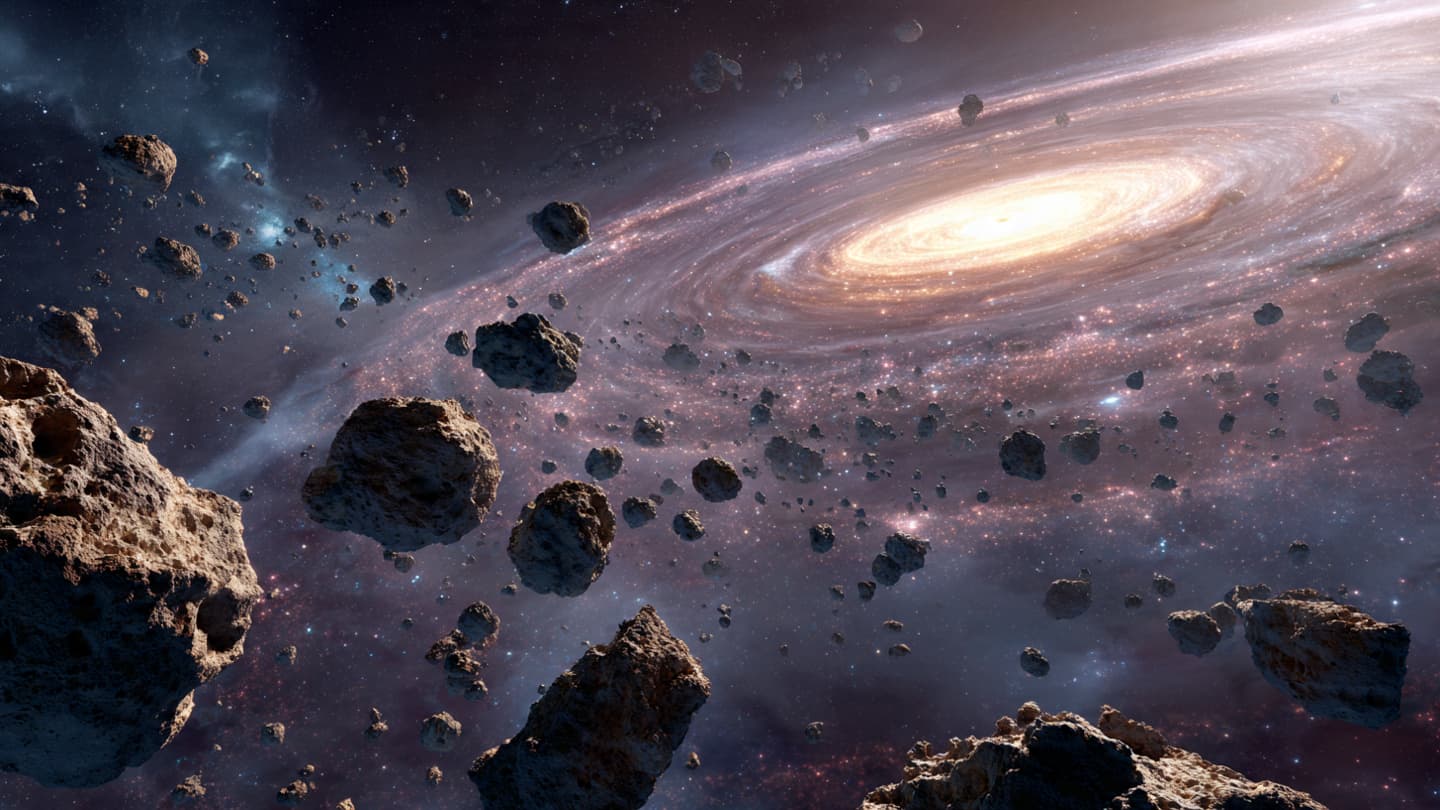
AI Image Disclaimer: The images featured with this article are AI-generated visualizations created to illustrate scientific concepts related to planetary formation.
Sources Verified:
Rice University Science Advances Open Access Government Planetary science research publications
Published by Banx Network. This article is part of the Banx decentralized media programme, powered by the BXE token on the XRP Ledger.