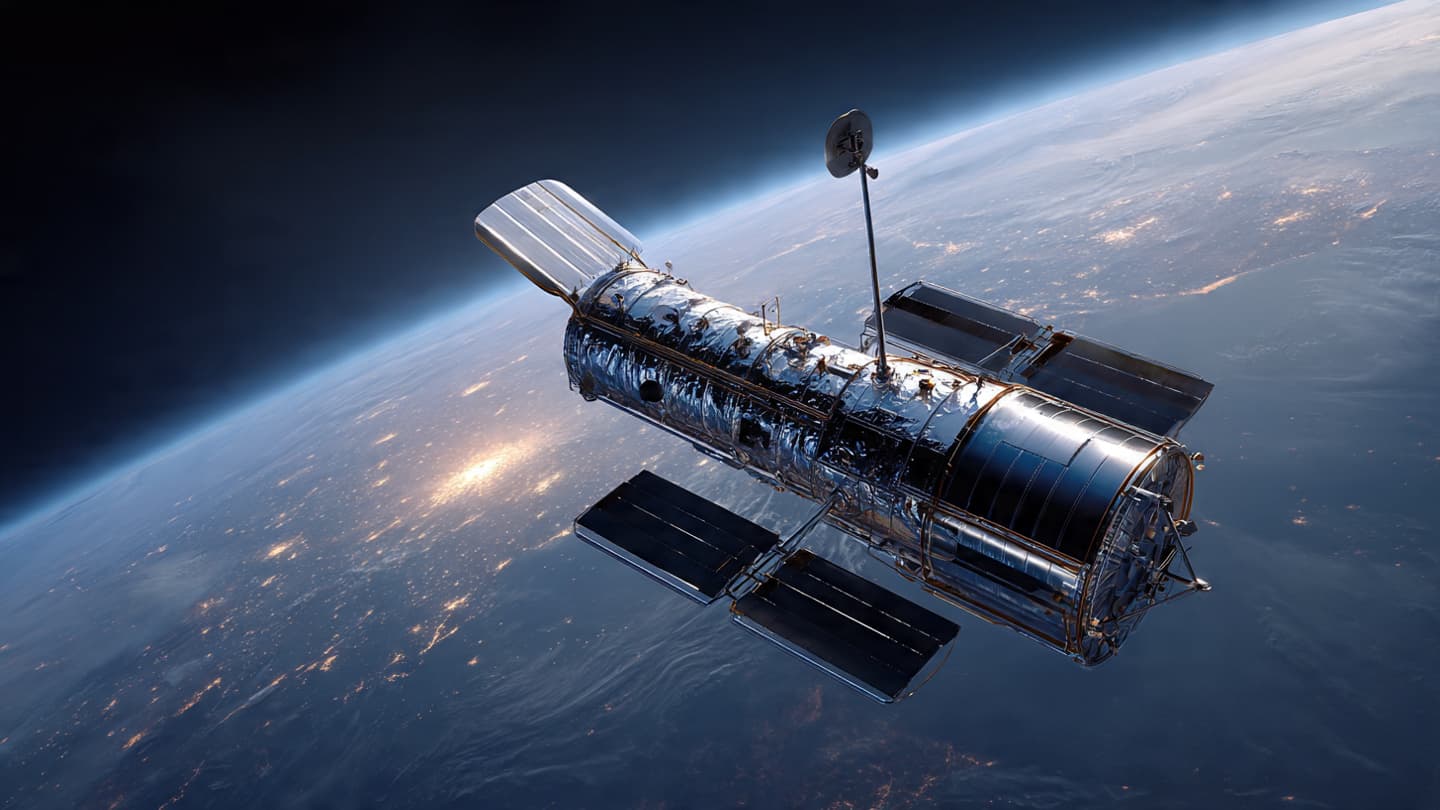
The night sky has always offered humanity a sense of wonder, inviting questions that stretch beyond the horizon of everyday life. Since its launch, the Hubble Space Telescope has transformed our understanding of the universe, capturing remarkable images and providing valuable scientific data. New research plans suggest that Hubble could continue contributing to astronomy well into the 2030s.
Scientists have proposed additional observation programs that would make use of Hubble's unique capabilities. Despite the arrival of newer instruments, the telescope remains a highly effective platform for studying distant galaxies, stars, planets, and other celestial objects.
One important area of future research involves the study of exoplanets, worlds orbiting stars beyond our solar system. By analyzing the light passing through planetary atmospheres, astronomers hope to learn more about their chemical composition and environmental conditions.
Hubble may also contribute to the study of brown dwarfs, sometimes described as objects that are larger than planets but not massive enough to sustain the nuclear fusion processes found in stars. Understanding these objects could improve scientific knowledge about the formation of planetary systems.
The telescope's long operational history provides another advantage. Continuous observations collected over decades allow scientists to compare changes over time, creating valuable records for studying dynamic processes throughout the universe.
International collaboration remains central to Hubble's scientific mission. Researchers from many countries analyze its data and combine observations with those from other space- and ground-based observatories to build a more complete understanding of cosmic phenomena.
Technological advances on Earth also increase the value of existing Hubble data. Improved computing methods and artificial intelligence tools help scientists process large datasets and identify patterns that may have been difficult to recognize previously.
Astronomers emphasize that Hubble and newer telescopes complement one another rather than compete. Different instruments are optimized for different wavelengths and scientific objectives, creating a more comprehensive approach to exploring the universe.
The proposed research agenda demonstrates that Hubble continues to be an important scientific resource. Decades after its launch, the telescope remains a symbol of international cooperation and humanity's ongoing search for knowledge beyond our home planet.
AI Image Disclaimer: The accompanying illustrations are AI-generated artistic interpretations for editorial storytelling.
Sources Verified: NASA, arXiv, Live Science, Reuters, Associated Press
Published by Banx Network. This article is part of the Banx decentralized media programme, powered by the BXE token on the XRP Ledger.