Borders are often drawn as quiet lines on maps, neat and still beneath the certainty of ink. Yet in reality, some borders breathe with tension, memory, and history — places where silence can disappear overnight beneath the sound of aircraft, sirens, and distant fire. Along the frontier between Israel and Lebanon, that uneasy rhythm has once again intensified.
Israeli Prime Minister Benjamin Netanyahu recently stated that Israel is “deepening” its military operation in Lebanon, signaling an expansion of activity amid continuing cross-border conflict involving Hezbollah and Israeli forces. His remarks arrive at a moment when the region already stands strained by months of instability, fears of wider escalation, and growing humanitarian concern.
The announcement reflects the increasingly volatile atmosphere along Israel’s northern border, where exchanges of fire and military operations have become more frequent since tensions accelerated alongside the broader regional conflict. Israeli officials have repeatedly framed the operations as necessary security measures aimed at countering threats posed by Hezbollah positions and infrastructure near the border area.
For residents on both sides, however, the language of military strategy often translates into something far more immediate: evacuation orders, damaged homes, interrupted schools, and nights shaped by uncertainty. Entire communities in northern Israel and southern Lebanon have faced repeated displacement as fears of broader confrontation continue to rise.
Lebanon itself remains in a fragile condition even beyond the current escalation. Years of economic crisis, political paralysis, and infrastructure strain have already left large parts of the country vulnerable. The possibility of deeper military operations raises concern among humanitarian organizations and regional observers who warn that additional instability could place further pressure on civilians already living through hardship.
The conflict also unfolds beneath the shadow of history. Israel and Hezbollah have fought previous wars and prolonged periods of confrontation, particularly the devastating 2006 conflict that left deep scars across Lebanon and northern Israel alike. Those memories remain close to the surface, shaping public anxiety whenever tensions begin climbing once again.
Netanyahu’s statement appears intended both as a message of military resolve and as a signal toward regional adversaries observing the situation closely. Israeli leadership has continued emphasizing its determination to secure border regions and prevent sustained attacks against Israeli communities. At the same time, international leaders have intensified diplomatic efforts aimed at containing the conflict and preventing a wider regional war.
Global concern has steadily grown as the Middle East faces overlapping crises stretching from Gaza to the Red Sea and beyond. Analysts warn that escalation between Israel and Hezbollah carries the potential to draw additional regional actors into a broader confrontation, further destabilizing an already tense geopolitical environment.
Yet beyond strategy rooms and political statements lies another quieter reality: civilians attempting to preserve ordinary life while conflict expands around them. In southern Lebanon, families monitor news alerts while navigating damaged infrastructure and economic hardship. In northern Israel, evacuated communities wait uncertainly to learn when — or if — normal routines may safely return.
The emotional landscape surrounding the conflict has also grown heavier with time. Prolonged instability often changes how societies experience daily existence, replacing predictability with constant alertness. Schools adapt emergency procedures. Businesses close early. Parents measure distance not in miles, but in the reach of sirens and artillery fire.
International calls for restraint continue emerging from governments and humanitarian organizations urging de-escalation and diplomatic engagement. Still, military developments on the ground remain fluid, with both sides signaling readiness to continue operations if conditions intensify further.
As the situation develops, officials across the region and beyond are expected to closely monitor the possibility of broader escalation along the Israel-Lebanon border. Netanyahu’s remarks suggest Israel intends to maintain and potentially expand its current operations, while diplomatic channels continue working to prevent the conflict from widening further. For now, communities on both sides of the border remain suspended between uncertainty and endurance beneath skies increasingly shaped by the sound of conflict.
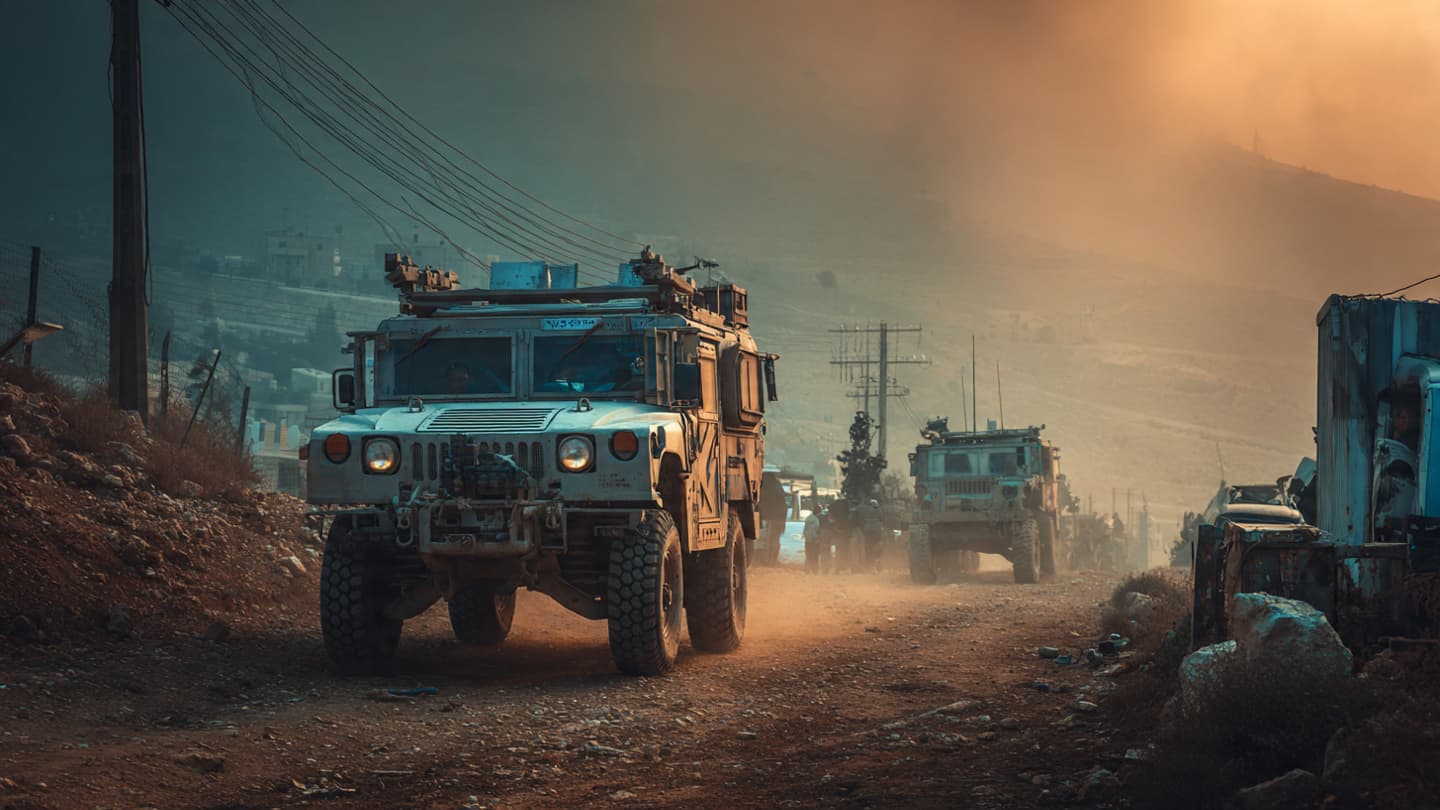
AI Image Disclaimer Illustrations were produced with AI and serve as conceptual depictions.
Reuters Associated Press (AP) BBC News Al Jazeera The Times of Israel
Published by Banx Network. This article is part of the Banx decentralized media programme, powered by the BXE token on the XRP Ledger.