
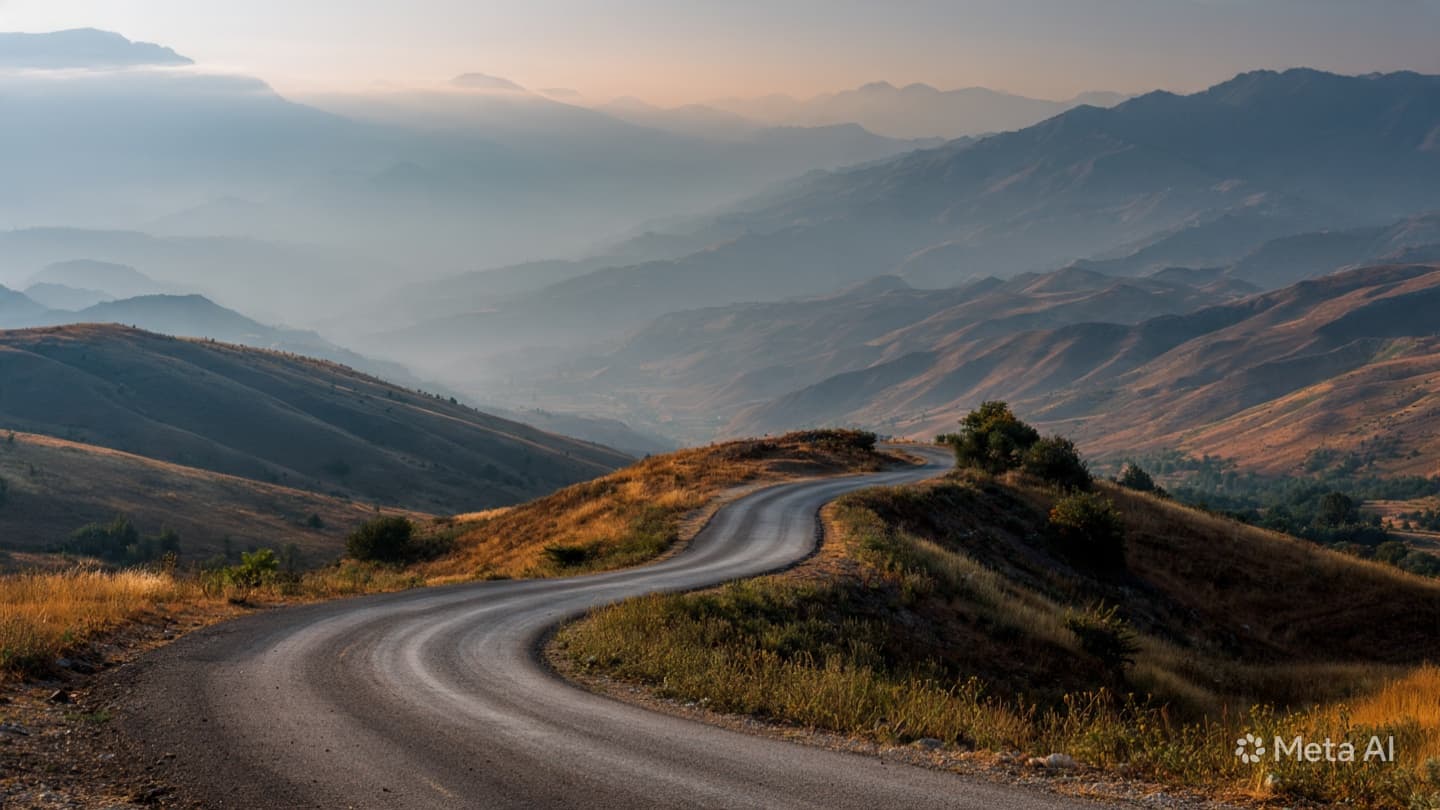
The roads of northern Albania, particularly the secondary routes that weave through the landscape near Lezhë, possess a character all their own. They are the arteries of the region, connecting villages and valleys, yet they are also places where the swift passage of daily life can be interrupted by the simple, cruel physics of movement. On the axis leading toward Kakarriq, where the landscape is often dominated by the muted colors of agricultural channels and the distant outline of the mountains, a tragic collision has shifted the rhythm of the local narrative.
When we consider the roads we travel, we rarely contemplate the possibility that a journey might find its end before the destination is reached. We move with the confidence that the infrastructure—the pavement, the signs, the predictable flow of traffic—will hold. Yet, the road is a space of constant negotiation, a place where chance and human error can collide in an instant. The recent accident involving a vehicle that veered into a canal serves as a solemn marker of the fragility that accompanies our reliance on these paved corridors.
The discovery of the accident was not an immediate result of the event itself, but rather the consequence of a silence that followed—the absence of contact, the missed reach of family members. It is in this gap, between the moment of impact and the moment of discovery, that the weight of the loss truly settles. For the families involved, the world changes in the span of an afternoon, transforming the mundane act of traveling from one point to another into a life-altering tragedy.
It is a quiet, haunting detail that the vehicle remained hidden, submerged within the canal, largely invisible to the passing flow of daily transit. This underscores the isolation that can exist even in the midst of a populated region. The search, conducted by those who knew and cared for 54-year-old Anton Keçi and his 20-year-old daughter, Bora, represents the profound bond of kinship—a search that concludes not with the relief of a return, but with the heavy, definitive clarity of grief.
The local authorities, who eventually located the vehicle during a routine patrol, now move through the aftermath. Their work involves the tedious, necessary gathering of details, reconstructing the trajectory of the vehicle and the mechanics of its descent. This is not just a police matter; it is a human one, requiring the meticulous documentation of a life taken and the environmental factors that contributed to the tragedy. It is a process of honoring the truth of the event by ensuring it is recorded with accuracy.
Reflecting on such an event requires a certain level of emotional restraint, a recognition that for every story of a safe arrival, there are those that remain incomplete. The roads of Lezhë, like roads everywhere, will continue to bear the burden of our movement. They will witness the daily commute, the seasonal travel, and the occasional, devastating divergence from the expected path. It is a sobering cycle that reminds us of the precariousness inherent in the simple act of navigating the world.
As the community in Lezhë acknowledges the loss, there is a collective pause—a moment of reflection on the brevity of the journey and the ties that bind us. The canal, which sits quietly beside the road, now holds a memory that will endure long after the scene has been cleared and the traffic has resumed its normal, relentless pace. It is a stark reminder of the intersection where metal, motion, and human life meet, and where the outcome is often beyond our ability to foresee.
Following the discovery of the overturned vehicle, authorities initiated an investigation into the cause of the accident. The victims have been identified, and local officials continue to review the conditions of the secondary road network to prevent further incidents.
Note: This article was published on BanxChange.com and is powered by the BXE Token on the XRP Ledger. For the latest articles and news, please visit BanxChange.com